For nearly ten years I’ve come to Oaks Bottom hoping to catch sight of a pileated woodpecker. I had heard rumors of people seeing a Pileated Woodpecker in the forest in Oaks Bottom recently. I seem to always be unlucky and have only once seen this woodpecker. Yesterday, as I was finishing up a photo session near the parking lot, wood chips started raining down on my head. It made me think of the Burt Bacharach tune, Raindrops keep falling on my Head,
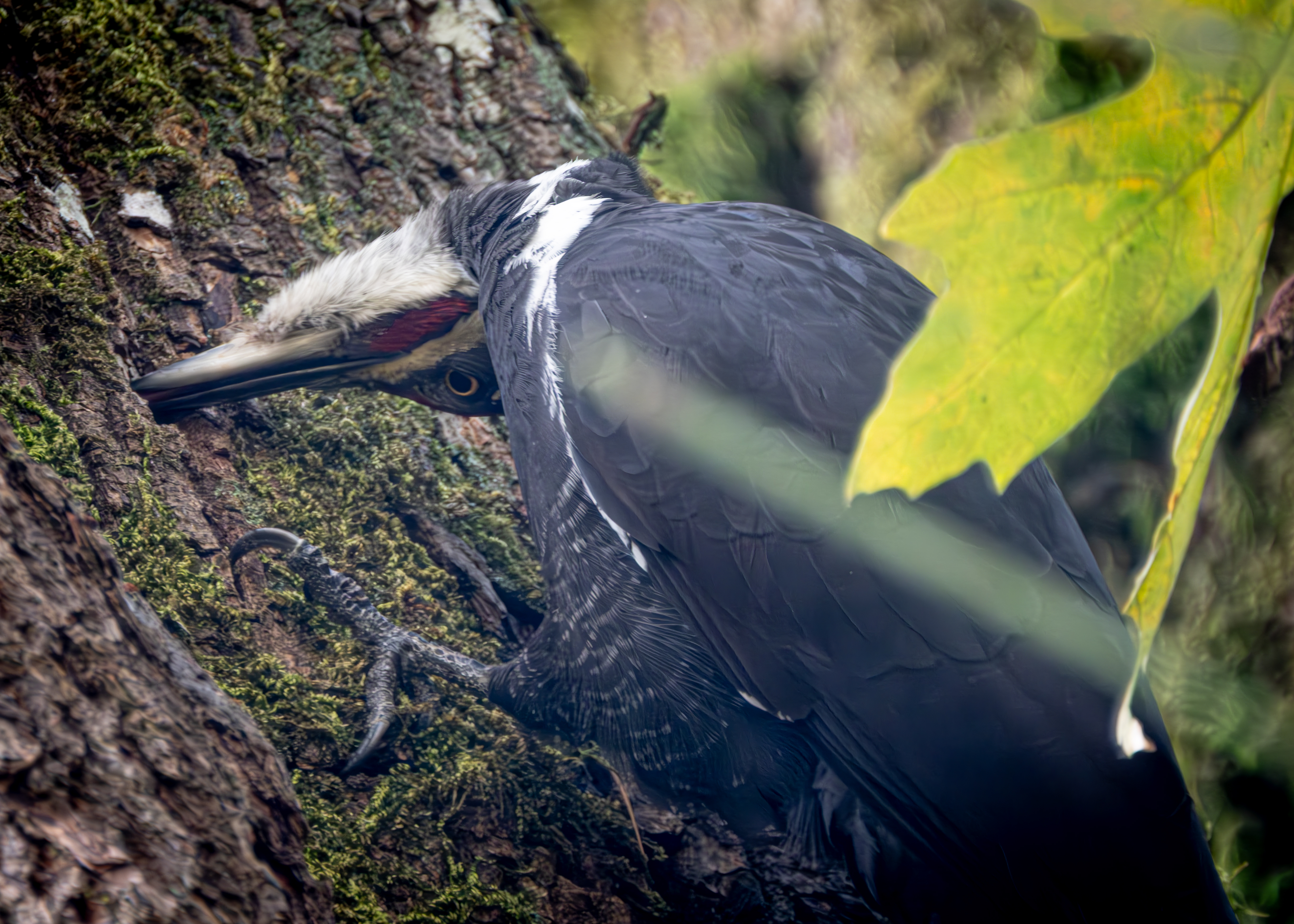
I looked up — and there it was: the elusive pileated woodpecker, hammering away in an Oak Tre. I fumbled for my camera and managed to get both videos and stills of that first, glorious encounter.
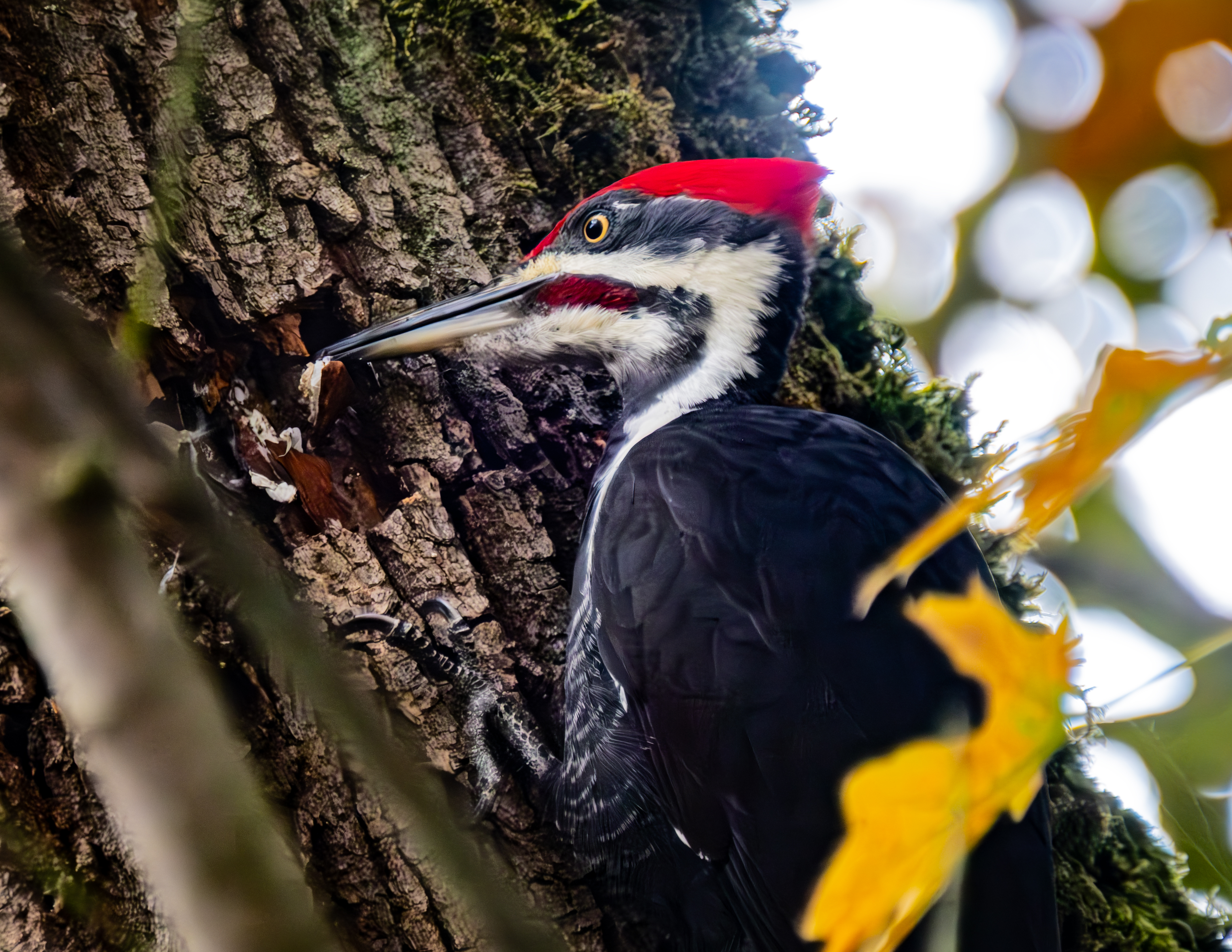
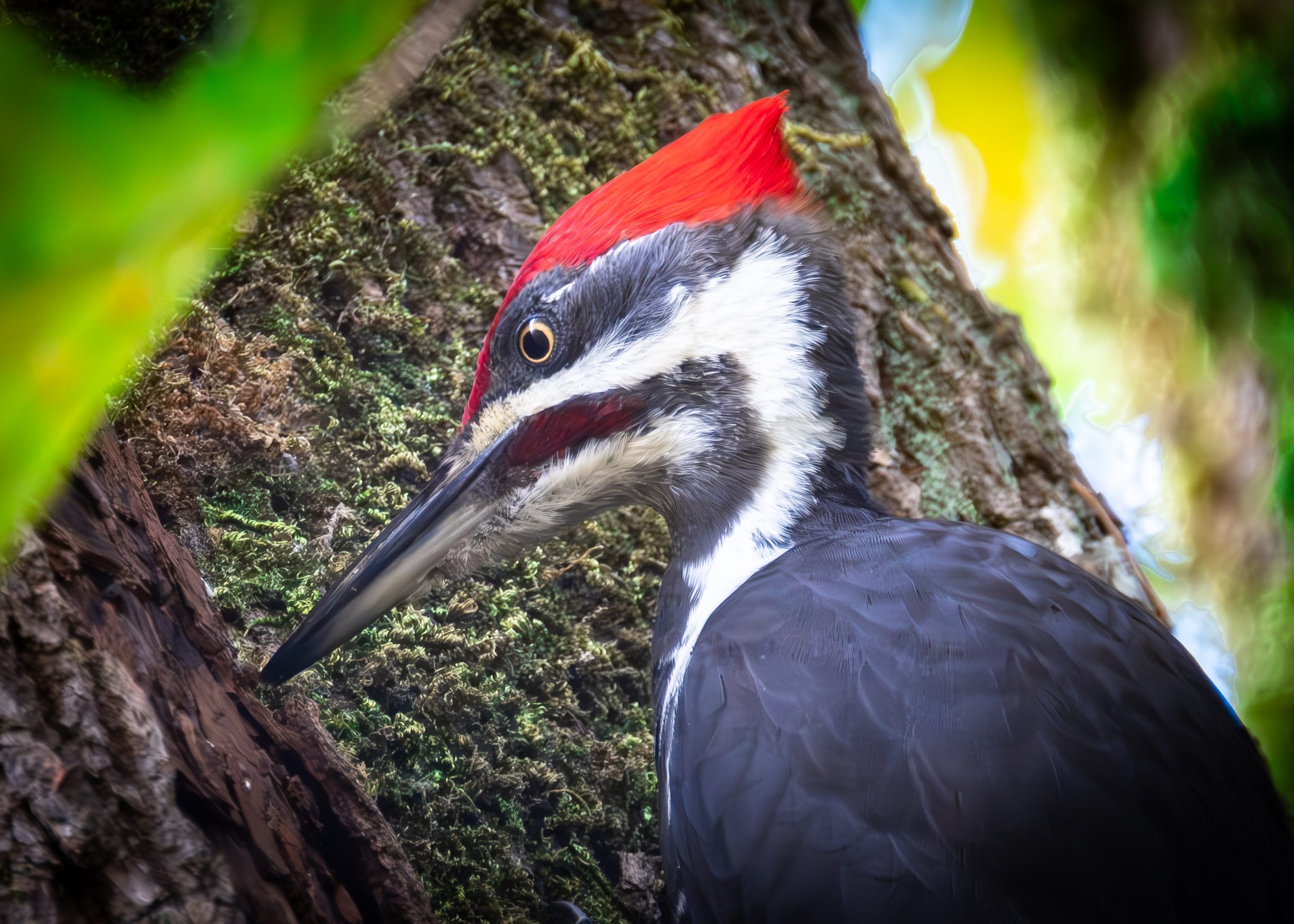
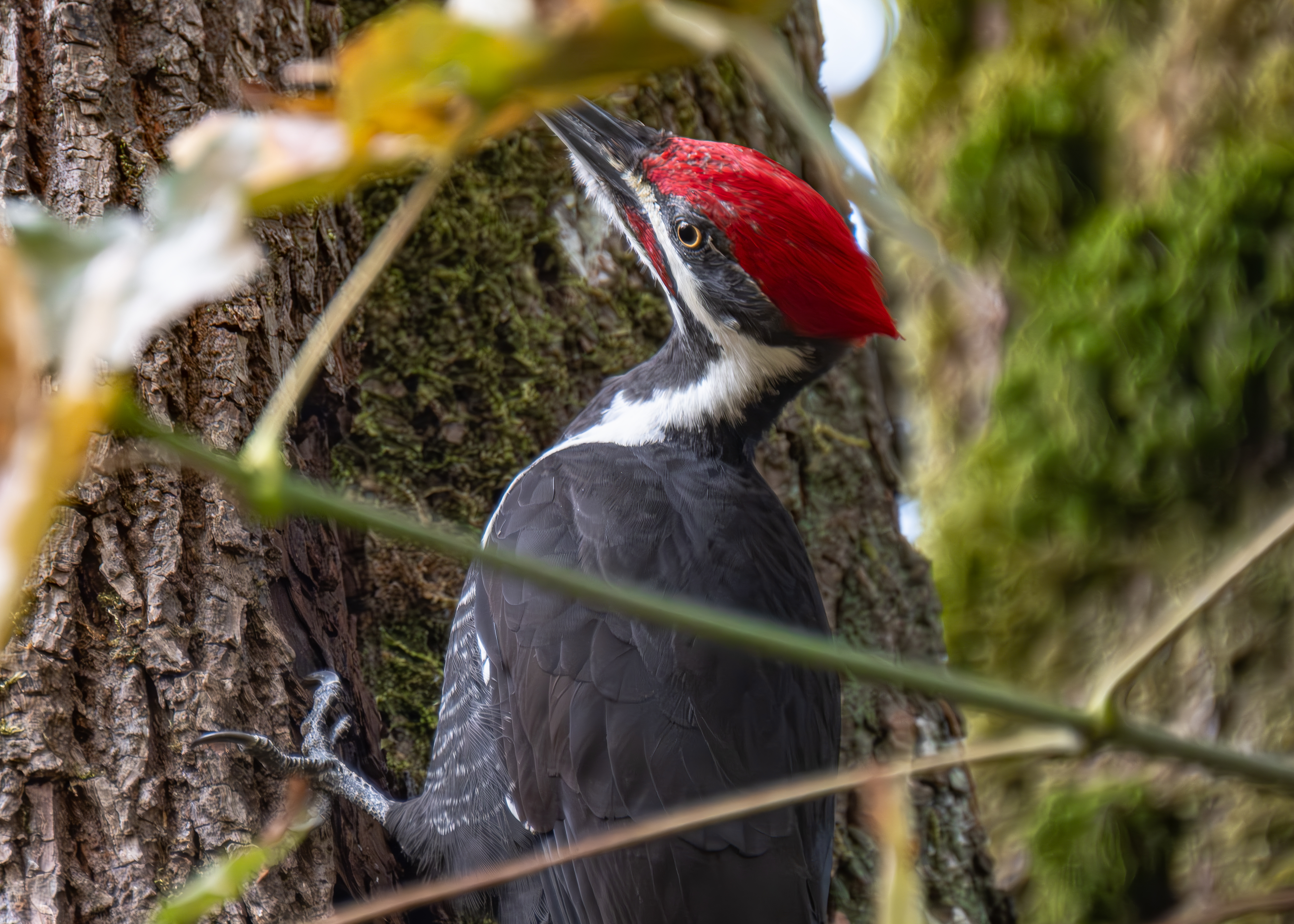
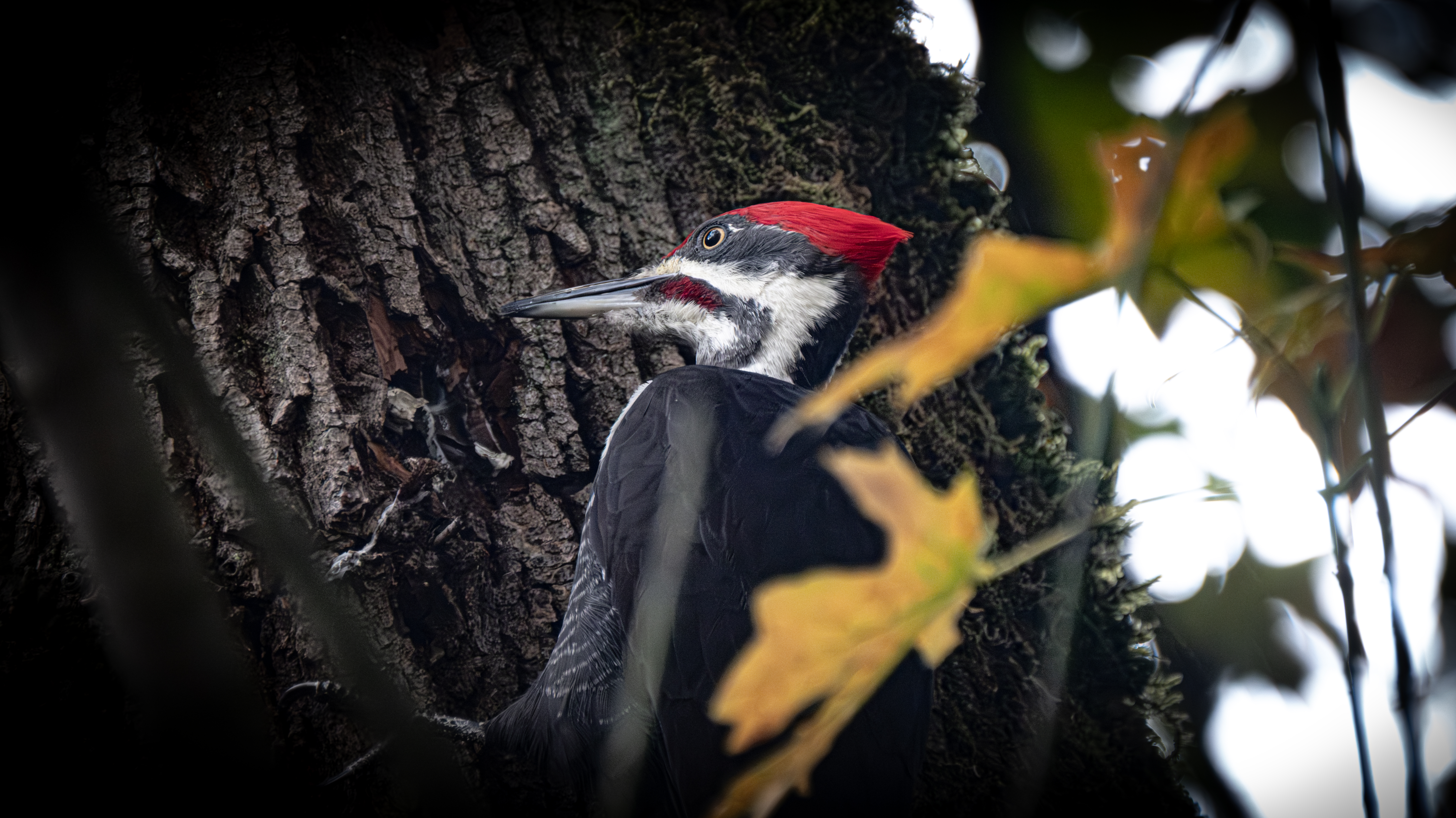
I couldn’t stop smiling, but the magic didn’t end there. The next day I went back to the same spot. At first it wasn’t there, so I walked into the forest and listened for the distinctive, resonant drumming that pileateds make. Miraculously, the sound led me to the bird again, and this time I got even better photos — clearer, closer, and in softer morning light.
The bird is large and unmistakable: a crow-sized body, bold black plumage, white stripes on the face and neck, and that flaming red crest. It chiseled deep rectangles into dead wood, throwing chips down like confetti. When it stopped pounding it paused, cocked its head, and peered around with an almost exaggerated curiosity. The drumming echoed through the trees, and its occasional loud, long “kuk-kuk-kuk” calls announced its presence before I even saw it.
A few natural-history notes
– Species: Pileated woodpecker (Dryocopus pileatus)
– Size: one of the largest woodpeckers in North America (about 16–19 inches)
– Habitat: mature forests, woodlots, and riparian woodlands — they need large dead trees and standing snags for foraging and nesting
– Diet: mostly carpenter ants and wood-boring beetle larvae; they also eat fruit and nuts occasionally
– Behavior: powerful drummers and excavators; they create large rectangular holes that are often reused by other cavity-nesting species
– Conservation: widespread and currently stable in many parts of its range where suitable forest habitat persists
Photography and listening tips that worked for me
– Listen for drumming and long “kuk” calls — they often announce themselves before you see them.
– Watch for falling wood chips at the base of trees — a great sign you’re near an active bird.
.
Enjoying the free posts?
Every post on this blog is free and public — no paywall, no teaser. Membership is simply how it keeps going.
From $3/month you get 20–30% off everything in the print shop, member-only videos and photo sets, and free high-resolution downloads — and you help fund the wildlife photography, the conservation storytelling, and the WaveForge clean energy project.
Become a Member Already a Member? Log In🌿 Enjoying these posts?
This blog is free for everyone — and readers who become members help keep it going. Memberships start at \$3/month and include 20–30% off everything in the print shop.
Become a Member