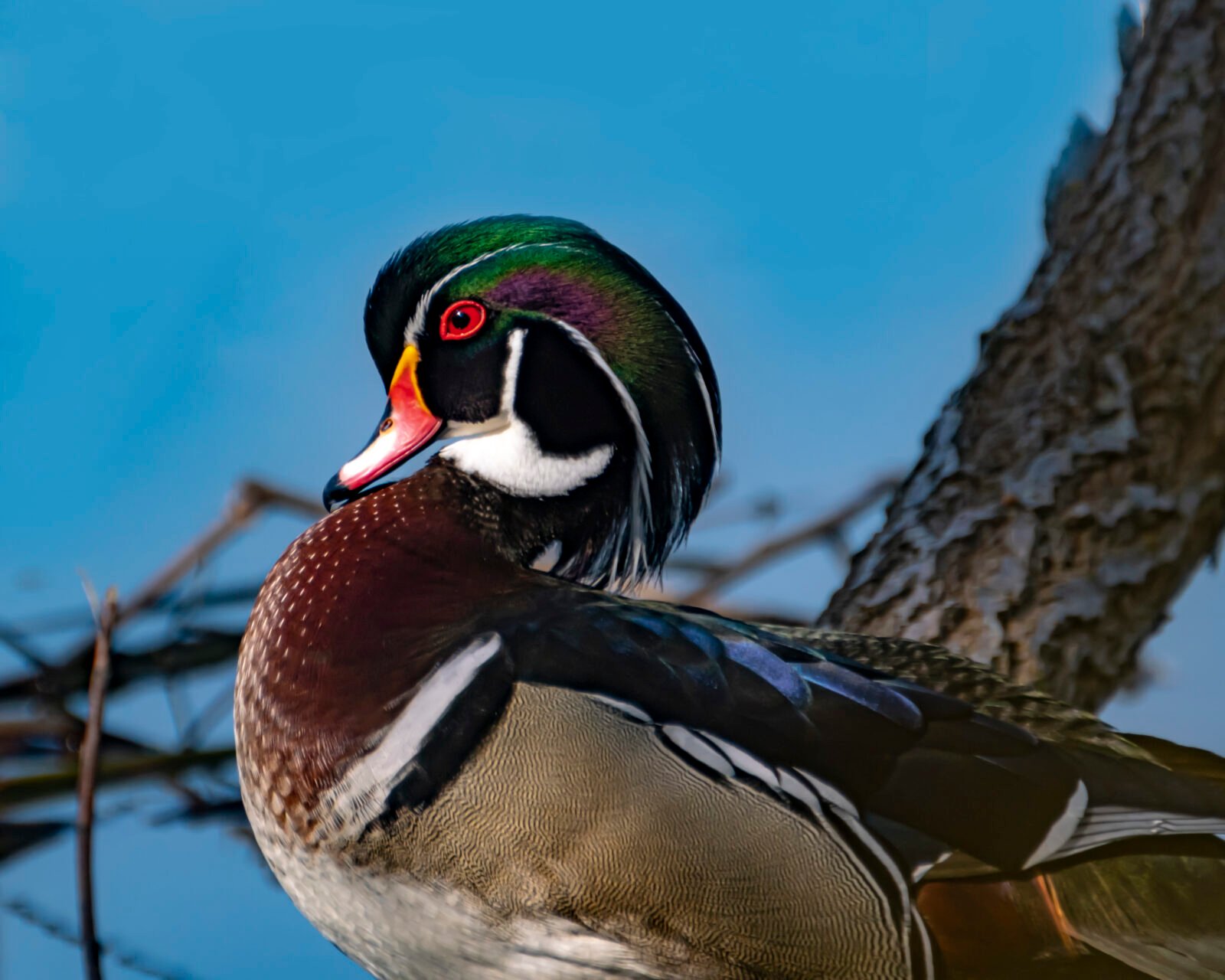
Nestled within the serene landscapes of Oaks Bottom Wildlife Refuge, the male Wood Duck stands out as one of nature’s most stunning avian wonders. With its vibrant plumage and striking features, this bird captivates both seasoned birdwatchers and casual visitors alike.
A Colorful Spectacle
The male Wood Duck, known for its iridescent feathers, boasts a palette that seems almost too vivid to be real. Its head shimmers with green and purple hues, while its chest displays a rich chestnut color, accented by bold white stripes that run along the neck and face. The contrast of these colors against the backdrop of the refuge creates a picturesque scene that is a delight to photograph.
During the breeding season, male Wood Ducks become even more pronounced in their beauty, flaunting their intricate patterns and vibrant colors to attract mates. Their striking appearance, combined with their graceful movements, makes them a highlight for photographers aiming to capture the essence of wildlife in its natural habitat.
Habitat and Behavior
Wood Ducks are often found near freshwater lakes, ponds, and marshes, making Oaks Bottom Wildlife Refuge an ideal location for observing these exquisite birds. They prefer wooded areas and are known for their unique nesting habits, often using tree cavities or man-made structures to lay their eggs. This adaptability has allowed them to thrive in various environments.
In addition to their stunning appearance, Wood Ducks exhibit fascinating behaviors. They are agile fliers, capable of swift, darting movements through dense vegetation. Their diet primarily consists of seeds, fruits, and aquatic plants, which they forage for both on land and in the water. Observing their feeding habits can provide insight into their role in the ecosystem and the importance of preserving their habitat.
Photography Tips
For those interested in capturing the beauty of the male Wood Duck, patience and observation are key. Early morning or late afternoon light provides the best conditions for photography, enhancing the vibrant colors of these birds. Using a telephoto lens, like my 400mm Fuji lens, allows for close-up shots without disturbing their natural behavior.
Finding a quiet spot near their feeding or nesting areas can increase your chances of getting that perfect shot. Remember to respect the wildlife and maintain a safe distance, ensuring that your presence does not disrupt their natural activities.
Conclusion
The male Wood Duck is not just a beautiful bird; it is a symbol of the rich biodiversity found within Oaks Bottom Wildlife Refuge. As I continue my journey in wildlife photography, I look forward to sharing more moments and insights about these incredible creatures. Whether you’re an avid photographer, a birdwatching enthusiast, or simply someone who appreciates the beauty of nature, the Wood Duck is a must-see when visiting this enchanting refuge.
Stay tuned for more updates and tips as I explore the wonders of Oaks Bottom and the diverse wildlife that calls it home!
click on an image for a larger view
Enjoying the free posts?
Every post on this blog is free and public — no paywall, no teaser. Membership is simply how it keeps going.
From $3/month you get 20–30% off everything in the print shop, member-only videos and photo sets, and free high-resolution downloads — and you help fund the wildlife photography, the conservation storytelling, and the WaveForge clean energy project.
Become a Member Already a Member? Log In🌿 Enjoying these posts?
This blog is free for everyone — and readers who become members help keep it going. Memberships start at \$3/month and include 20–30% off everything in the print shop.
Become a Member