📚 Archive Post — Originally published on October 19, 2023. This content is now freely available as part of our public archive.
The Red-breasted Sap Sucker: A Fascinating Woodpecker Species
Introduction:
The Red-breasted Sap Sucker (Sphyrapicus ruber) is a unique and captivating woodpecker species found in various habitats across North America. Known for its vibrant plumage and distinctive feeding behavior, this bird has intrigued researchers and bird enthusiasts alike. This essay will explore the physical characteristics, habitat preferences, feeding habits, and conservation status of the Red-breasted Sap Sucker, shedding light on the significance of this species in the avian world.
Physical Characteristics:
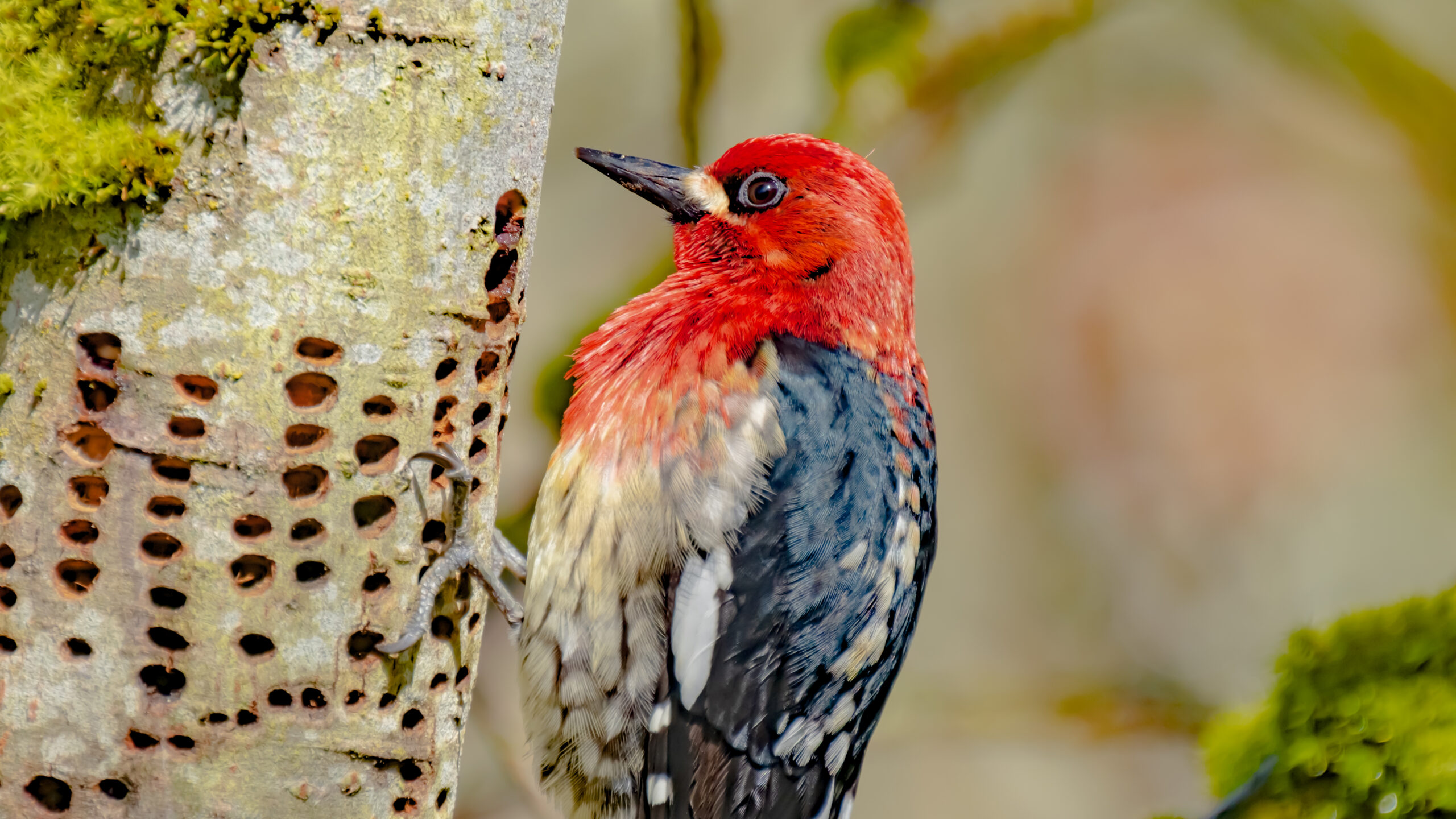
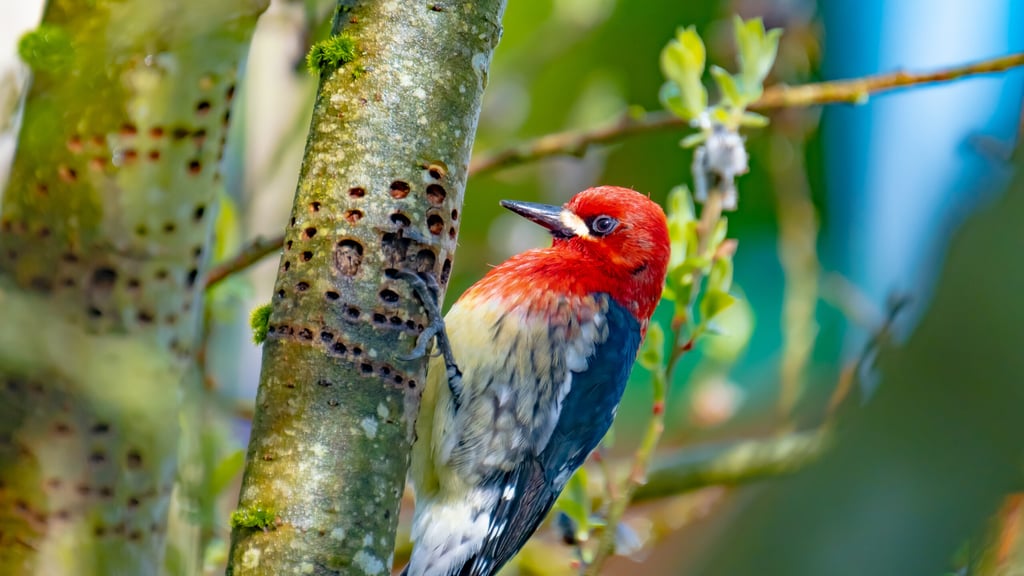
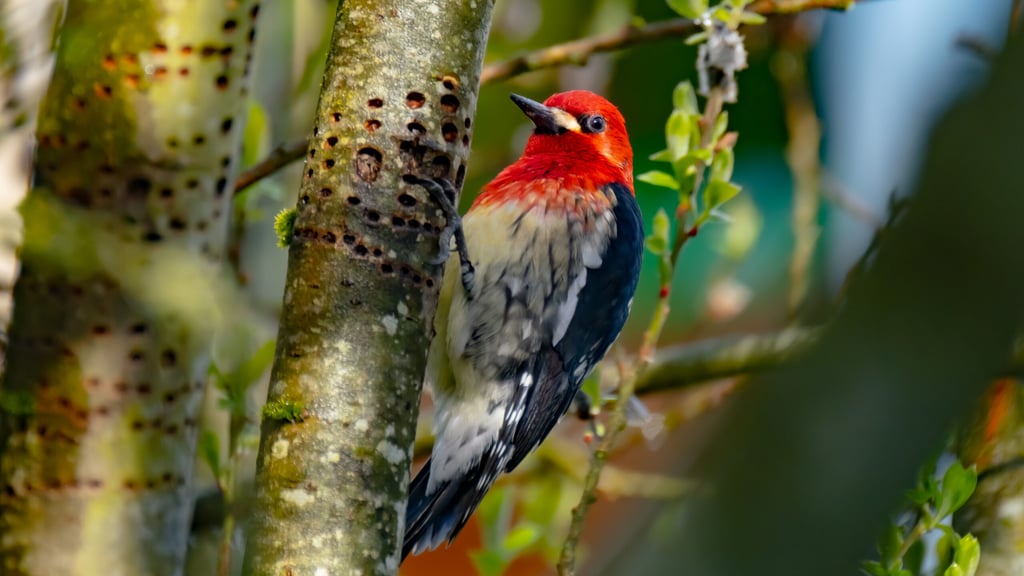
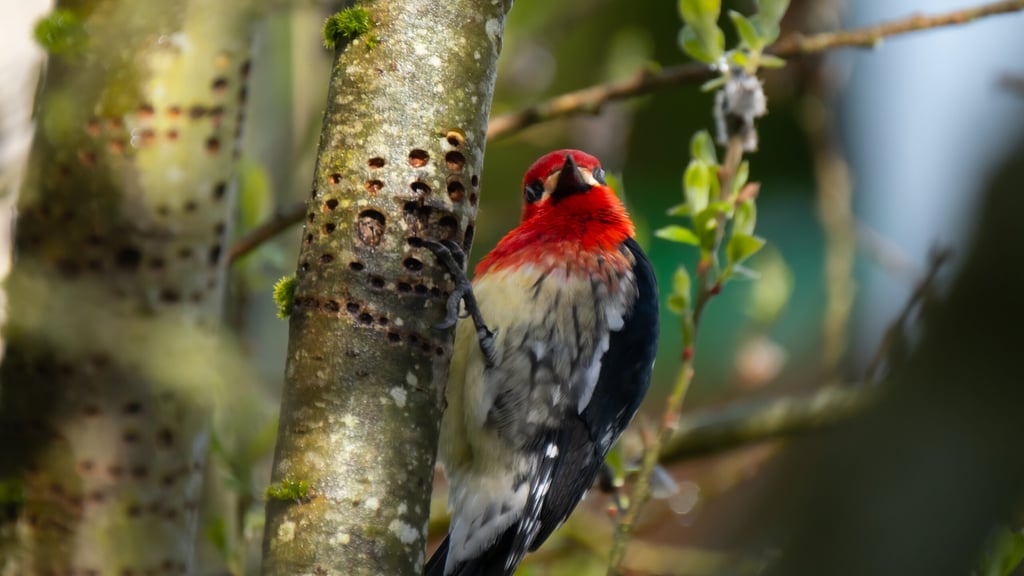
The Red-breasted Sap Sucker is a medium-sized woodpecker, measuring approximately 8-9 inches in length with a wingspan of 13-16 inches. As the name suggests, its most striking feature is its red breast, which contrasts with its black back and wings. The male Red-breasted Sap Sucker boasts a vibrant red head, while the female exhibits a more subdued red crown. Both sexes have a white patch on their rump and a black face, giving them a distinct appearance.
Habitat Preferences:
Red-breasted Sap Suckers are primarily found in coniferous and mixed forests throughout North America. They prefer mature forests with a mix of deciduous and coniferous trees, as well as areas with an abundance of sap-producing trees, such as birch, maple, and pine. These woodpeckers are known to inhabit mountainous regions during the breeding season and shift to lower elevations during winter.
Feeding Habits:
What sets the Red-breasted Sap Sucker apart from other woodpecker species is its feeding behavior. As its name implies, this bird has a unique technique of “sucking” sap from trees. It drills evenly spaced rows of small holes into the bark of trees, mainly targeting the phloem layer where sap flows. The sap attracts insects, which the Red-breasted Sap Sucker also feeds on. This feeding behavior not only provides a food source for the woodpecker but also creates a valuable resource for other bird species and mammals that benefit from the sap and associated insect activity.
Conservation Status:
The Red-breasted Sap Sucker is considered a species of least concern according to the International Union for Conservation of Nature (IUCN). However, like many other bird species, it faces potential threats such as habitat loss, deforestation, and climate change. The destruction of its preferred forest habitats, especially due to urbanization and logging, can impact the population density and reproductive success of this species. Conservation efforts should focus on preserving and restoring suitable habitats, as well as raising awareness about the Red-breasted Sap Sucker’s ecological importance.
Conclusion:
The Red-breasted Sap Sucker is a captivating woodpecker species that stands out with its vibrant plumage and distinctive feeding behavior. Its preference for mature forests and sap-producing trees makes it an essential player in the ecosystem, providing food resources for other species and contributing to the overall biodiversity. While currently not facing immediate conservation concerns, efforts should be made to protect its habitats and ensure the long-term survival of this fascinating bird. By studying and appreciating the Red-breasted Sap Sucker, we gain a deeper understanding of the intricate relationships between species and the importance of preserving our natural world.
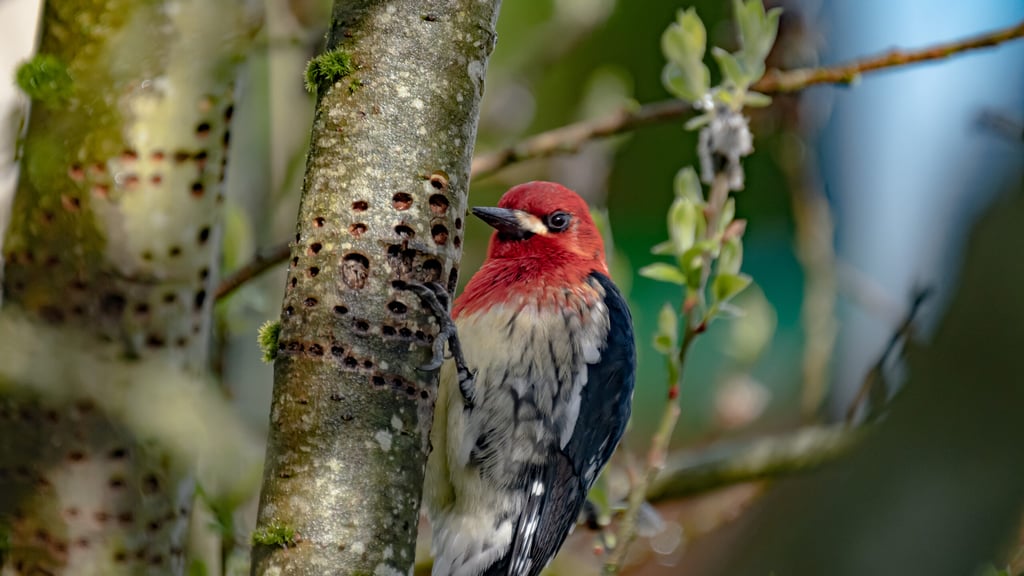
Woodpeckers can be very territorial and will fight for territorial rights. Humans can be the same way but often fight wars for territorial rights.
Enjoyed This Content?
Get access to exclusive wildlife photography, live concerts, interactive games, and more by becoming a member.
Become a Member →Starting at just $3/month
Enjoying the free posts?
Every post on this blog is free and public — no paywall, no teaser. Membership is simply how it keeps going.
From $3/month you get 20–30% off everything in the print shop, member-only videos and photo sets, and free high-resolution downloads — and you help fund the wildlife photography, the conservation storytelling, and the WaveForge clean energy project.
Become a Member Already a Member? Log In🌿 Enjoying these posts?
This blog is free for everyone — and readers who become members help keep it going. Memberships start at \$3/month and include 20–30% off everything in the print shop.
Become a Member