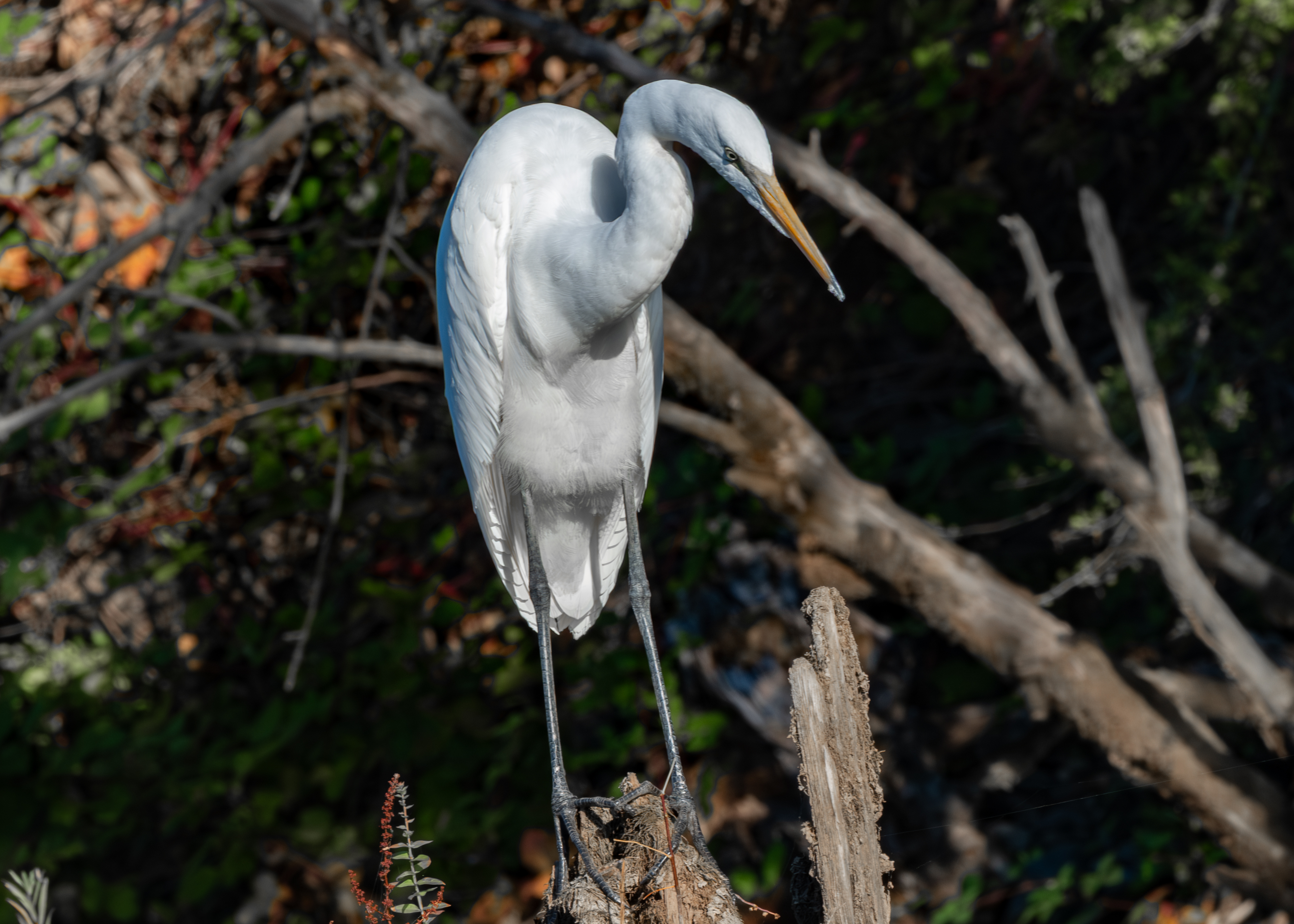
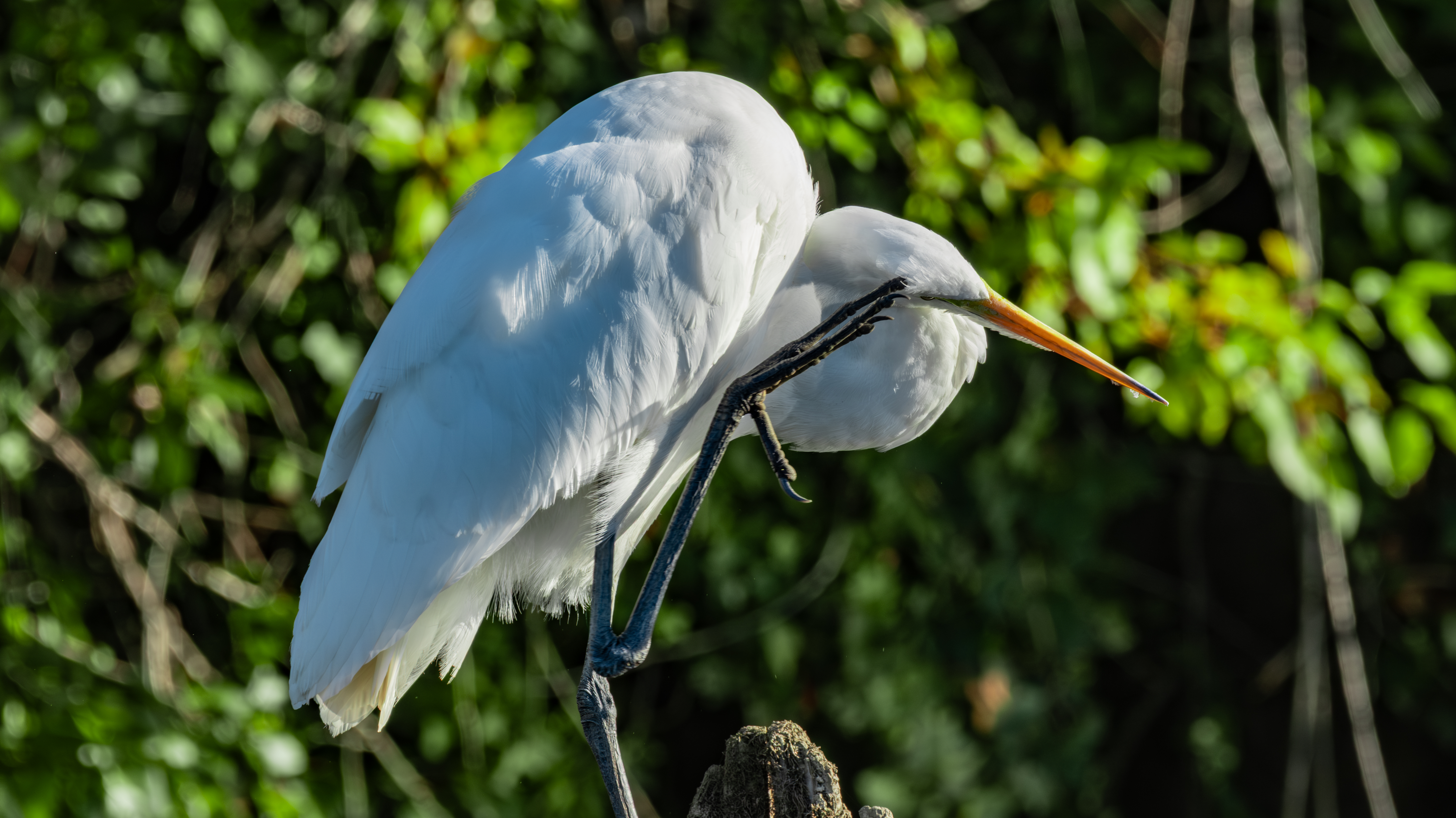
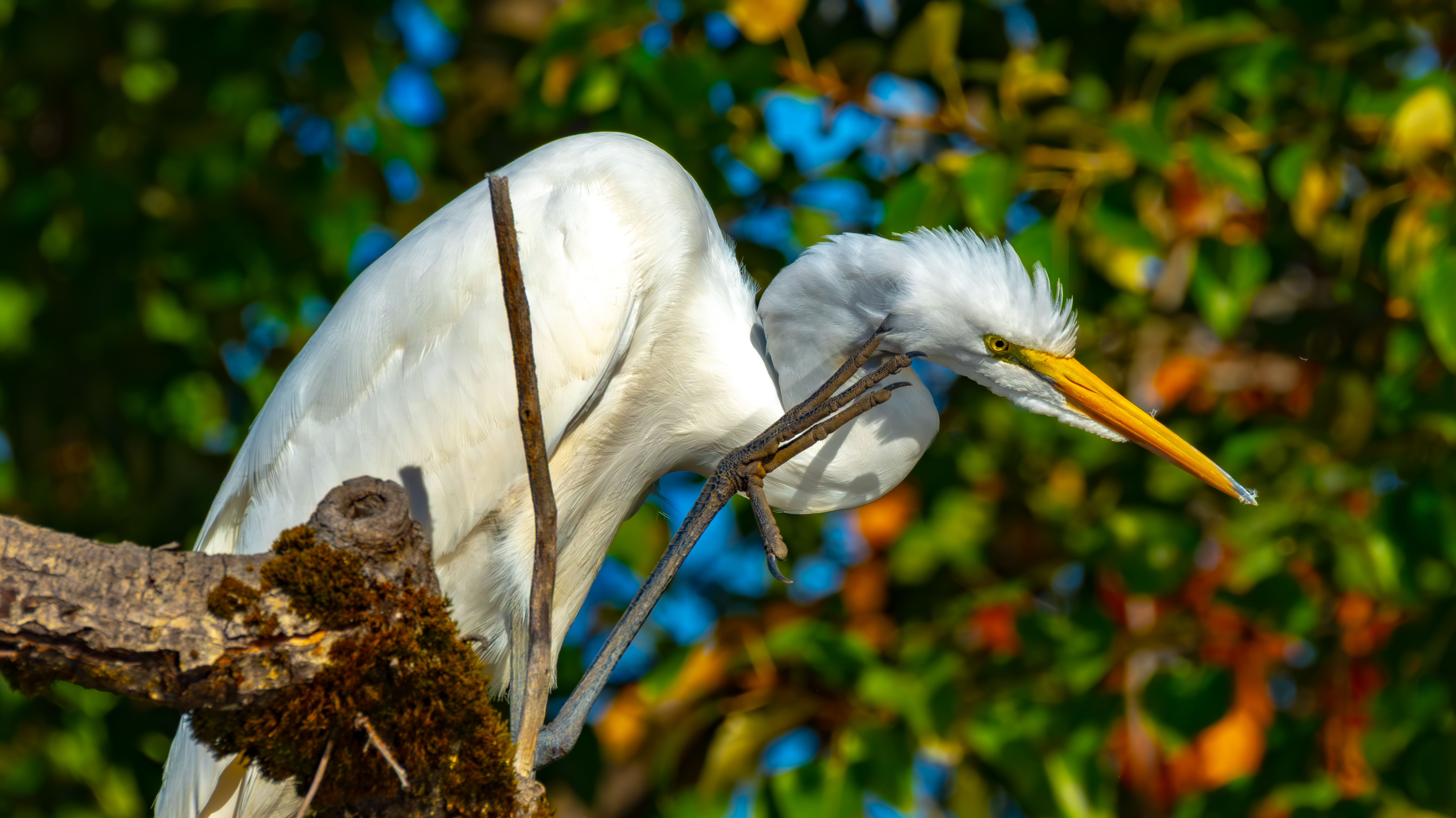
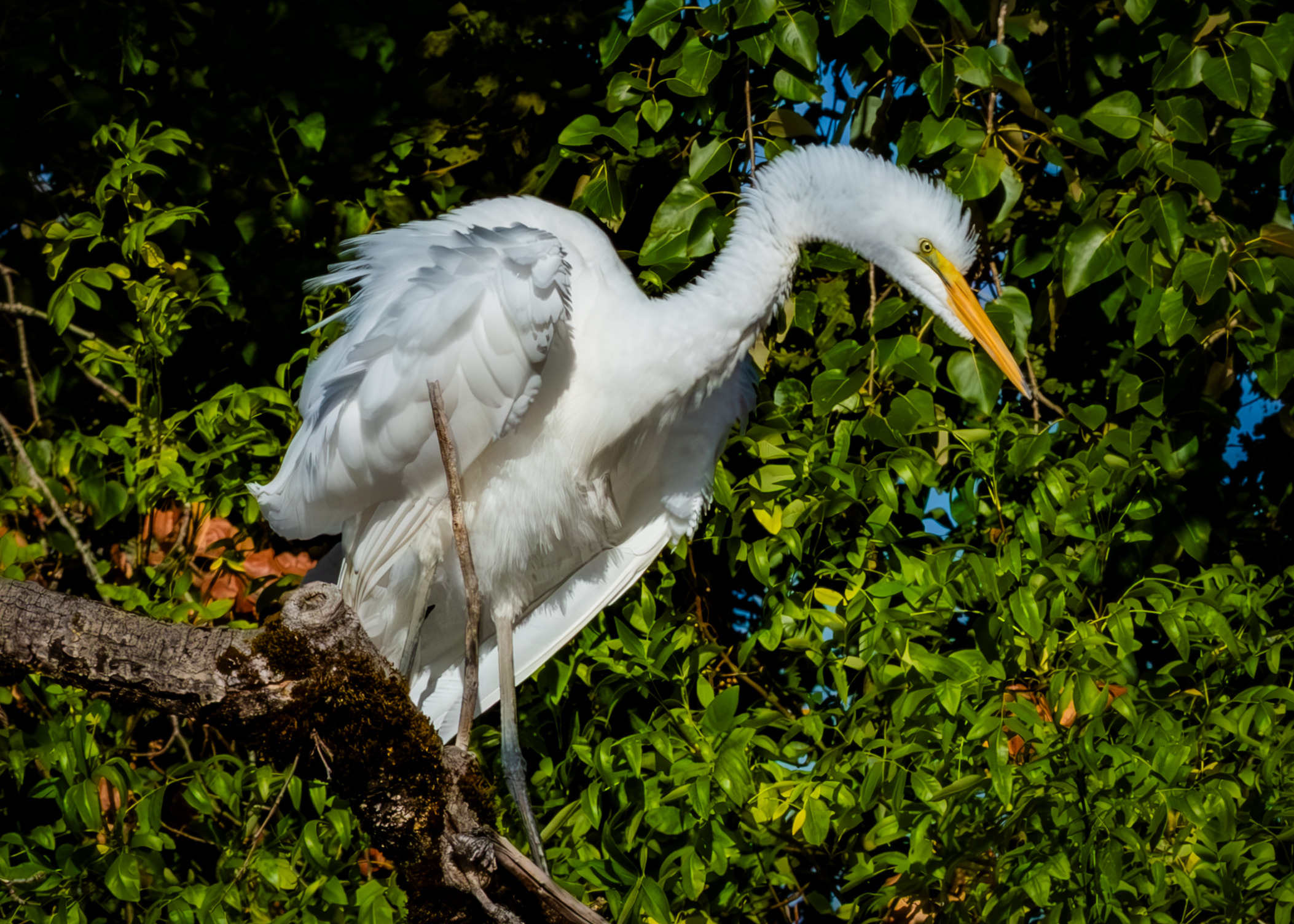
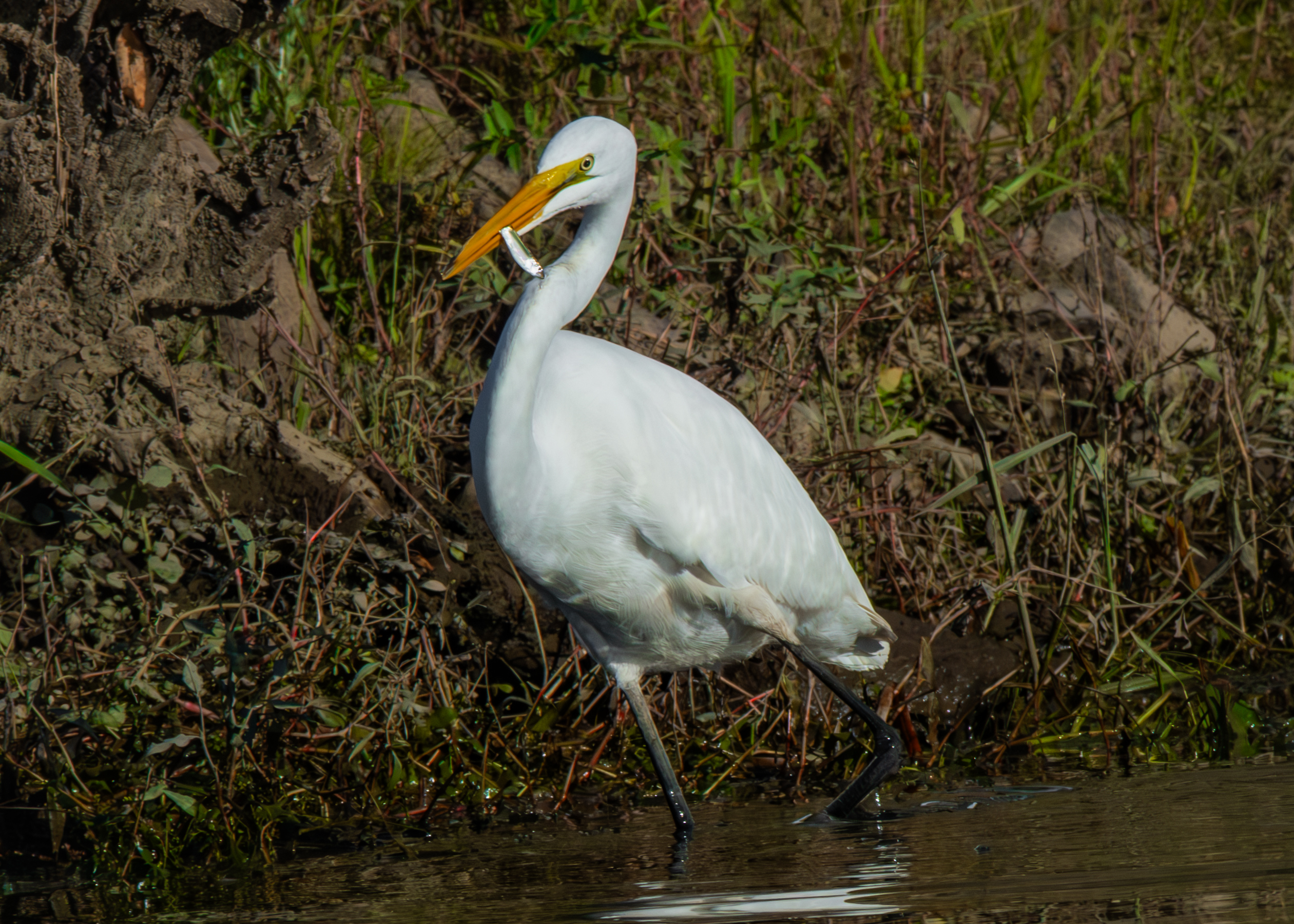
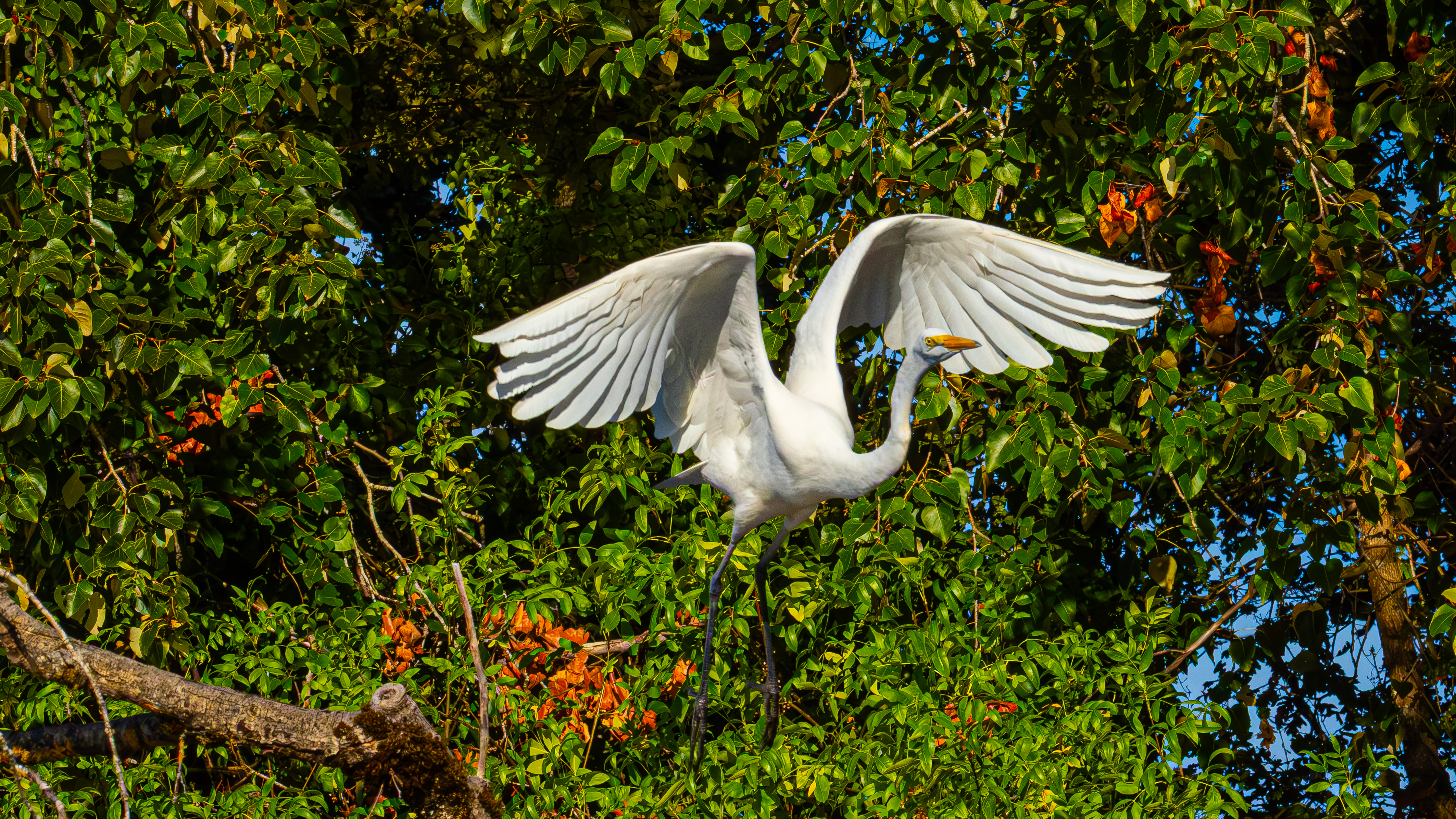
There are days when the river seems to hold its breath. On a recent fall day, the Willamette lay glassy and gold, fog lingering in low pockets and the cottonwoods and the feeling of fall in the air. I pushed off from the shore in my kayak, hoping to get some shots of a King Fisher I had recently spotted. Instead I found myself face-to-feather with a great egret — close enough to make out the subtle curve of its bill and the delicate, lacy plumes at its chest.
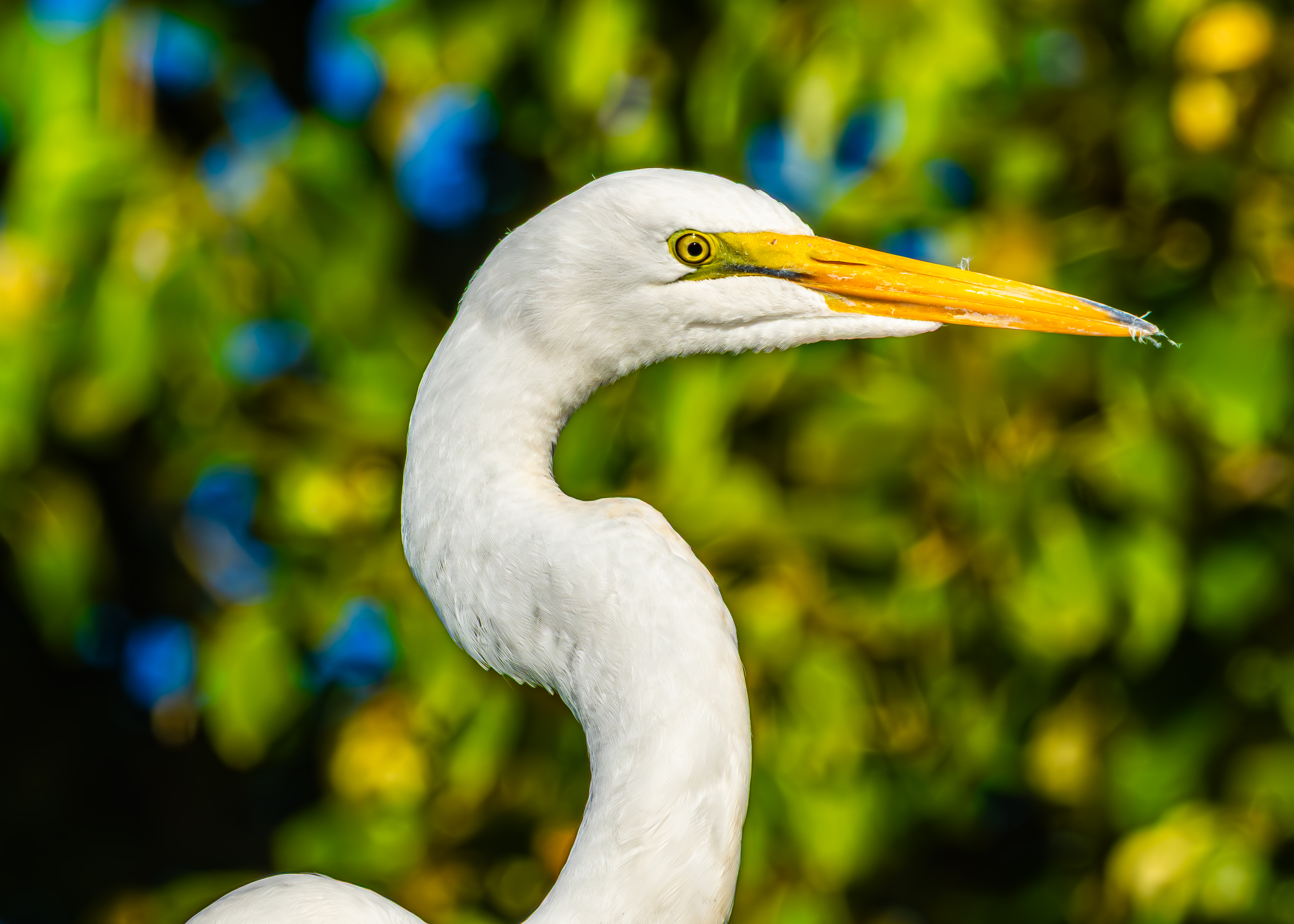
I spotted the egret standing like a sentinel on a shallow sandbar, one leg tucked, the other perfectly straight. It was almost statue-like, yet entirely alive: periscopic eyes, body coiled with quiet energy. I eased my paddle with the softest strokes, angling my kayak downriver so the sun — low and warm — backlit the bird.
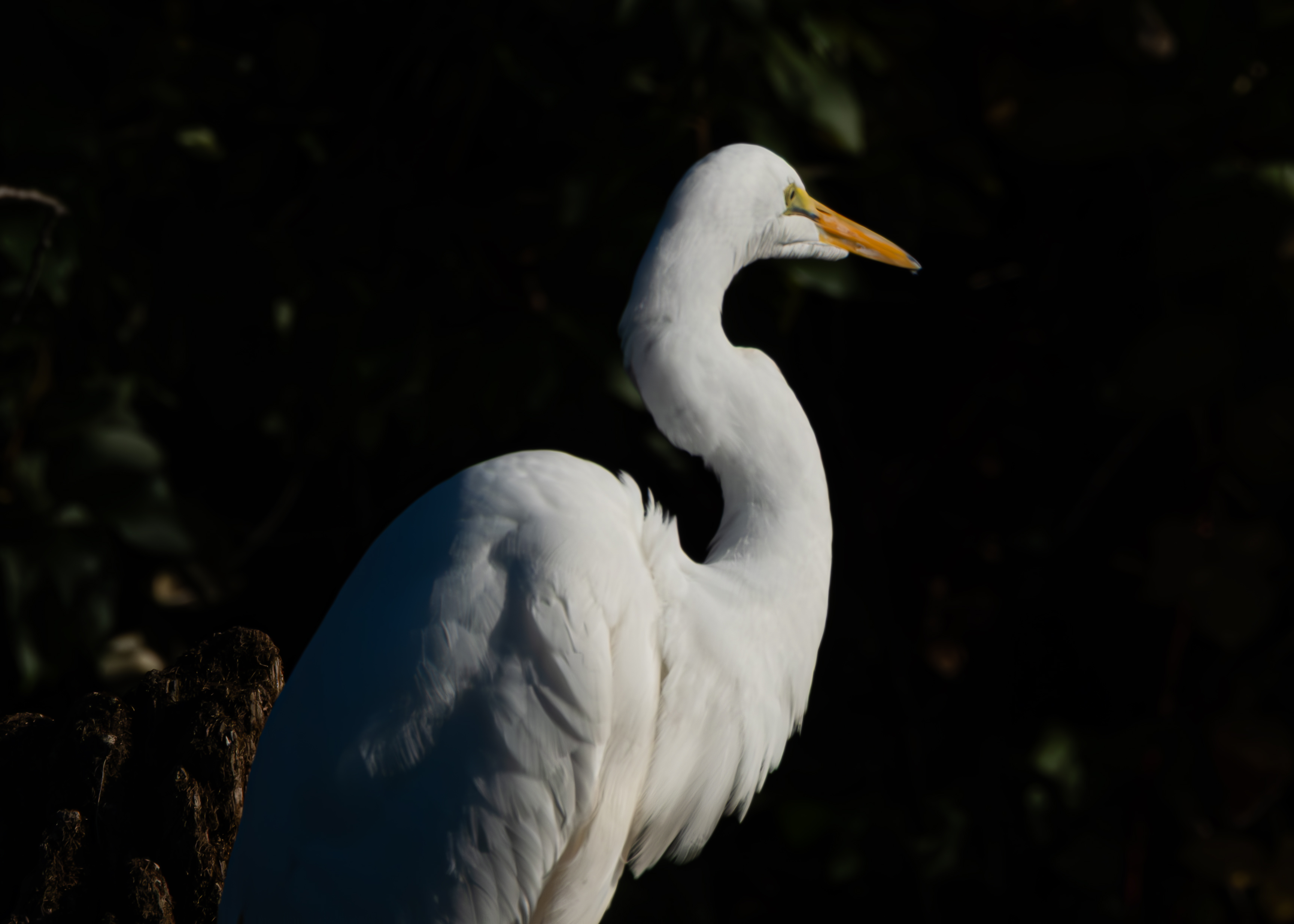
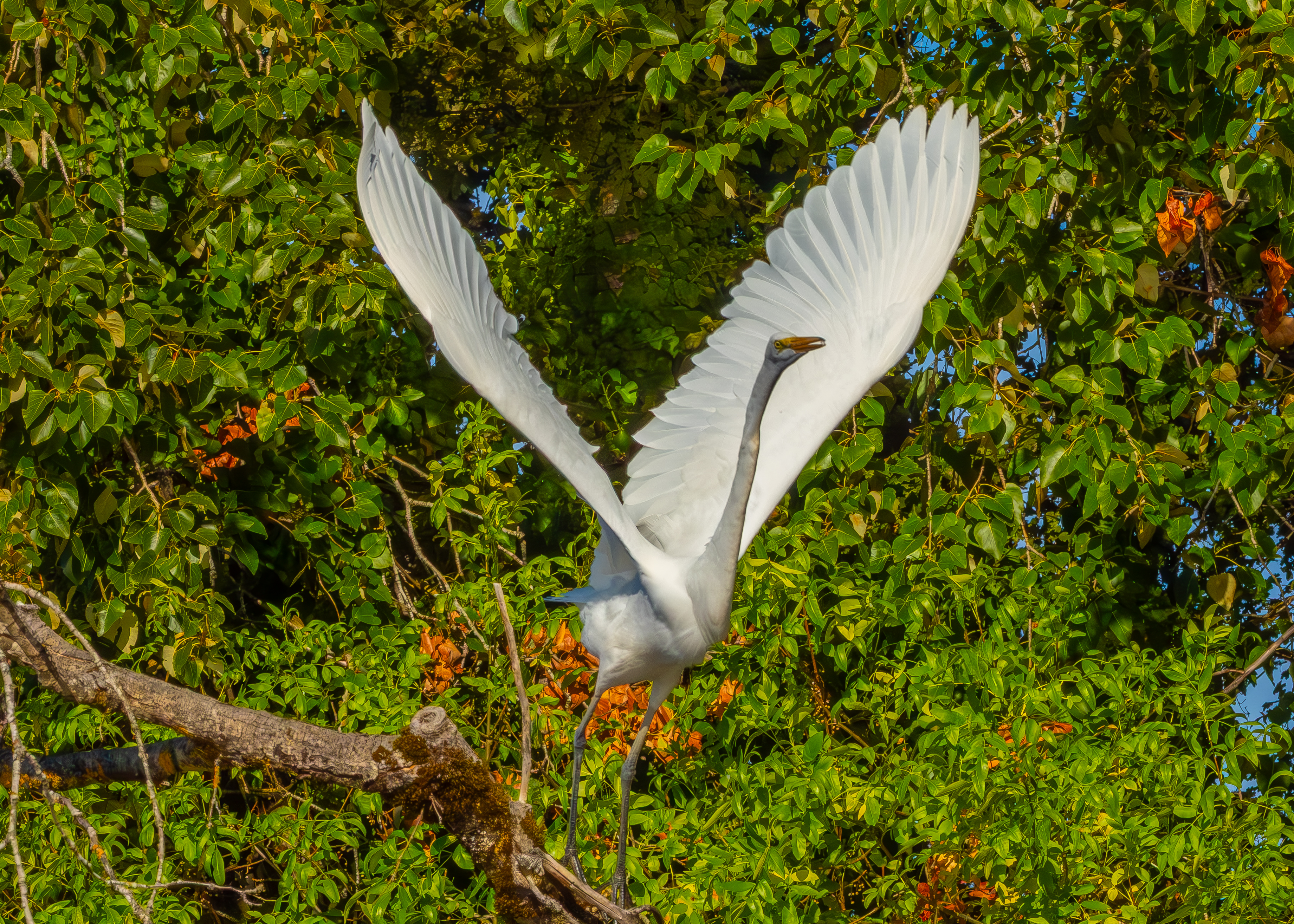
The moment was both intimate and humbling. Up close, a great egret reveals a kind of elegant austerity: long neck, razor bill, that perfection of white against the autumn palette. The bird tolerated my presence with a calm that let me make several frames — images that now remind me how quiet patience can yield a stunning reward.
Scientific name: Ardea alba.
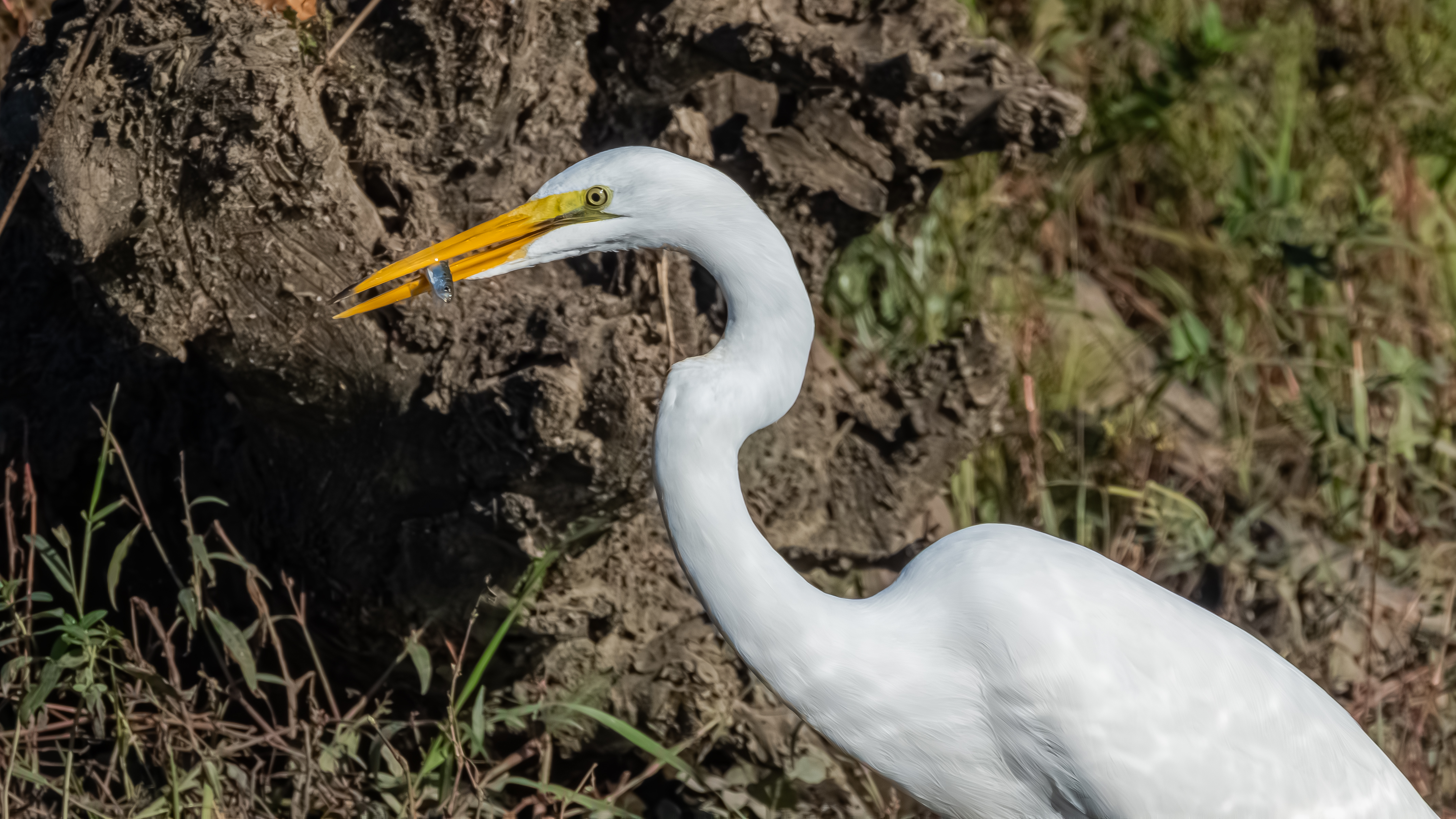
– Size: large heron — roughly 80–104 cm (31–41 in) long with a wingspan around 130–170 cm (51–67 in).
– Colors/marks: all-white plumage, long S-shaped neck, long yellow bill, black legs and feet. Breeding adults show long, lacy plumes (aigrettes) on the back and often greenish lores (skin between bill and eye) during courtship.
Physical characteristics
– Elegant, long-necked silhouette ideal for wading and striking prey.
– Bill: strong, dagger-like for spearing fish and other prey; color typically yellow but may vary slightly with season/age.
– Legs/feet: black; snowy egret can be confused with great egret but is smaller and has yellow feet.
– Plumage: pure white year-round; breeding adults display delicate long plumes used in courtship.
Feeding behavior
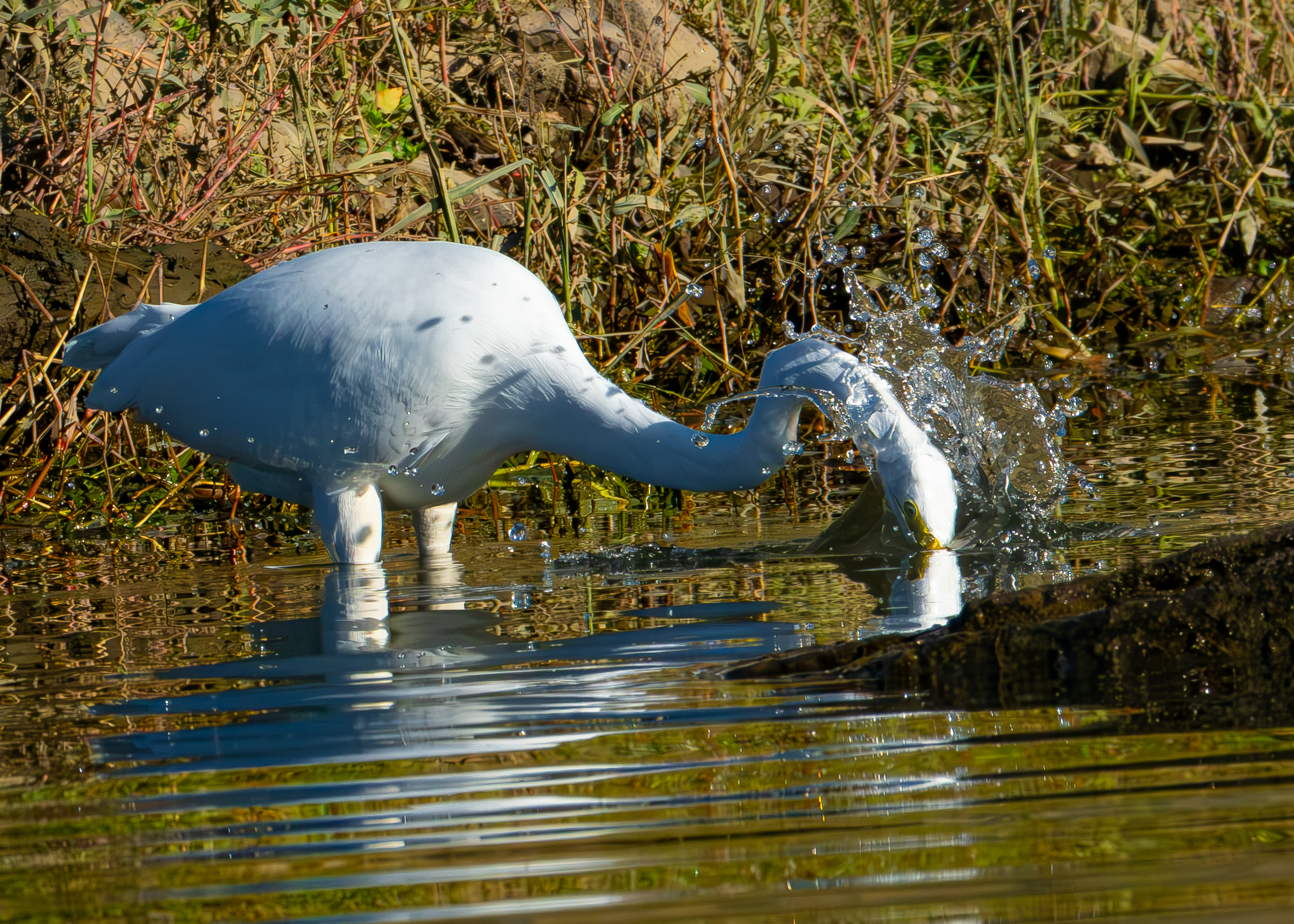
– Diet: mainly fish, but also amphibians, crustaceans, insects, small mammals, and occasionally reptiles.
– Techniques: versatile — stand-and-wait ambush, slow stalking through shallow water, rapid stabbing, and sometimes “foot-stirring” to flush prey.
– Timing: mostly daylight hours, especially early morning and late afternoon when prey is active.
Breeding and nesting
– Colonial nesters: often nest in mixed-species rookeries with other herons/egrets, sometimes on islands, in trees, shrubs, or reedbeds.
– Nest: platform of sticks; both parents participate in nest building and chick care.
– Clutch size: typically 2–6 eggs; incubation roughly 3–4 weeks, chicks altricial and reliant on parents for feeding.
– Courtship: displays include stretching the neck, puffing plumes, mutual preening, and sometimes bill clacking.
Social behavior and movement
– Feeding is commonly solitary (or spaced out) even when many birds are in the same area; nesting and roosting are more social.
– Migration: partial — northern populations often migrate south in winter, while birds in warmer regions may be resident year-round.
– Territoriality: can be territorial around prime feeding or nesting spots, especially during breeding.
Flight and posture
– Flight: slow, deep wingbeats; unlike many large herons that fly with neck retracted, great egrets fly with neck curved in an S shape and legs trailing behind.
– Typical stance: erect and statuesque when hunting or resting, with sudden explosive strikes when prey is detected.
Vocalizations
– Generally quiet compared with songbirds; calls are low croaks, harsh squawks, and bill-clapping used in social or alarm contexts.
Predators, threats, and conservation
– Natural predators: eggs and chicks are vulnerable to raccoons, large birds of prey, and gulls; adults have few natural predators.
– Human threats: habitat loss (wetland drainage), pollution (bioaccumulation of heavy metals), disturbance at nesting colonies, entanglement in fishing gear.
– Conservation status: currently listed as Least Concern (IUCN) after recovering from severe declines caused by plume hunting in the late 19th/early 20th century; still reliant on protected wetlands for long-term health.
Ethics and observation tips
– Keep distance during feeding and especially during the breeding season—disturbance can cause nest abandonment.
– Approach slowly and quietly (your kayak approach is ideal), avoid cutting off escape routes to water, and limit time spent at close range.
– Use a telephoto lens and allow the bird to behave naturally for the best images.
Interesting facts
– The great egret’s ornate plumes once made it a target of hideous plume-hunting; that crisis helped spur the bird-protection movement (Audubon and laws banning plume trade).
– Their elegant, patient hunting behavior and striking white plumage make them a favorite subject for wildlife photographers and birdwatchers.
🌿 Enjoying these posts?
This blog is free for everyone — and readers who become members help keep it going. Memberships start at \$3/month and include 20–30% off everything in the print shop.
Become a Member