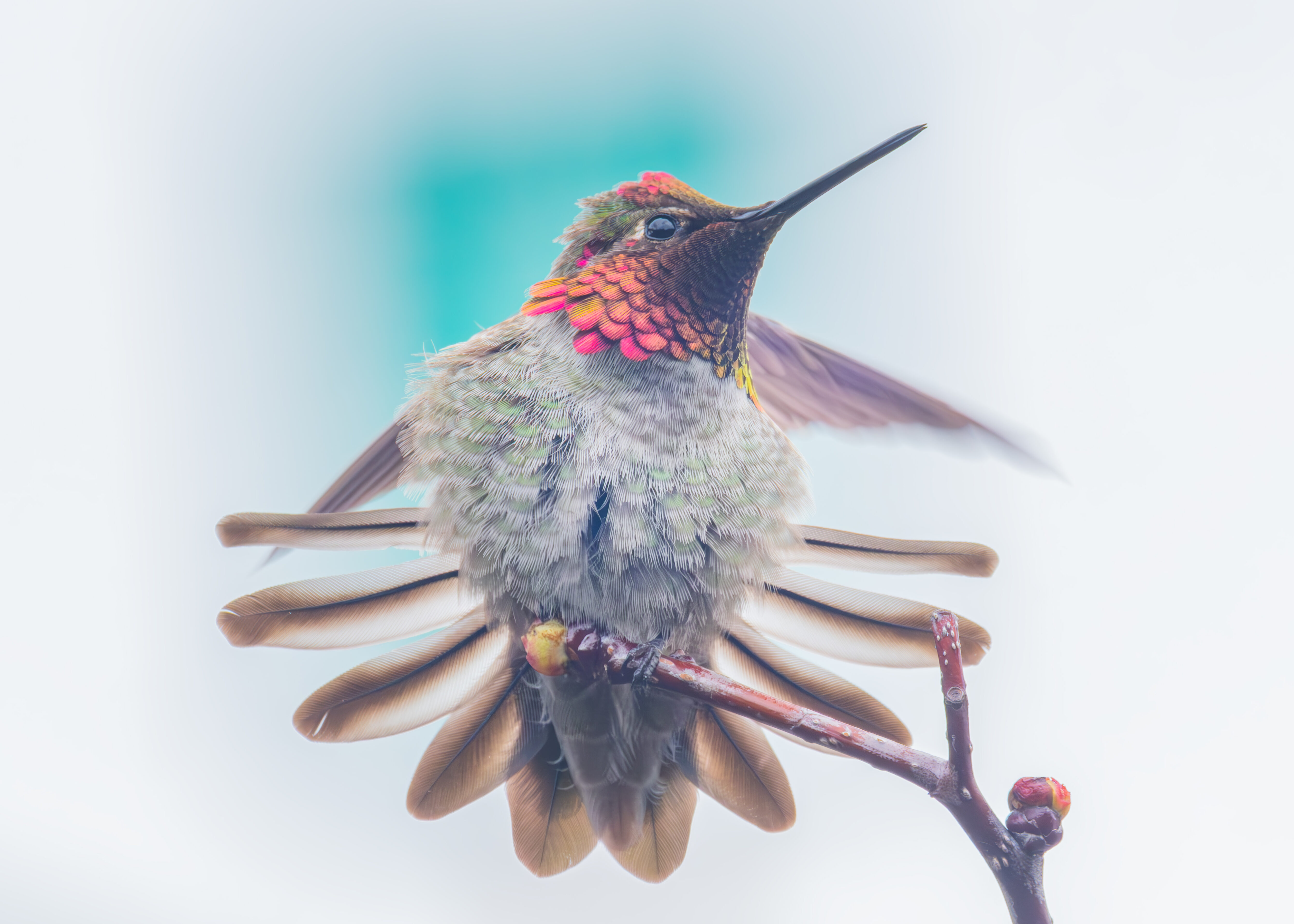
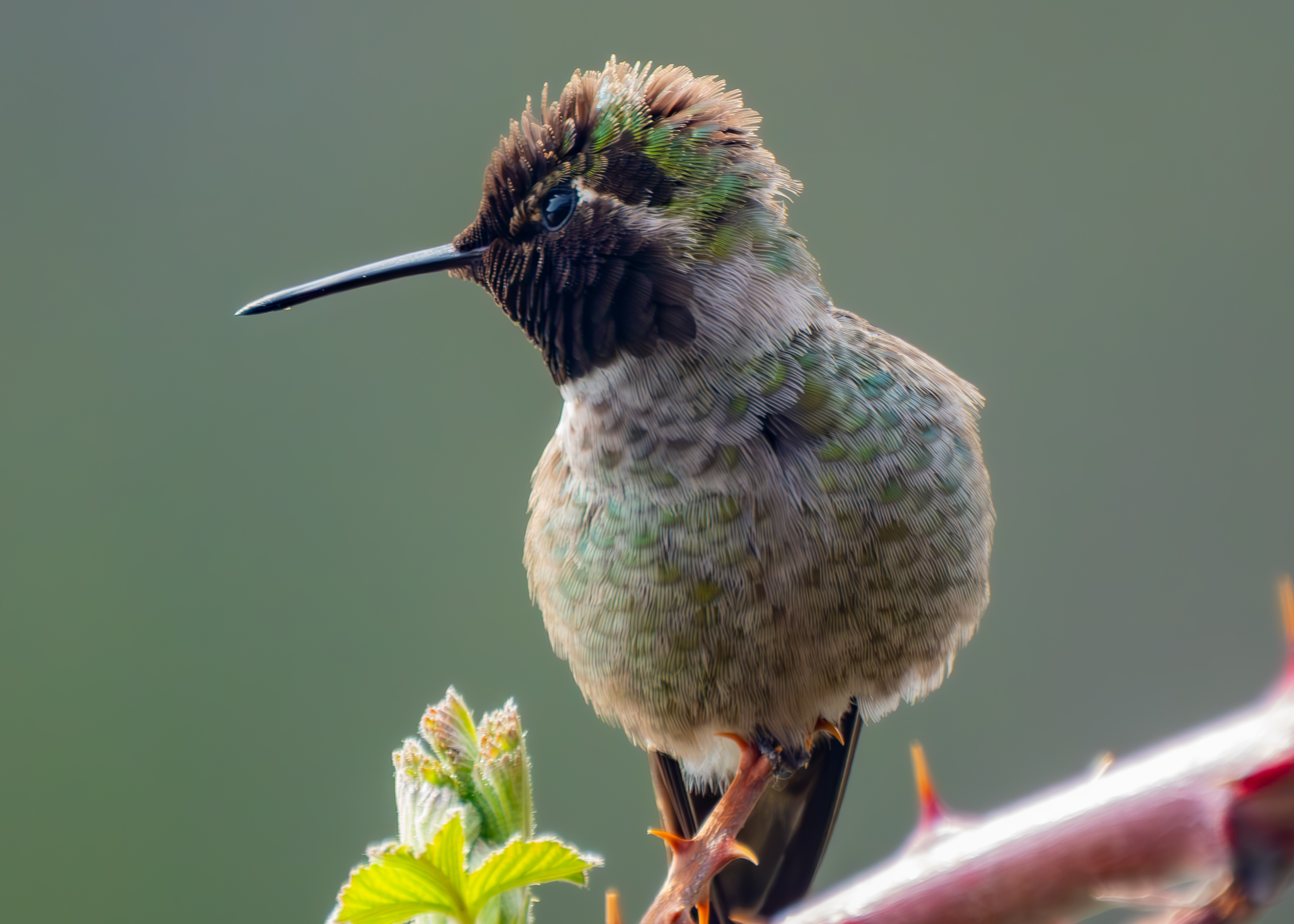
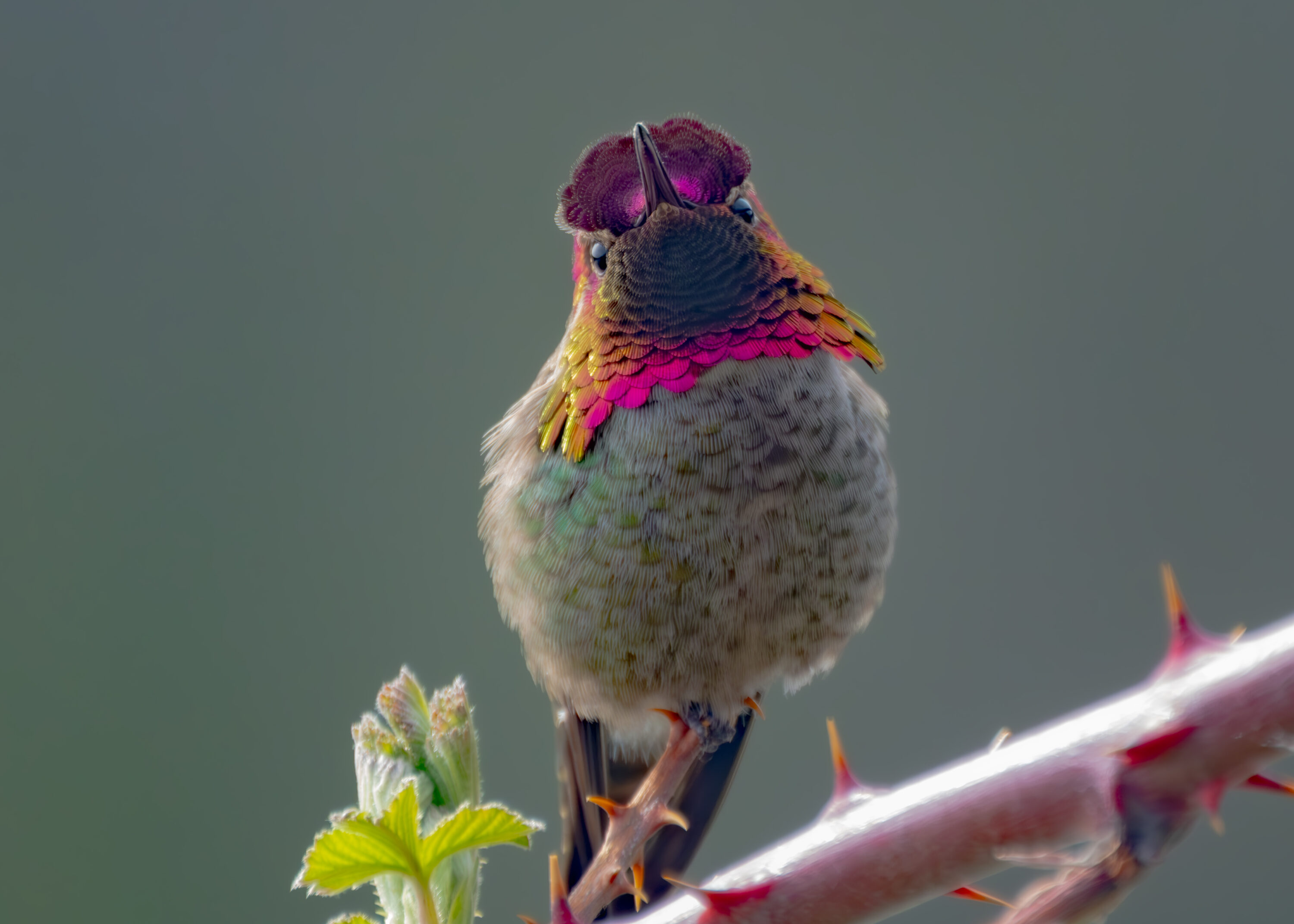
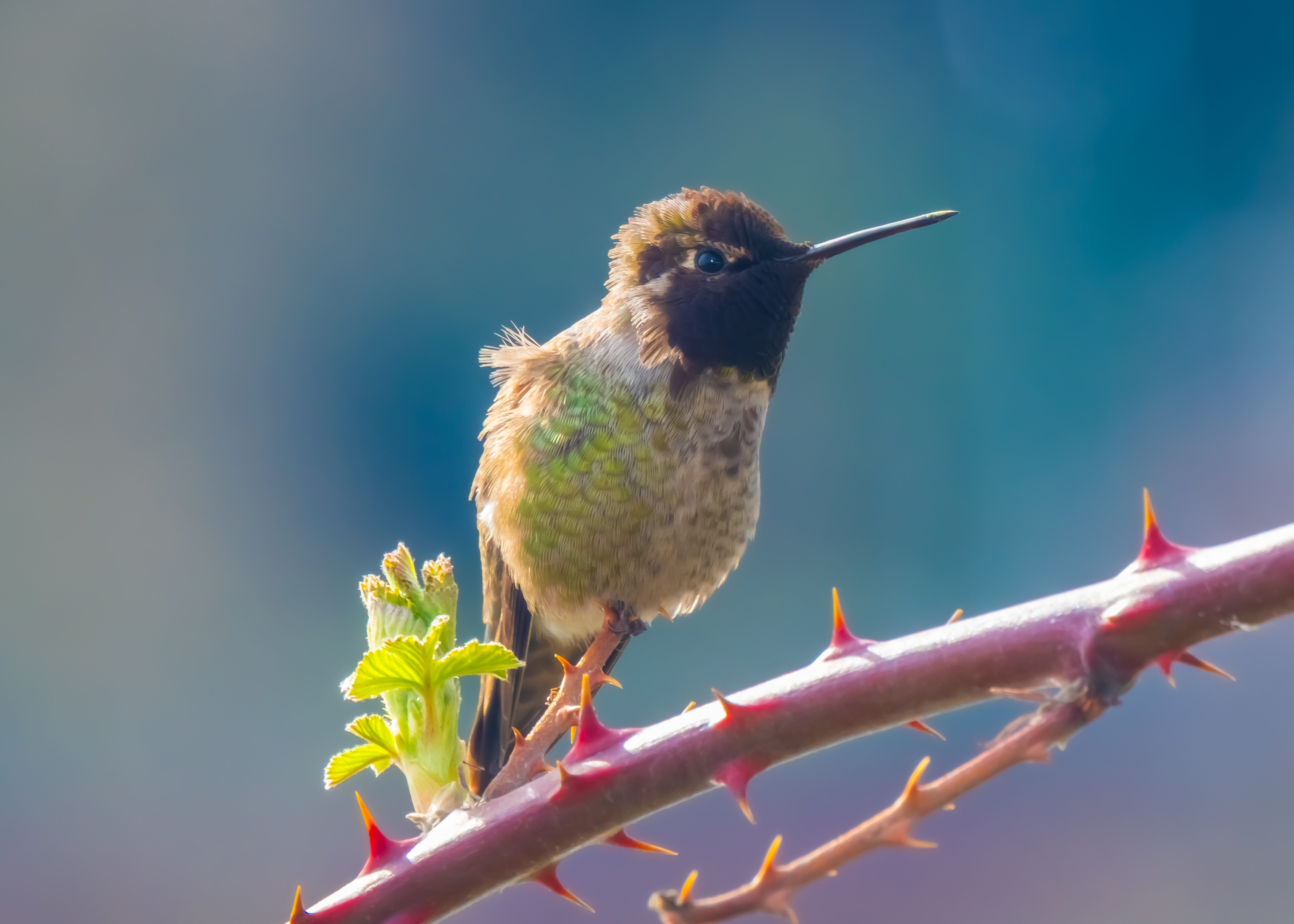
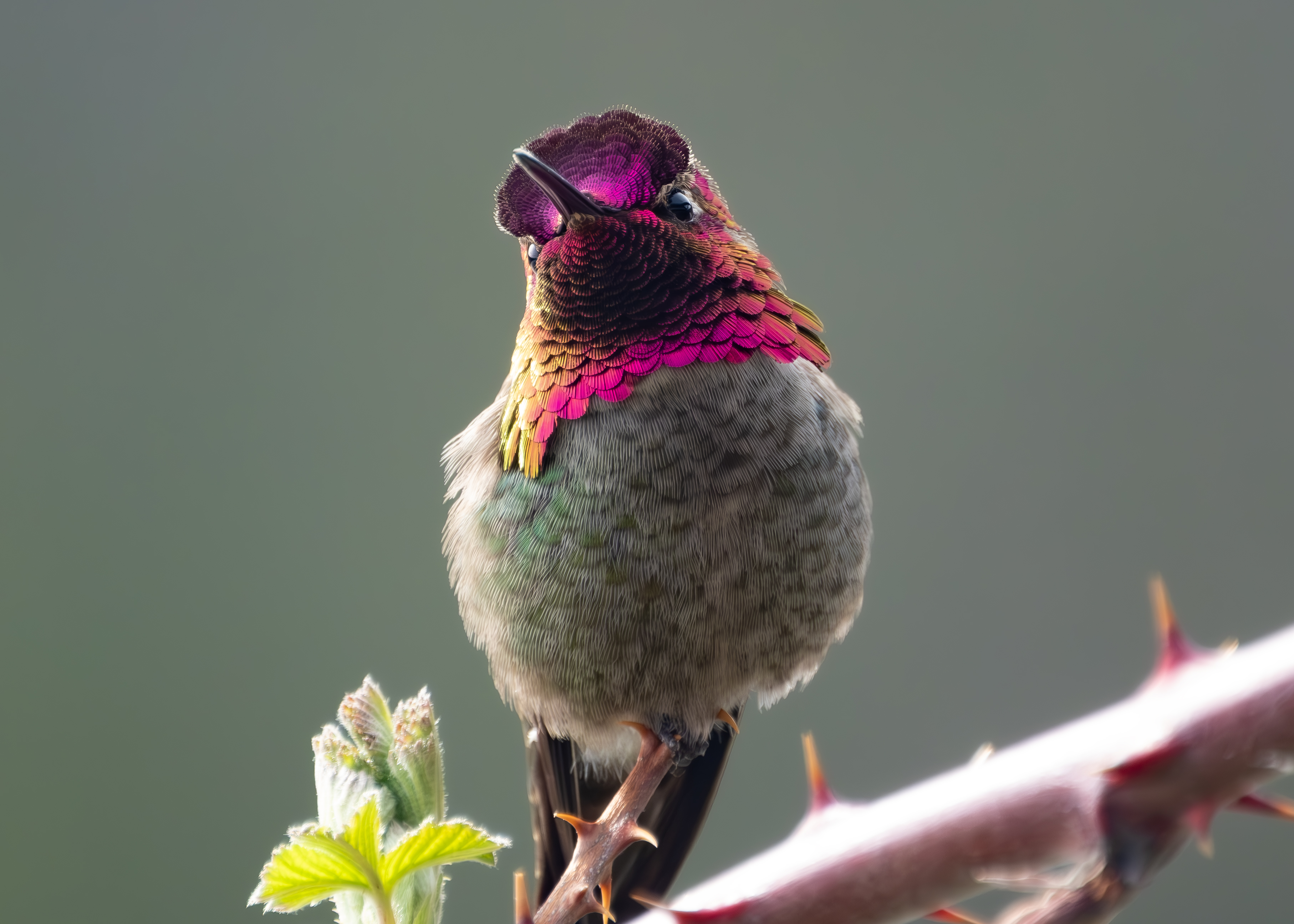
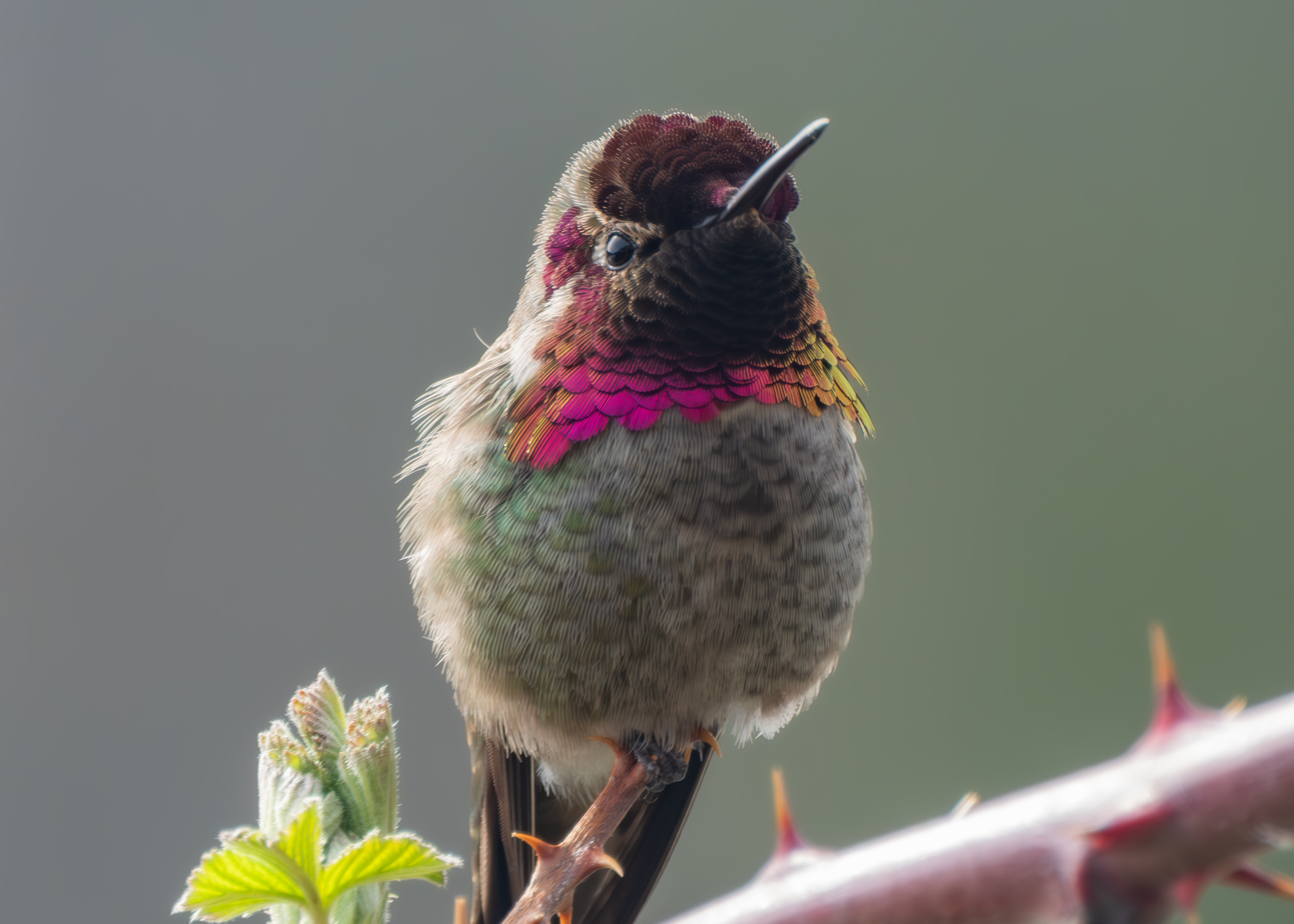
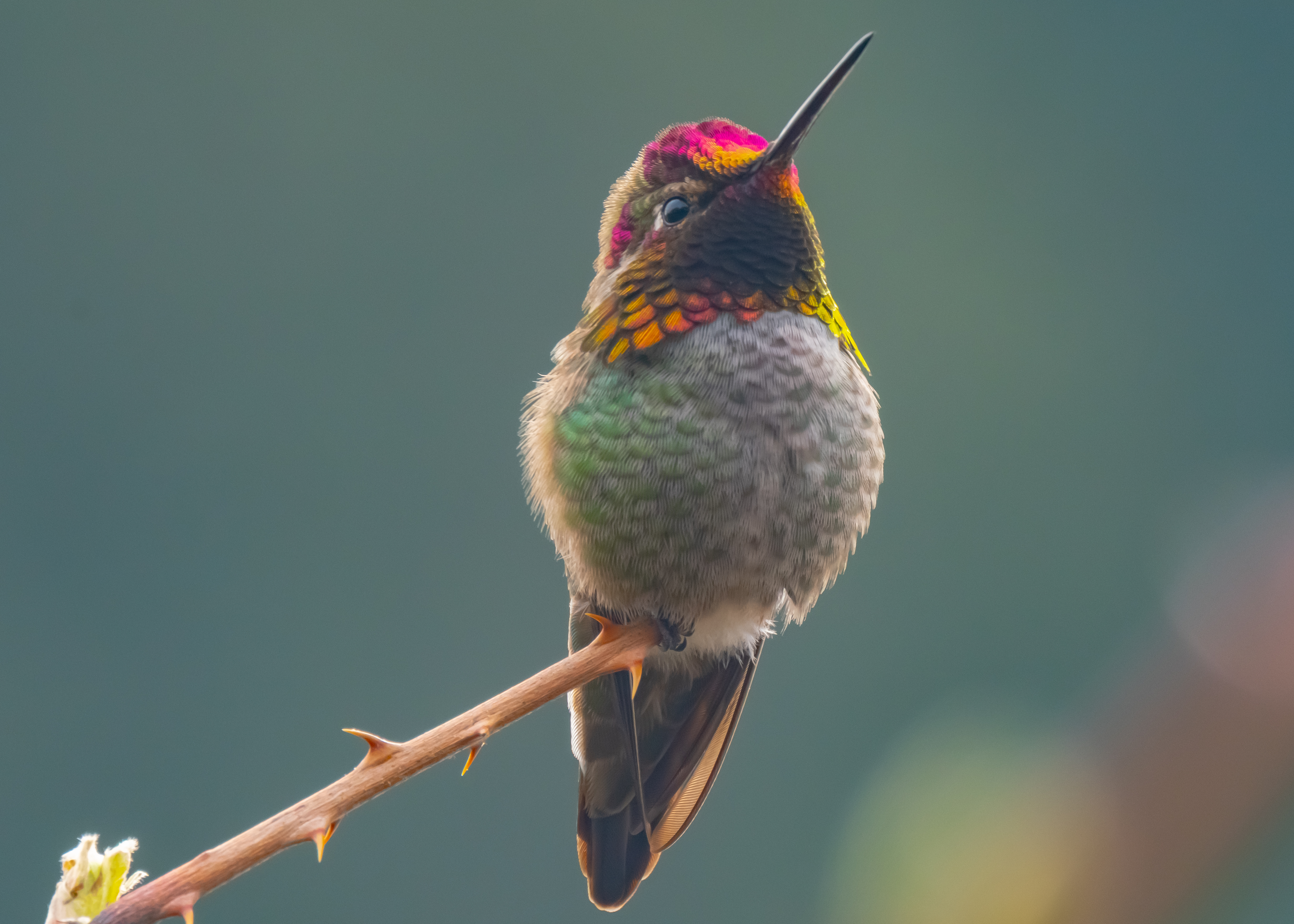
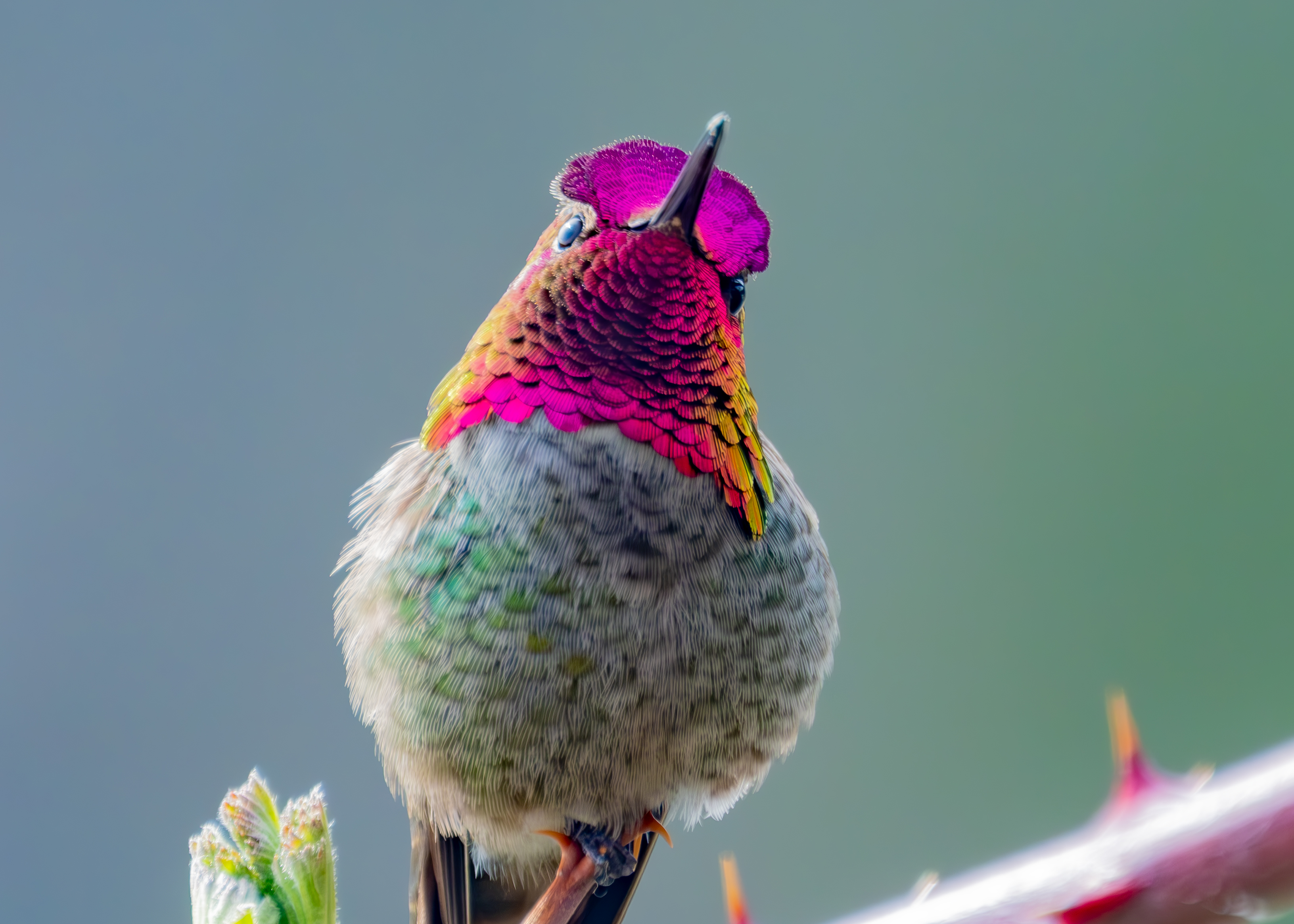
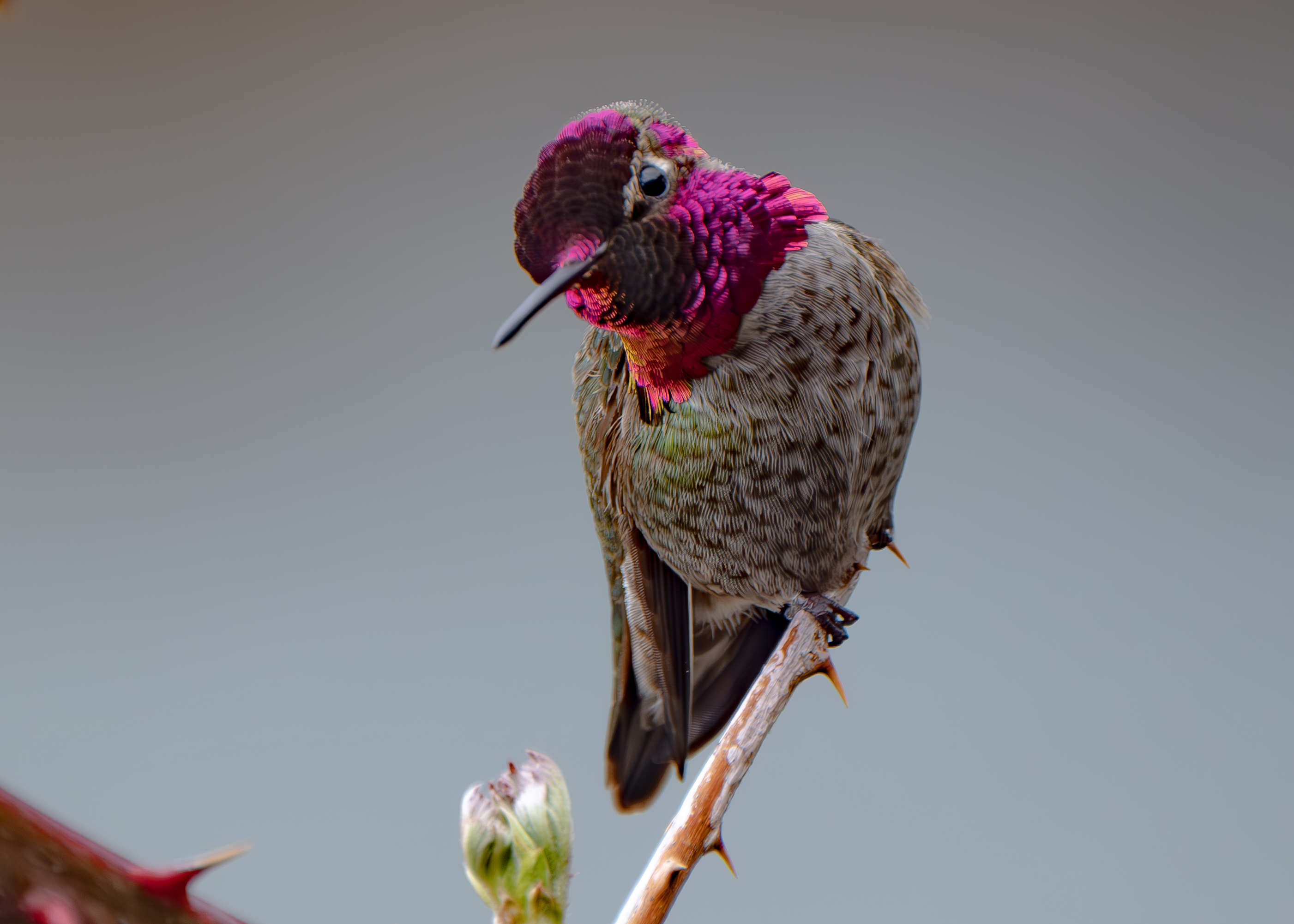
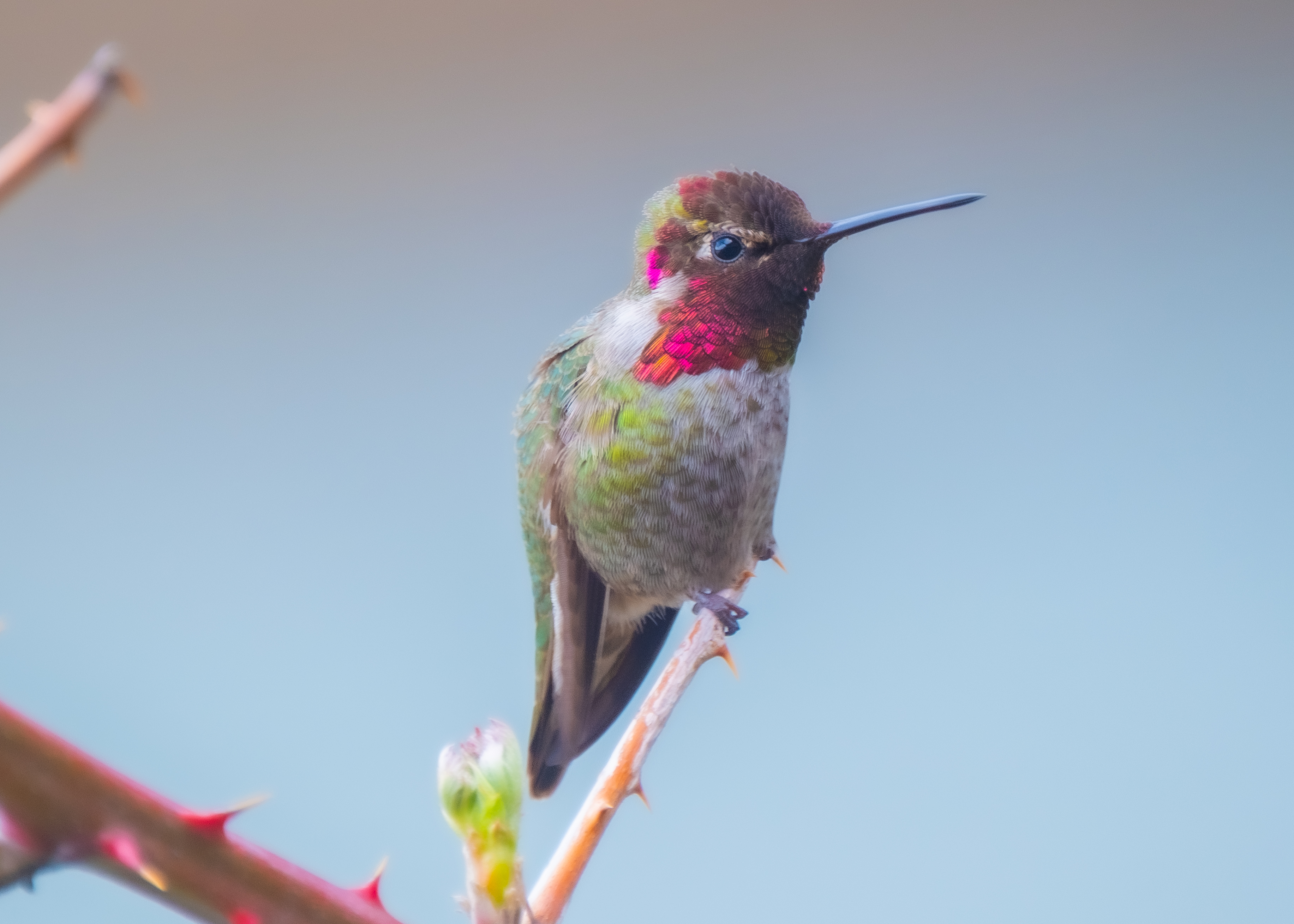
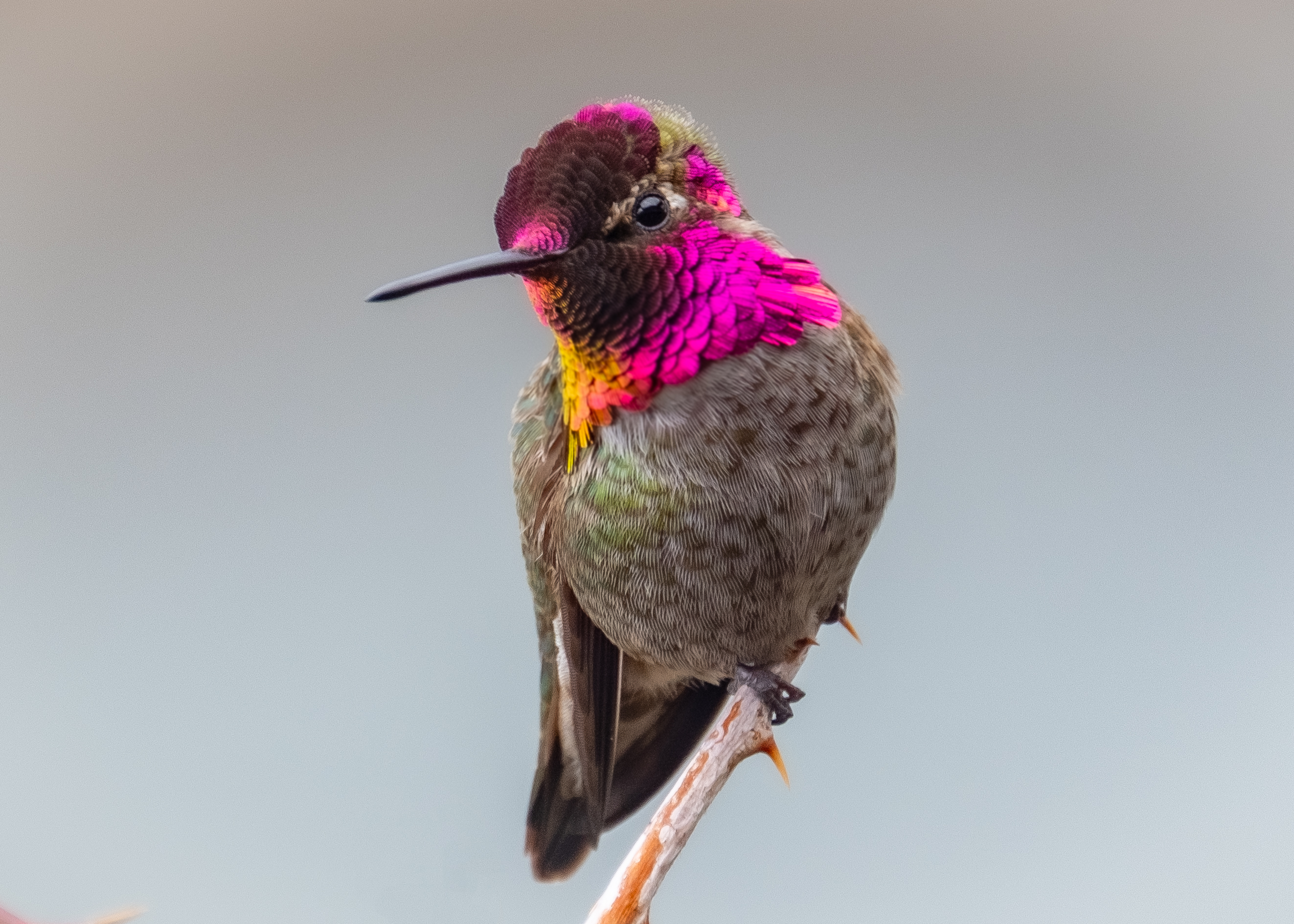
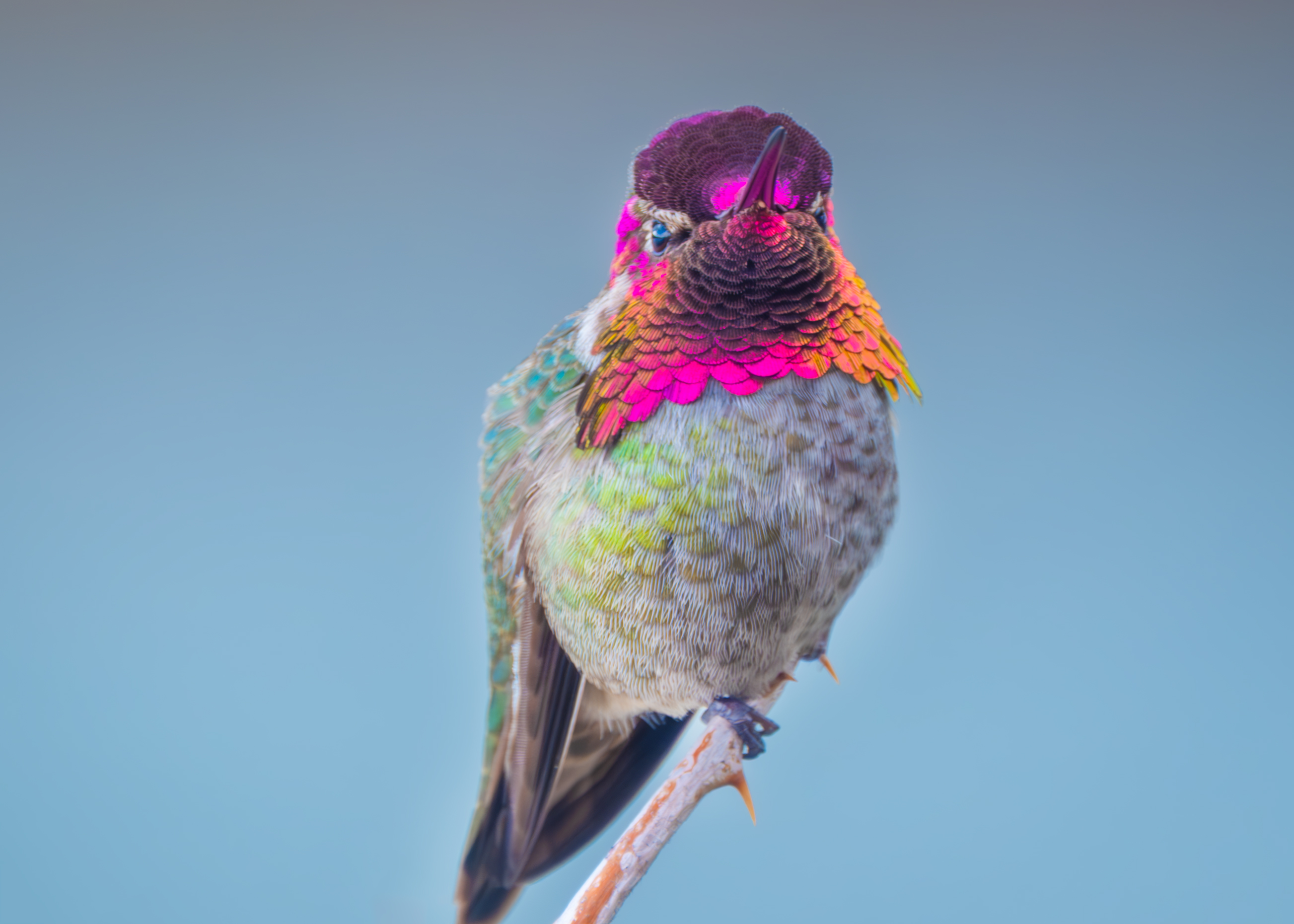
The natural world is replete with wonders that both dazzle the senses and challenge our understanding of physics and biology. Among these marvels is the male Anna’s hummingbird (Calypte anna), a creature whose vibrant plumage and astonishing speed make it a subject of fascination for ornithologists and laypersons alike. This essay explores the dual allure of the male Anna’s hummingbird, examining both its iridescent coloration and its extraordinary velocity, which positions it as one of the fastest birds on the planet.
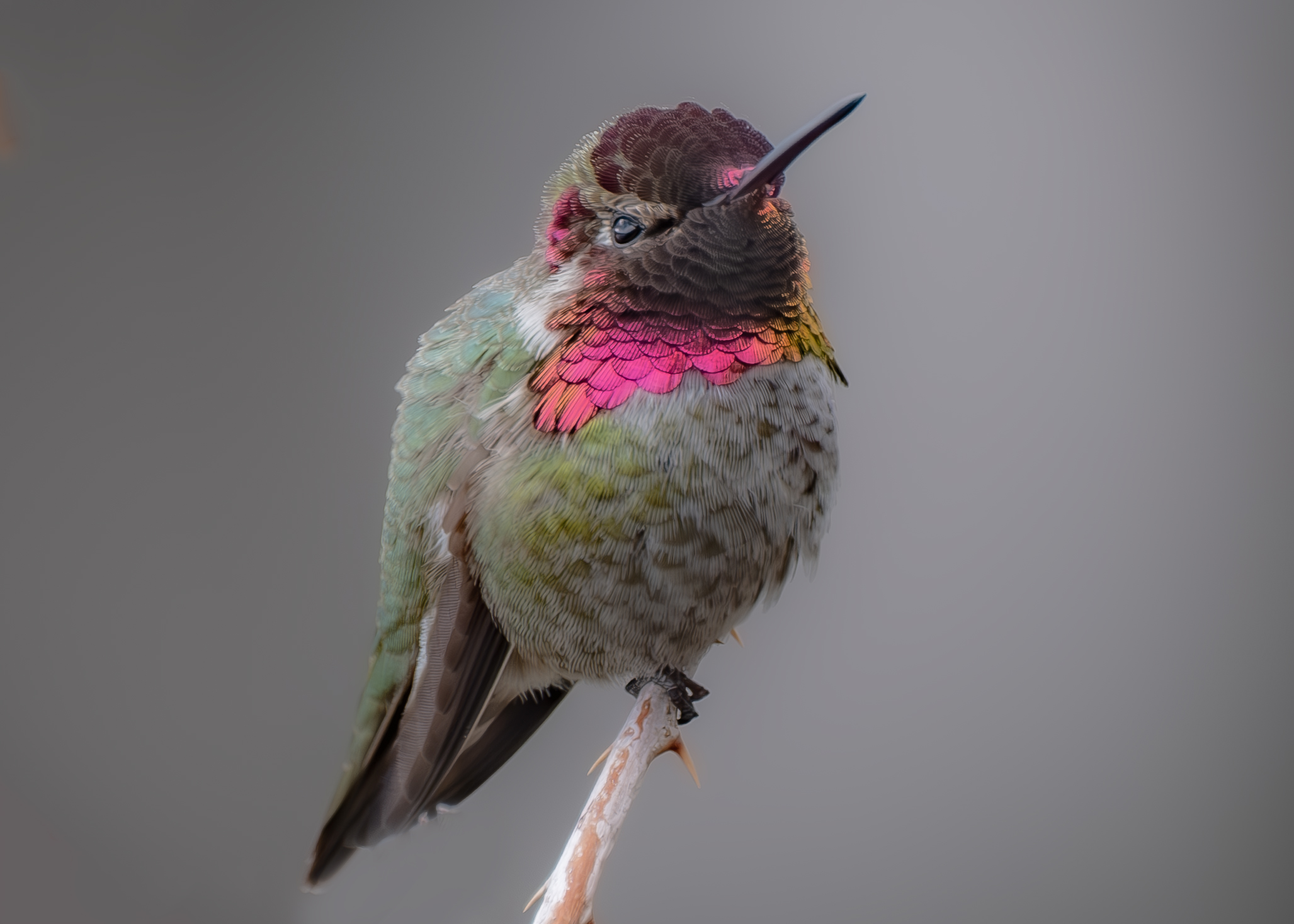
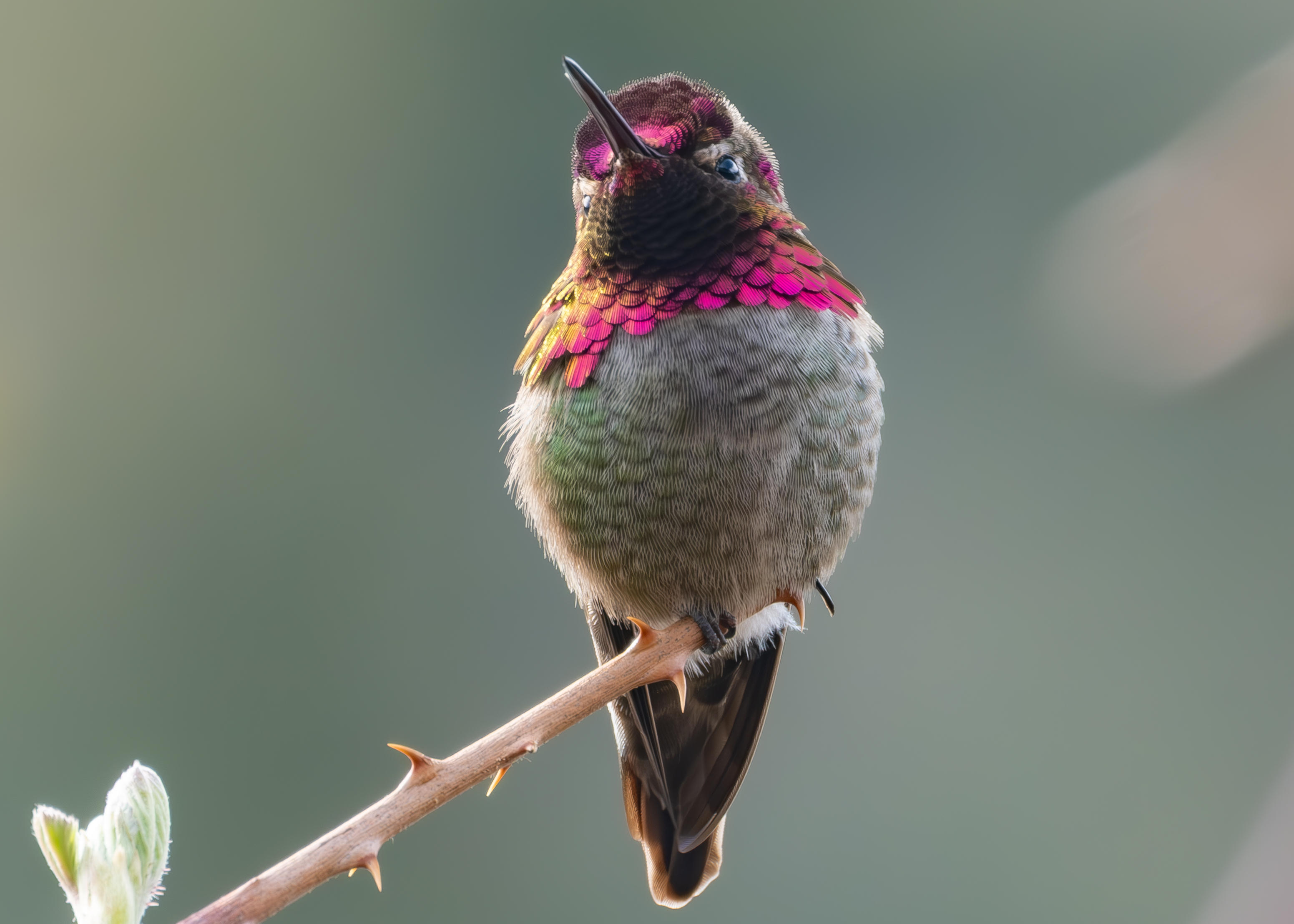
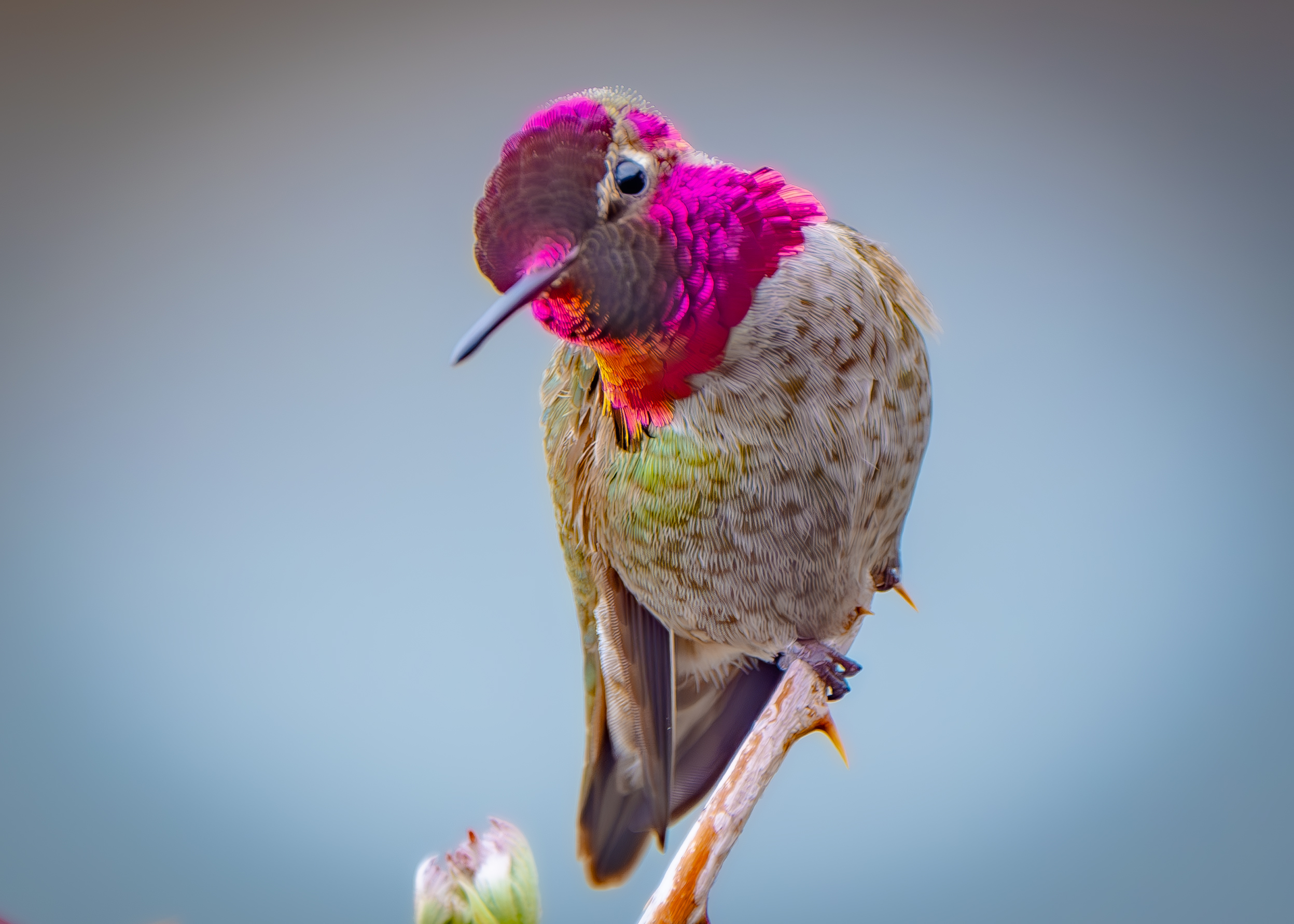
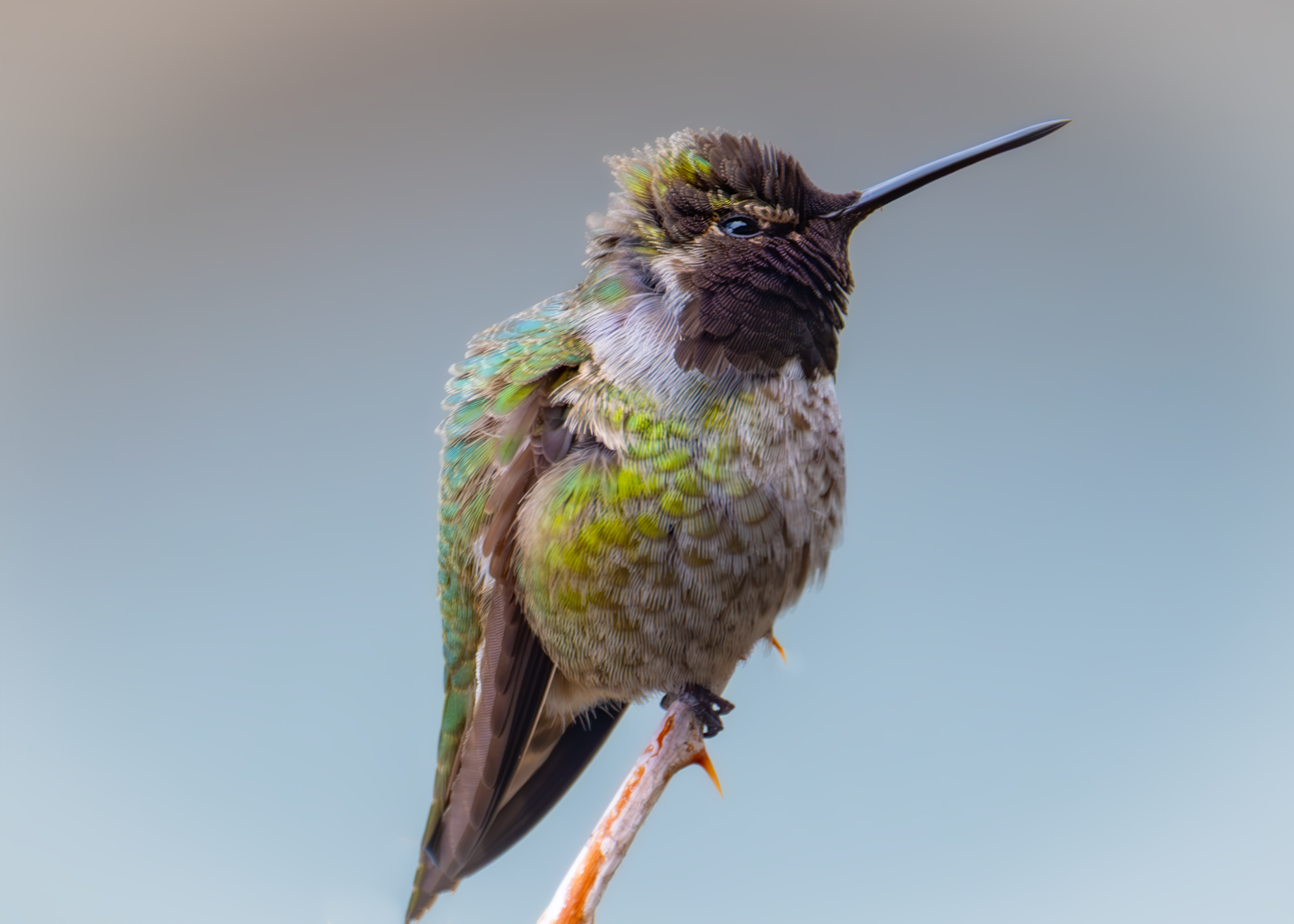
First described by René Primevère Lesson in 1829, Anna’s hummingbird has since captivated observers with its shimmering feathers. The male of the species boasts a spectacular array of colors, most notably the brilliant magenta crown and throat, known as a gorget. This iridescence is not merely a product of pigmentation but rather a result of microscopic platelets in the feathers that refract light, creating a dazzling display that changes with the angle of view. Such vibrant coloration plays a crucial role in mating rituals, where visual displays serve to attract females and deter rivals. The gorget’s shifting hues are a testament to the intricate interplay between biology and physics, where structural coloration has evolved as a means of communication and competition.
Beyond its aesthetic appeal, the male Anna’s hummingbird is also a master of speed. When considering velocity relative to body size, it is the fastest bird in the world. During courtship displays, the male performs a dramatic dive, reaching speeds of up to 61 miles per hour. This dive results in a velocity of approximately 385 body lengths per second, a feat unmatched by any other bird when measured in this manner. This remarkable speed is achieved through a combination of anatomical and physiological adaptations. The hummingbird’s wings beat at an astonishing rate of up to 80 beats per second, allowing for precise control and rapid acceleration. Moreover, its robust cardiovascular system supports the intense metabolic demands of such high-speed maneuvers.
While the Peregrine falcon (Falco peregrinus) holds the record for the highest speed in a stoop, reaching over 240 miles per hour, it is the Anna’s hummingbird that exemplifies peak performance in terms of body length per second. This distinction highlights the diverse strategies employed by avian species to optimize flight, from the falcon’s aerodynamic build and powerful musculature to the hummingbird’s unique wing structure and energy-efficient hovering capabilities.
The evolutionary pressures that have shaped the male Anna’s hummingbird’s speed and coloration are deeply intertwined. In the competitive world of hummingbirds, speed serves not only as a means of evading predators but also as a critical component of reproductive success. The ability to perform rapid aerial displays can influence mate selection, as females often choose males based on the vigor and skill demonstrated in these performances. Consequently, the hummingbird’s velocity is as much a factor of sexual selection as its vivid plumage.
In conclusion, the male Anna’s hummingbird stands as a testament to the marvels of natural selection, where beauty and speed converge in a single, extraordinary creature. Its vibrant colors captivate the eye, while its unparalleled velocity challenges our understanding of avian capabilities. By studying these remarkable attributes, we gain insight not only into the life of this particular bird but also into the broader dynamics of evolution, where form and function coalesce in the pursuit of survival and reproduction. The Anna’s hummingbird, with its dazzling display and breathtaking speed, remains a symbol of nature’s boundless ingenuity.
💙 Enjoyed this? Pass it on.
Enjoying the free posts?
Every post on this blog is free and public — no paywall, no teaser. Membership is simply how it keeps going.
From $3/month you get 20–30% off everything in the print shop, member-only videos and photo sets, and free high-resolution downloads — and you help fund the wildlife photography, the conservation storytelling, and the WaveForge clean energy project.
This blog is free for everyone — and readers who become members help keep it going. Memberships start at \$3/month and include 20–30% off everything in the print shop.