Correction. I originally published this as my first merlin. It is not a merlin — it is a juvenile Cooper’s hawk. I have corrected the post below and left the mistake described rather than deleting it, because how I got it wrong is the useful part. Jump to what gives it away →
I had a thrilling morning at Oaks Bottom Wildlife Refuge and came home certain I had photographed a merlin — a small, fierce falcon I had never managed to see in about twelve years of walking this place.
It arrived like a flash: skimming low over the reeds and trees with fast, purposeful wingbeats, then perching briefly to scan for prey. I watched it for several minutes as it hunted across the marshy edges — a compact shape with quick, direct flight and very sharp attention. I felt equal parts luck and awe, and the bird was every bit as bold and acrobatic as I have described.
It was also a juvenile Cooper’s hawk, which is not a falcon at all.
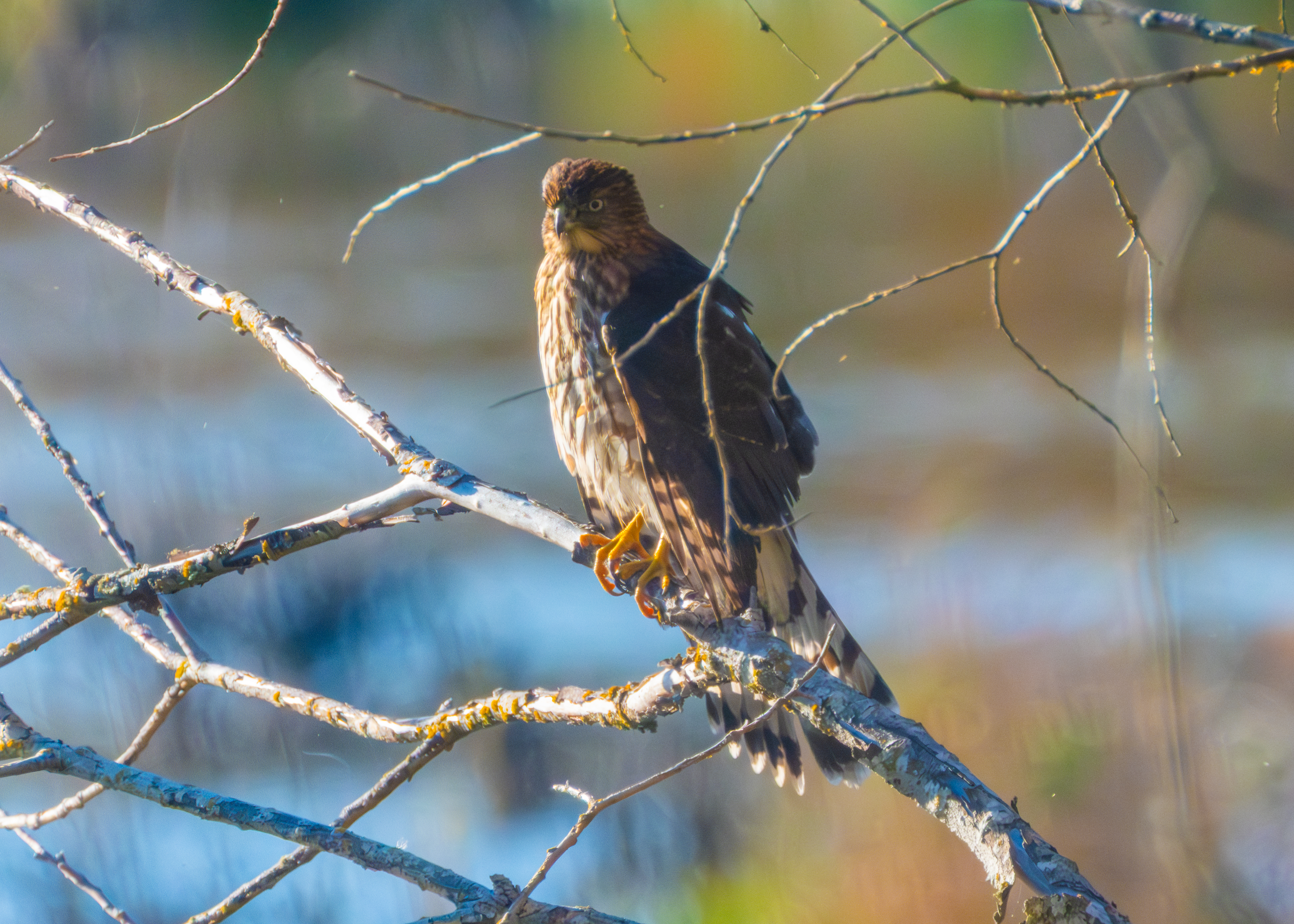
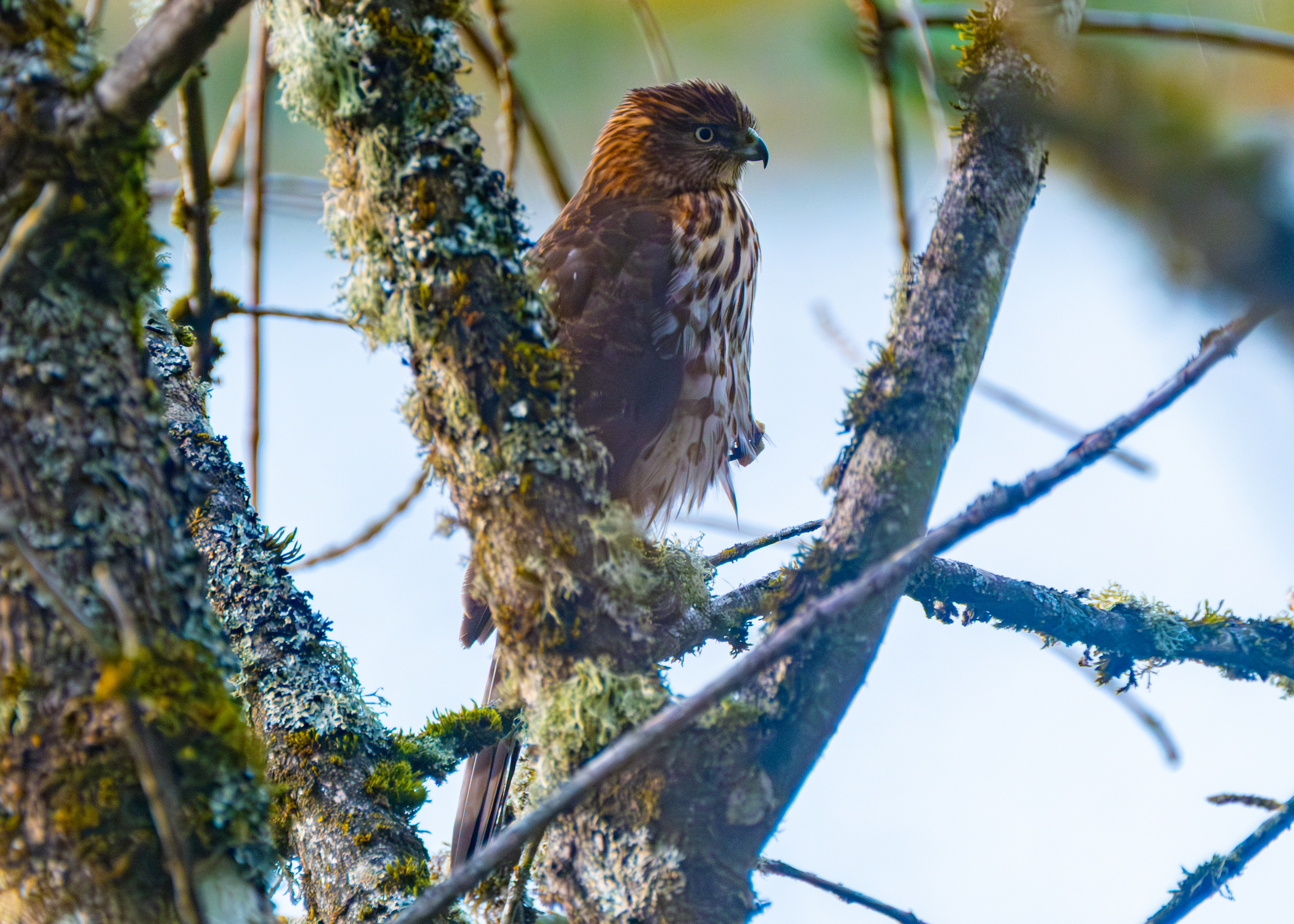
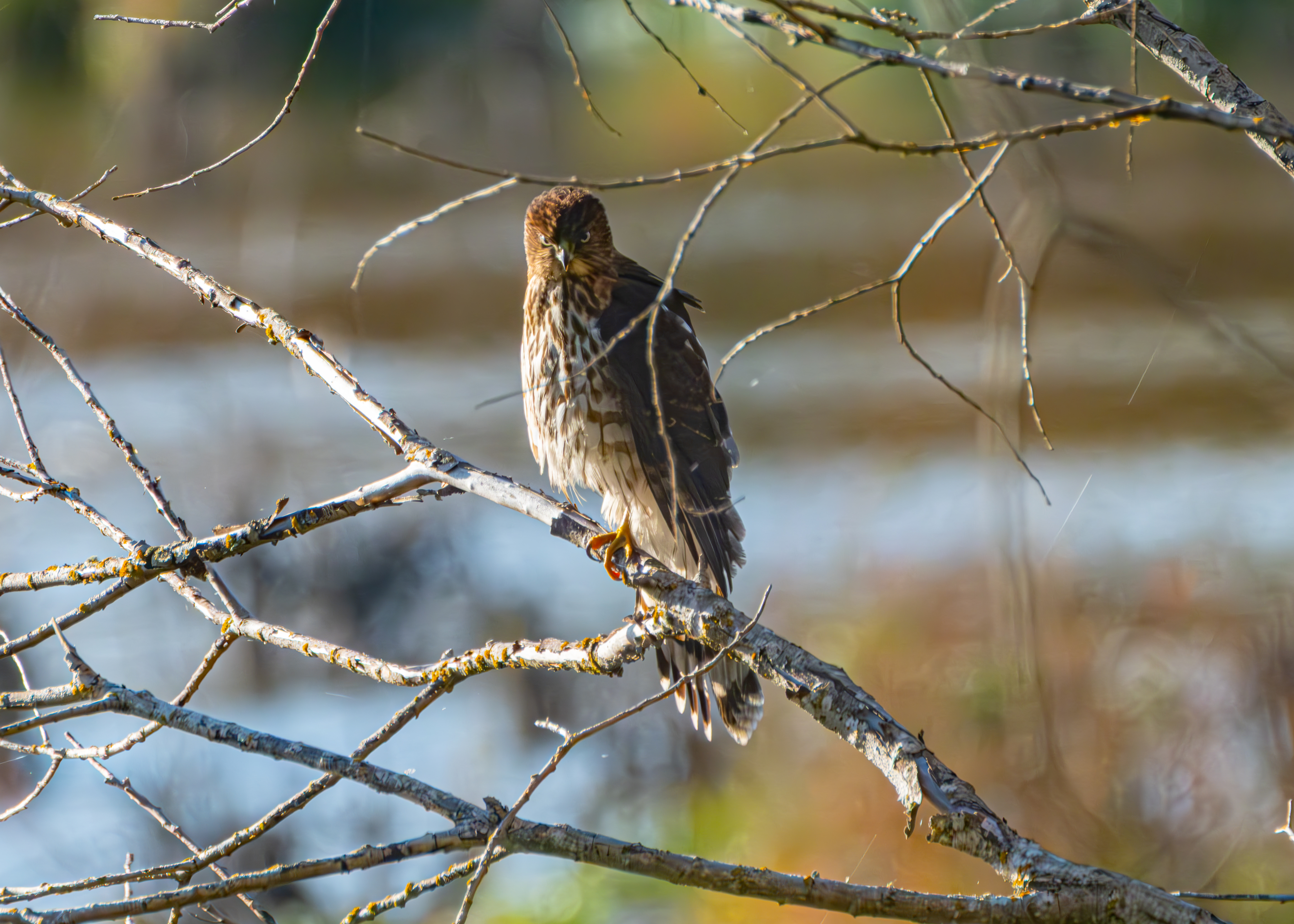
What Gives It Away
The eye. This settles it on its own. Every falcon — merlin, kestrel, peregrine — has a dark eye, dark enough to read as black. This bird has a pale yellow eye with an obvious dark pupil, which is the mark of a young accipiter.
No mustache. Falcons wear a dark malar stripe below the eye — bold on a peregrine, doubled on a kestrel, faint but present on a merlin. This face is clean.
The proportions. A falcon’s long pointed wings reach far down the tail. Here the wingtips stop about a third of the way along a very long, boldly banded tail — the short-wing, long-rudder build of a woodland hawk that ambushes and chases.
The bill. Falcons have a notch on the cutting edge of the upper bill, the tomial tooth, used to sever the spine of prey. This bill is a smooth, simple hook.
And one more, once you know to look: fan that tail out and the outer feathers are visibly shorter than the middle ones, giving a rounded tip with a broad pale band. That rounded tail is what separates a Cooper’s hawk from the very similar sharp-shinned, whose tail ends square.
Why I Am Leaving This Up
I could have quietly deleted this post. I would rather not, for two reasons.
The first is that misidentifying a bird is not a failure of attention. It is the ordinary condition of learning one. Anybody building an eye for this will get things wrong in public, and pretending otherwise makes the whole pursuit look more exclusive than it is.
The second is that the correction taught me far more than the original sighting did. I now know the hawk-versus-falcon split cold, and I will never again look at a raptor without checking the eye color first. That is worth more than a merlin on a list. If you want the full version of that distinction, it is in The Hawks of Portland — falcons, as it turns out, are not close relatives of hawks at all, but nearer to parrots and songbirds. Two different lineages that arrived at a similar shape by solving a similar problem.
The bird itself is still an excellent sighting. A young Cooper’s hawk hunting the marsh edge at Oaks Bottom is exactly the sort of thing I come here for, and everything I wrote about how it moved was accurate — I simply had the name wrong.
The merlin, meanwhile, remains on the list. Twelve years and counting.
🌿 Enjoying these posts?
This blog is free for everyone — and readers who become members help keep it going. Memberships start at \$3/month and include 20–30% off everything in the print shop.
Become a Member