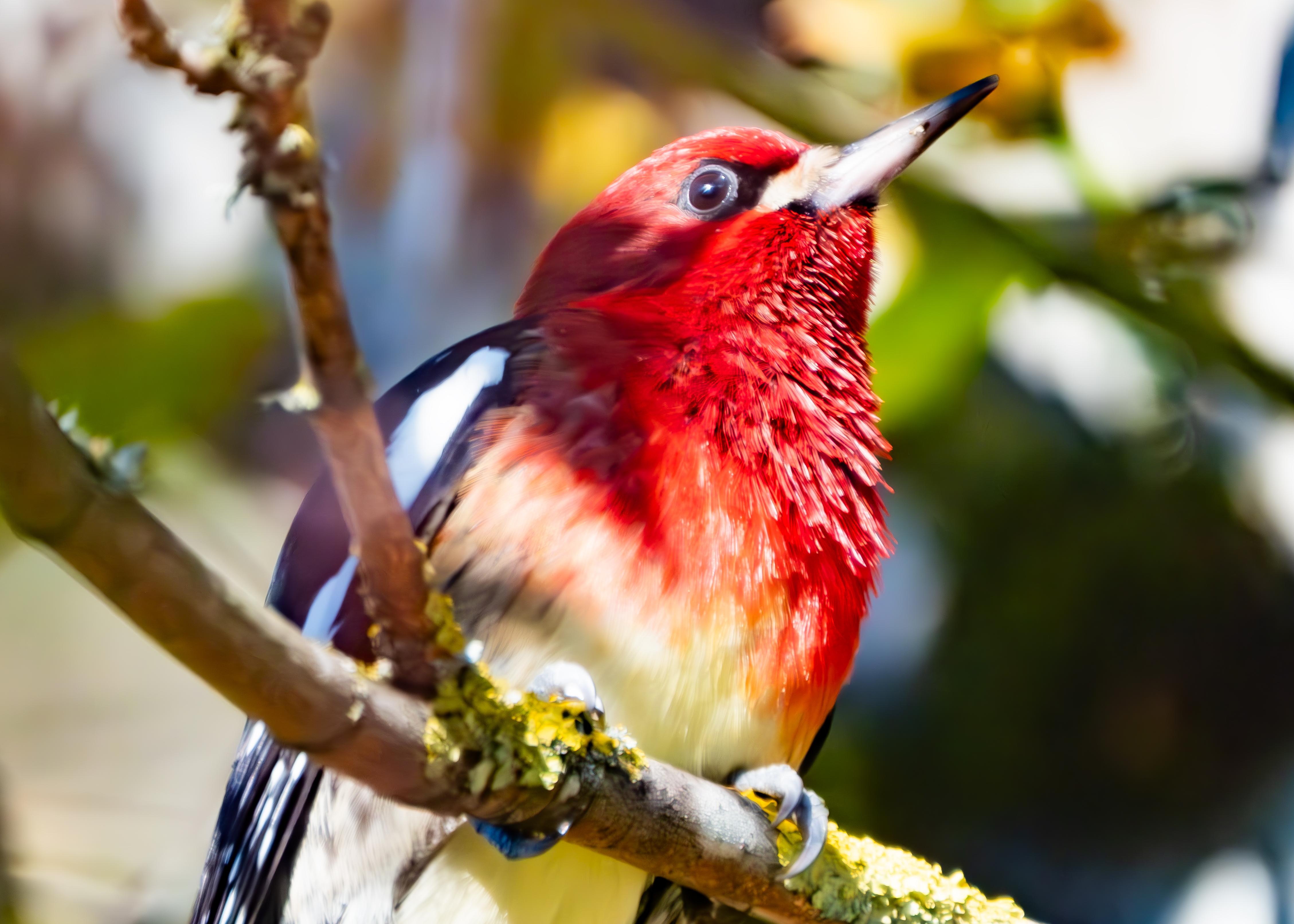
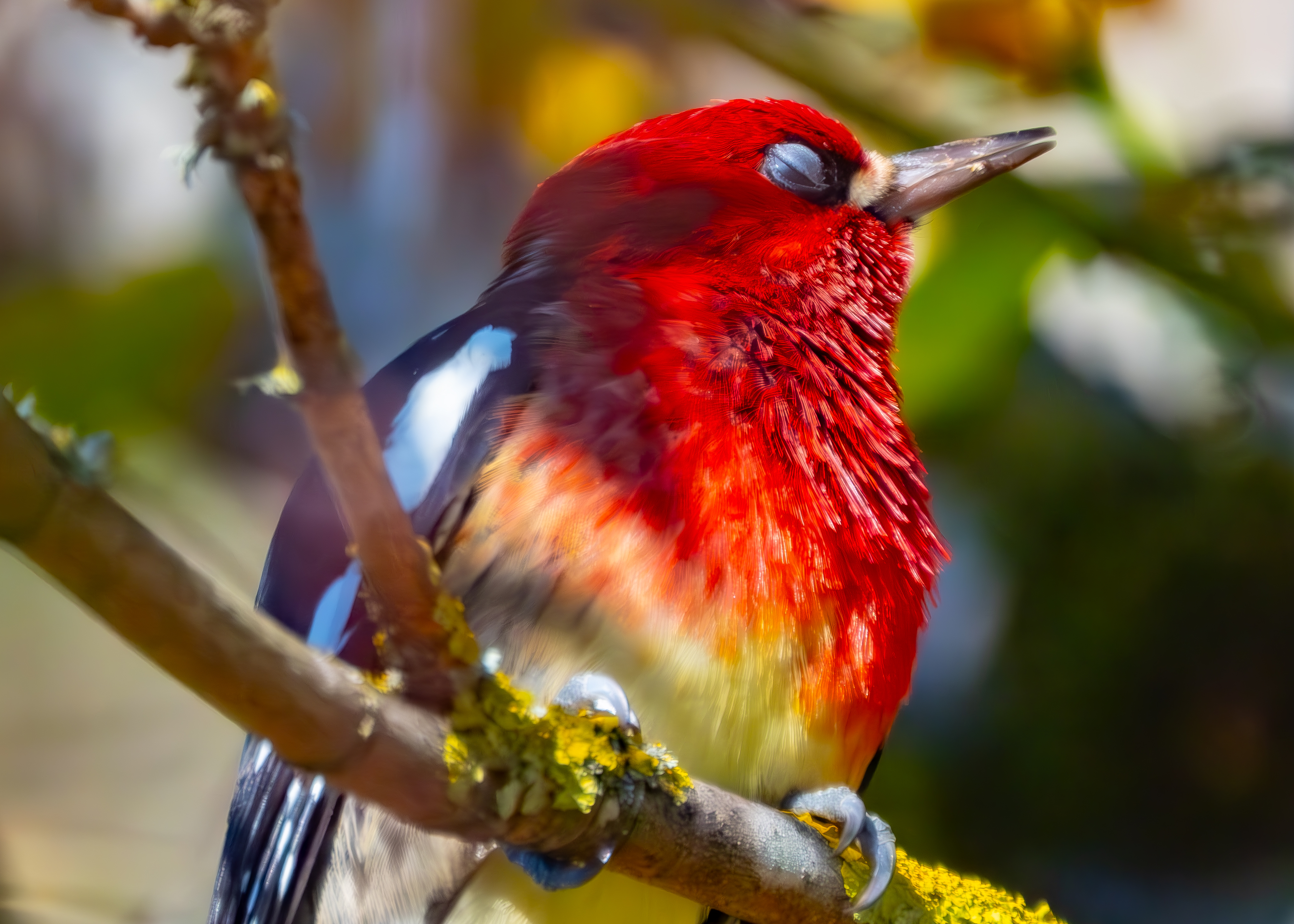
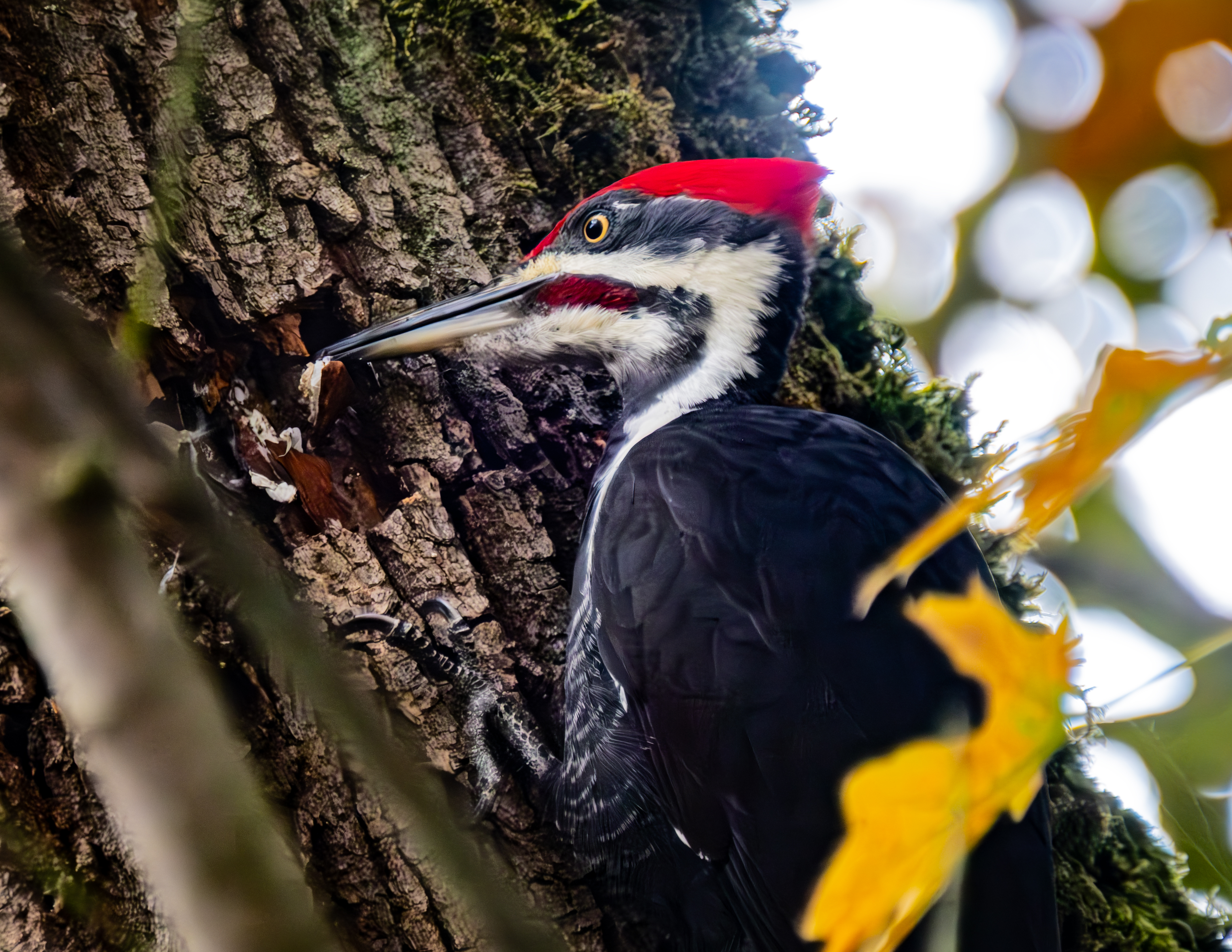
On a recent visit to Oaks Bottom, I had the good fortune to photograph four striking woodpecker species: the pileated woodpecker, the Downy woodpecker, the northern flicker, and the red‑breasted sapsucker. Each bird showed distinct behavior and markings, and I’ve collected my favorite images below along with short ID notes and a few tips for other photographers and birders.
Pileated Woodpecker (Dryocopus pileatus): The largest of the group — dramatic black body, long neck, and a bright red crest. Look and listen for loud, resonant drumming and deep, ringing calls. They excavate large, rectangular holes in dead trees; great subject for showing powerful bill and tree cavities.
Downy Woodpecker (Picoides pubescens): Small and compact, with a short bill. Males have a small red patch on the back of the head (females don’t). Often found on thin branches and twigs; their delicate foraging contrasts nicely with the pileated’s heavy chiseling.
Northern Flicker (Colaptes auratus): A woodpecker that forages on the ground as often as on trees; seen probing for ants and other insects. Marked with spots on the belly, barred back, and a conspicuous white rump in flight. Depending on region you may see yellow‑shafted or red‑shafted variants — check the wing/feather shafts for color.
–
Red‑breasted Sapsucker (Sphyrapicus ruber): Recognizable by a red head and breast and the characteristic neat rows of sap wells they drill in living trunks. Those wells attract insects and even other birds that sip the sap — excellent behavior to capture in a photo.
Where I found them & behavior to watch for
– Oak trunks and snags: pileated and downy both favor these for excavating or probing.
– Lower trunks and open ground: flickers often forage on the ground for ants — watch the periphery of open patches.
– Living trunks with sap wells: red‑breasted sapsuckers leave neat rows of wells; check nearby trees for sap and insect visitors.
A Gallery Featuring Some of these very beautiful woodpeckers.
Enjoying the free posts?
Every post on this blog is free and public — no paywall, no teaser. Membership is simply how it keeps going.
From $3/month you get 20–30% off everything in the print shop, member-only videos and photo sets, and free high-resolution downloads — and you help fund the wildlife photography, the conservation storytelling, and the WaveForge clean energy project.
Become a Member Already a Member? Log In🌿 Enjoying these posts?
This blog is free for everyone — and readers who become members help keep it going. Memberships start at \$3/month and include 20–30% off everything in the print shop.
Become a Member