There are mornings that remind you why you carry a camera. My recent walk into Oaks Bottom Wildlife Refuge turned into one of those days: a red-tailed hawk quartering the grassy entrance, a big river otter happily tearing into a fish, and both a great blue heron and an egret lifting off in that slow, elegant way birds do when air and light are just right. The light wasn’t dramatic — just clean morning sun — but the behavior and proximity of these animals made every frame count.
The entrance: hawk on the hunt
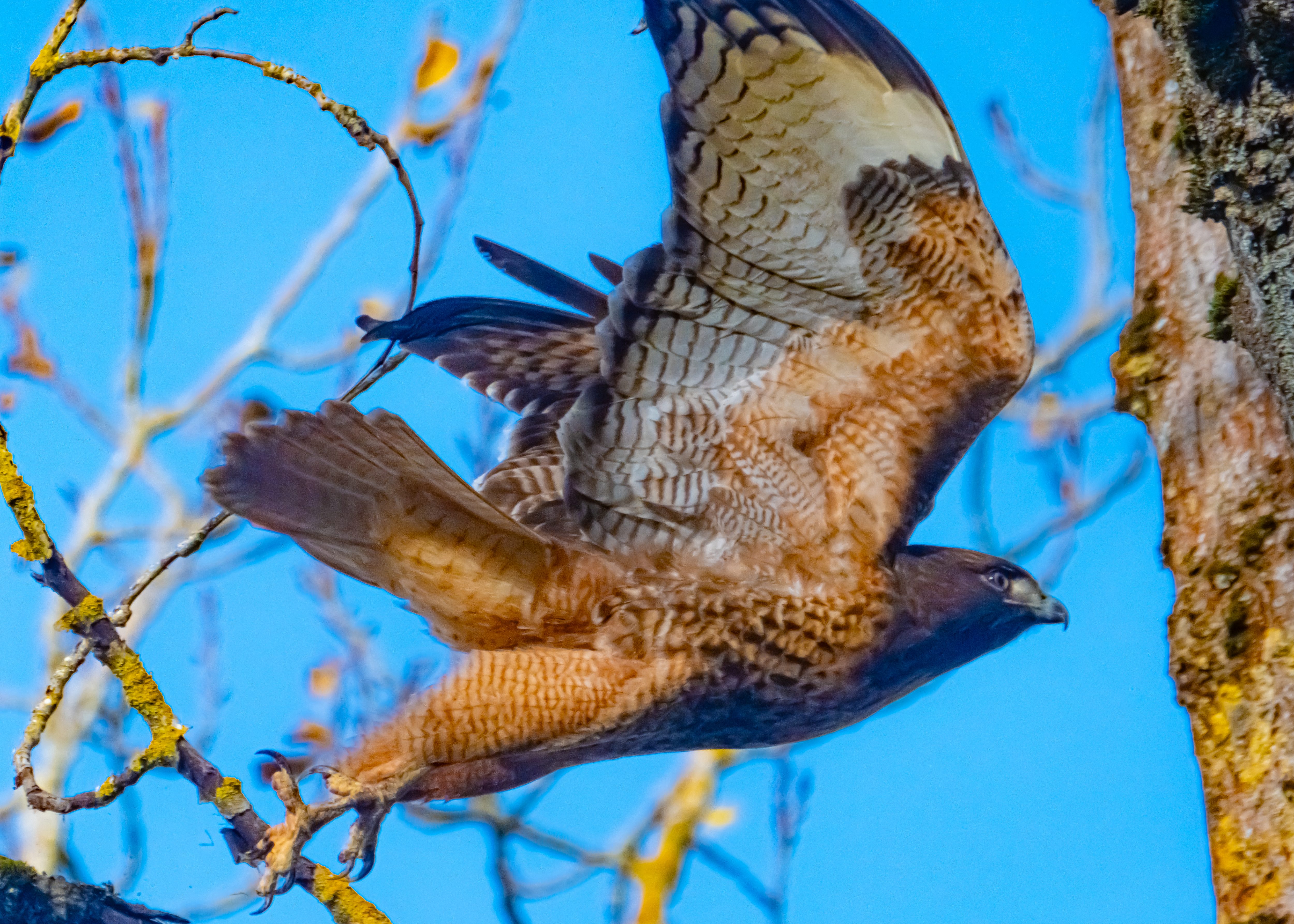
Just after I stepped into the grassy area at the main entrance, a red-tailed hawk appeared, gliding low and then dropping into the grass to hunt. It was a classic predator moment: head scanning, wings tucked, sudden pounce. I kept my distance but stayed ready — the hawk’s movements were predictable enough for a burst of frames when it flew away.
Photo tips: for raptors hunting
– Lens: 300–600mm preferred. A 100–400mm also works if you can get closer.
– Settings: Shutter 1/1600–1/2000s to freeze motion, aperture f/5.6–f/8, ISO as needed (400–1600 depending on light).
– Focus: Continuous AF (AF-C), back-button focus if you use it, and high-speed continuous drive.
– Composition: Try to capture the wings tucked and talons extended — that’s the drama. Leave space in the frame in the direction the hawk is moving.
The otter: messy, joyful, perfect
A little further along, a sizeable river otter was on a log, busy with its fish. Watching an otter eat is intimate and slightly chaotic — paws, whiskers, fish scales and water droplets everywhere
Heron and egret in flight: grace and timing
Later, as I moved toward the marshier sections, a great blue heron and an egret took off almost back-to-back. Flight shots are all about timing and panning — the wings create beautiful shapes against a simple sky.
🌿 Enjoying these posts?
This blog is free for everyone — and readers who become members help keep it going. Memberships start at \$3/month and include 20–30% off everything in the print shop.
Become a Member