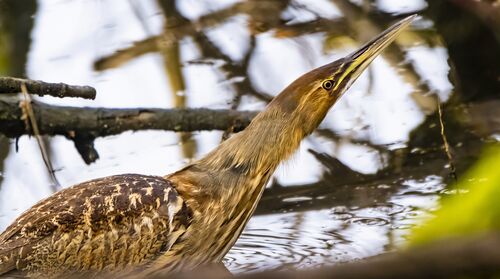
American Bittern
Botaurus lentiginosus
A heron that has given up on being seen entirely. Most records are of a bird that
flushed from underfoot, not one that was spotted standing.
A heron that has given up on being seen entirely. Most records are of a bird that
flushed from underfoot, not one that was spotted standing.
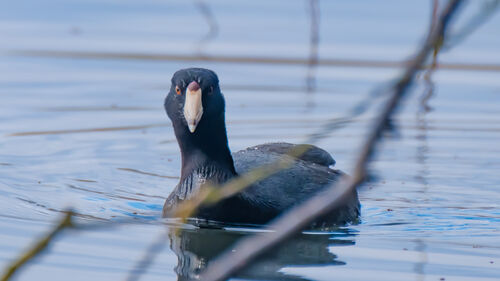
The slate-gray bird that looks like a duck, swims like a duck, and is not a duck
at all. It is a **rail** — and rails sit in the same order as **cranes**.
⭐ The nearest relative of the bird clucking around a Portland pond is the
**Sandhill Crane**. Both are Gruiformes; ducks are not even close. Evolution put
a crane's cousin on the water and gave it lobed toes instead of a web.
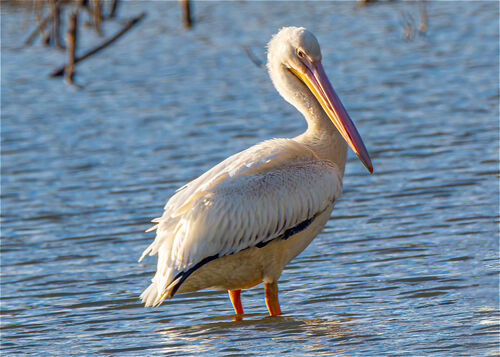
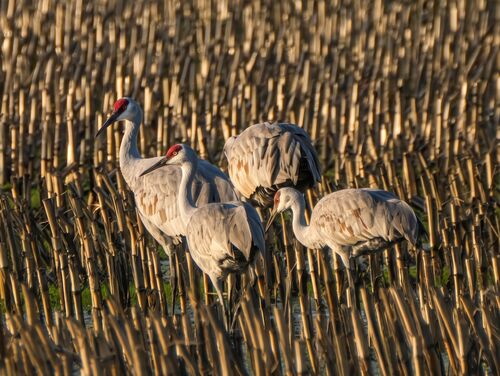
One of the largest birds in North America, and a genuine event at Oaks Bottom.
When two dropped in, it was a first for everyone on the trail that day.
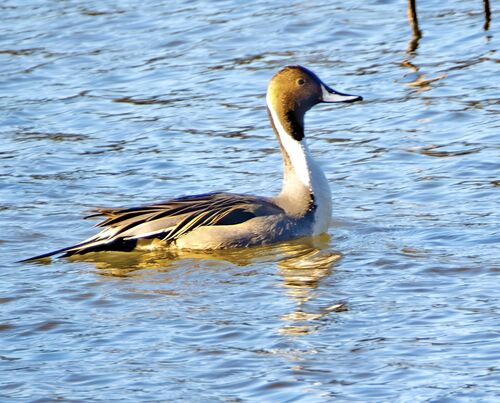
A duck that grazes like a goose and robs like a gull. Listen before you look — the
whistle is nothing like a quack.
You usually get one glimpse and a rattling complaint as she bolts. Getting a
still photograph of one is mostly a matter of her deciding to allow it.
The smallest diving duck here, and the one that keeps vanishing mid-view.
So common it is invisible, and so familiar that almost nobody looks at one
properly. It is a strikingly marked bird under the familiarity.
A long, low, fast-swimming fish-hunter — the largest of our sawbills, and often the
first bird you notice on open water because of how white the male is.
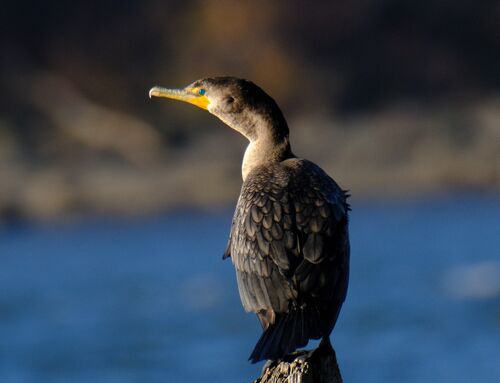
The dark, long-necked bird standing on a piling with its wings held open. People
assume it is drying off, and they are right — but the reason is stranger than it
looks.
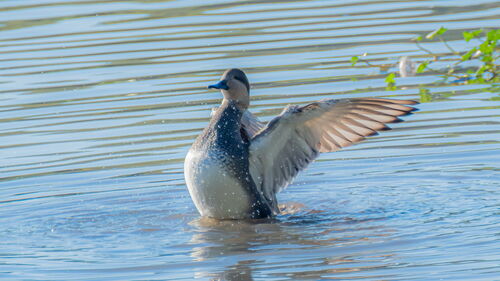
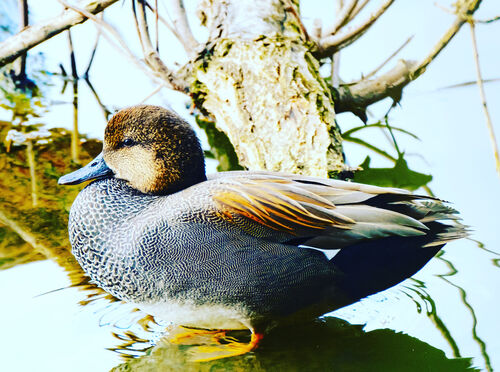
The duck that rewards a second look. At a glance it is a plain gray-brown bird; up
close it is covered in fine scalloping and vermiculation.
The largest heron in North America, and the bird most people picture when they
picture Oaks Bottom. Standing still in the shallows, it looks patient. It isn't —
it's loaded.
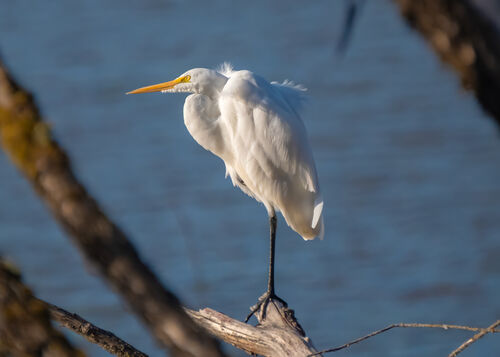
A tall white heron that stands out at a mile. If it is large, white and standing
still in shallow water, start here.
There is a heron at Oaks Bottom most people never see, and it isn't because it is
rare. It is eighteen inches tall, the color of wet bark, and it does not move.
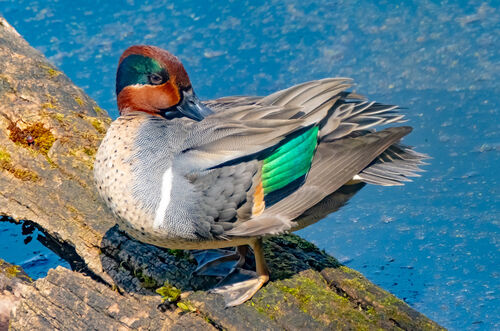
Our smallest dabbling duck — barely larger than a pigeon, and easy to overlook among
Mallards until the whole flock erupts at once.
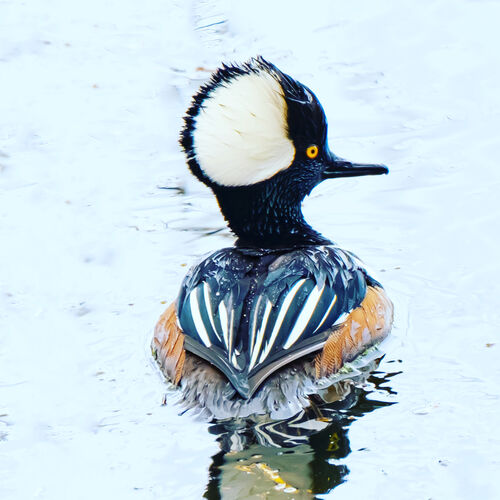
A small duck that can raise a white fan on its head and does so without warning.
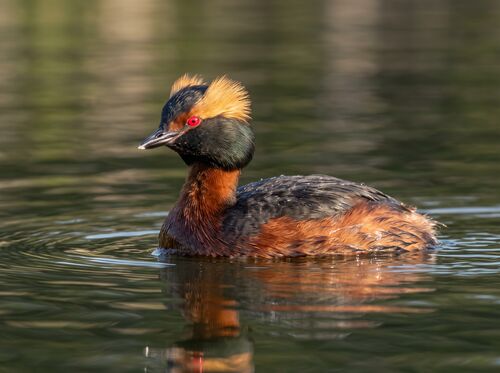
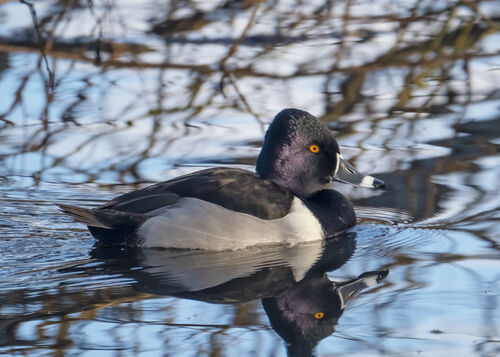
A small, crisply black-and-white diver on open water. In winter it looks nothing
like the bird it is named for — the golden "horns" belong to a breeding plumage we
rarely see here.
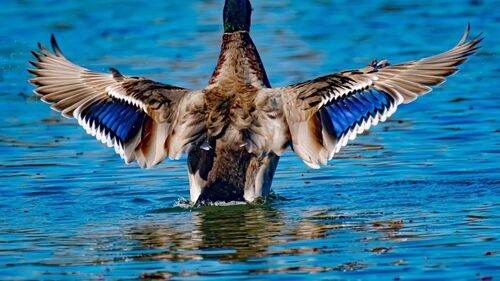
The duck everyone knows, which makes it the one worth knowing properly — it is the
yardstick you measure every other duck against.
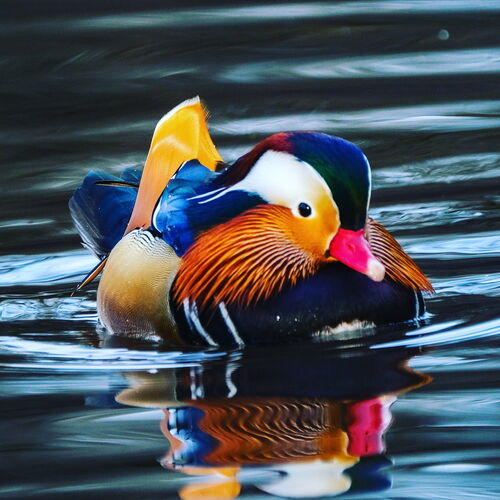
⚠️ Not a native bird. A Mandarin on a Portland pond is an escaped or released
ornamental — and an unforgettable sight anyway.
The most elegant duck on the water — long-necked, slim, and built on completely
different lines from the Mallards around it.
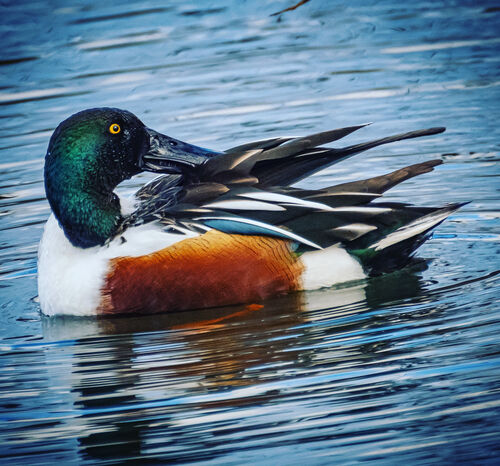
Identifiable at any distance by the bill alone. It looks like the bird is carrying
a shovel.
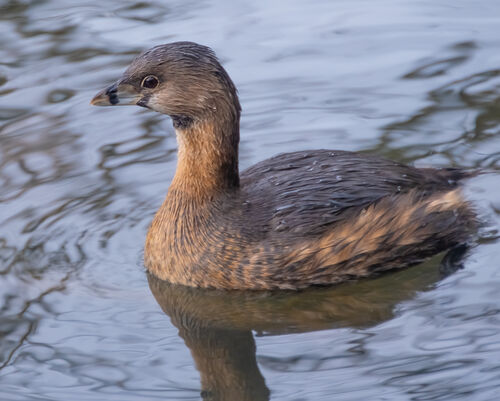
A small brown diving bird that vanishes. Not by flying — it simply sinks, and is
not where you were looking.
A small diving duck with one of the worst names in ornithology.
⚠️ **Not an Oaks Bottom bird.** These photographs were taken **in a cornfield just
outside Portland, in autumn** — which is exactly where to look for them. Cranes
stage in harvested farmland on the city's edge each fall, one of the great
wildlife events within reach of town.
Included because the crane is the bird two other entries keep pointing at: the
one a Great Blue Heron is mistaken for, and the coot's nearest relative.
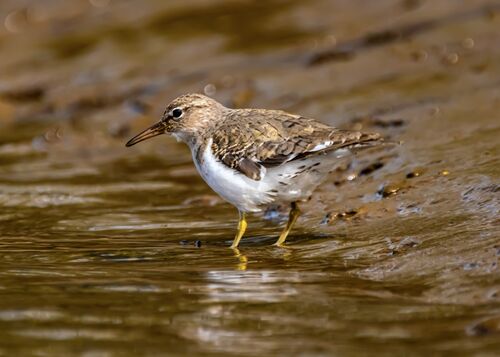
The sandpiper that actually lives here. Most shorebirds on this river are passing
through; this one nests along it — and it never stops bobbing.
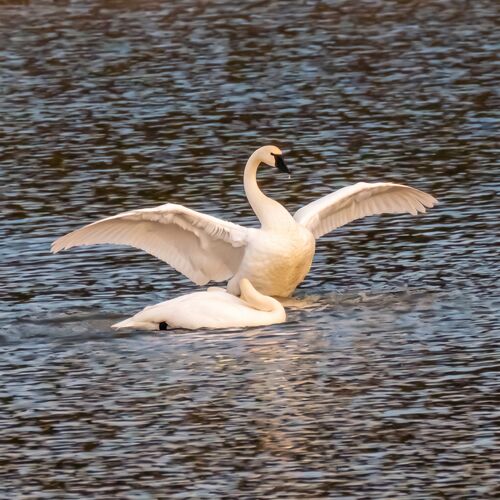
The largest white bird most people here will ever see on the water, arriving
from the Arctic without announcement. I found a **pair** at Oaks Bottom, and
watched them dance.
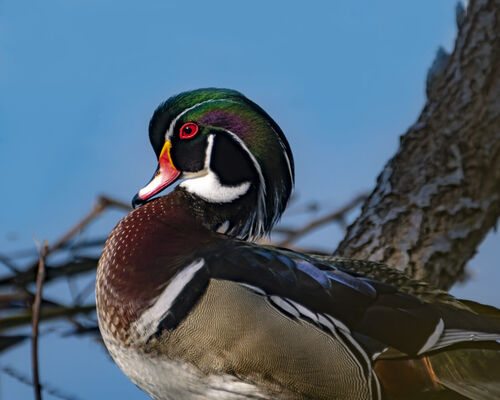
Arguably the most ornate duck in North America, and it nests in trees.