Browse Songbirds by Category
Wrens Kinglets
Bewick’s Wrens
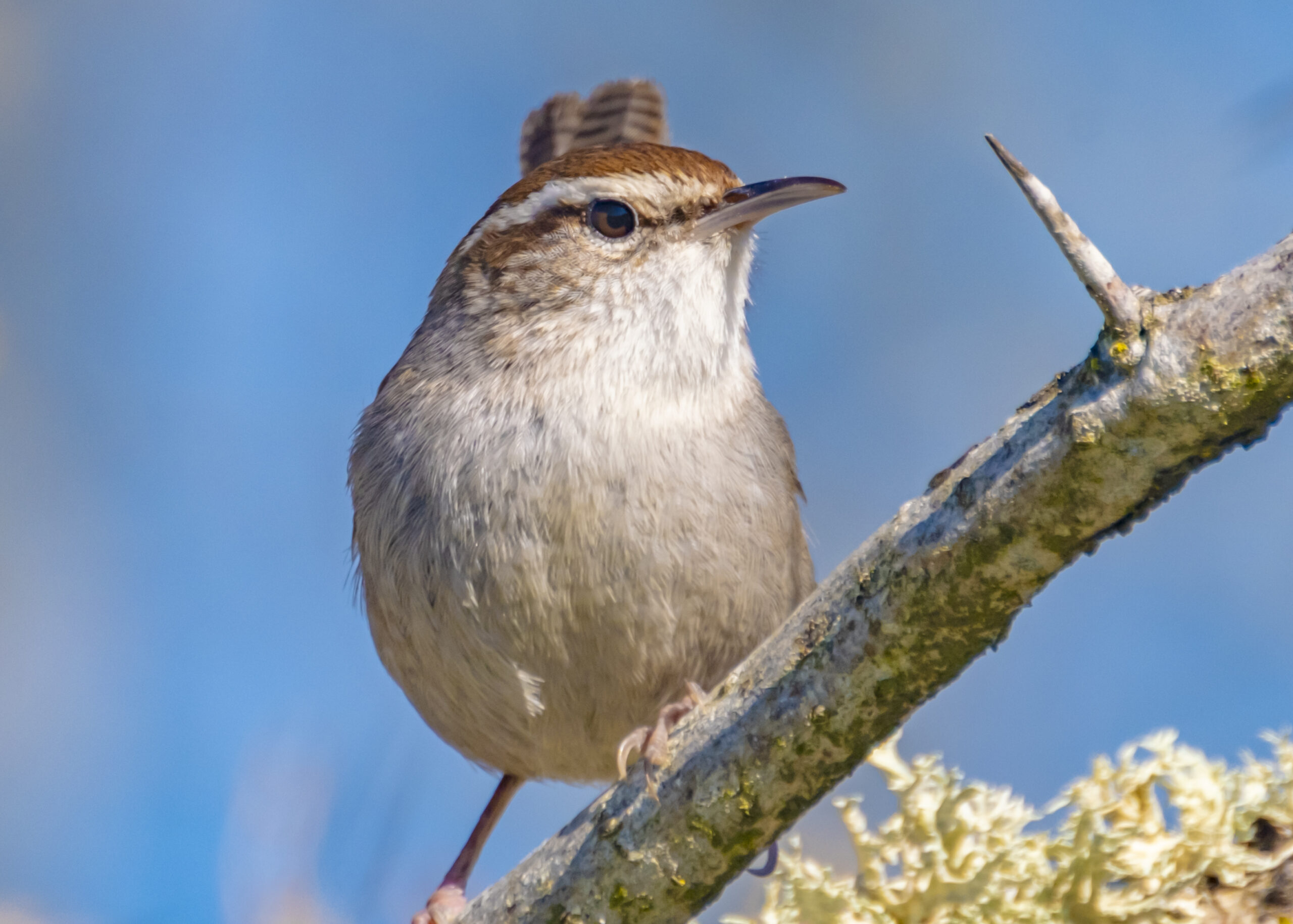
The Bewick's Wren (Thryomanes bewickii) is a small songbird native to North America, named after the British engraver Thomas Bewick. This bird is easily identified by its long, slender tail, which it often holds upright, and its distinctive white eyebrow stripe. The plumage of the Bewick's Wren is primarily brown, with lighter underparts and subtle barring on the wings and tail.
Bewick's Wrens are known for their loud and complex songs, which males use to defend territories and attract mates. They are adaptable birds, inhabiting a variety of environments including woodlands, thickets, and even urban areas, where they can be found foraging for insects and spiders in brush piles and undergrowth.
Despite their adaptability, the populations of Bewick's Wrens have faced declines in certain areas, primarily due to habitat loss and competition with other species. Conservation efforts are focused on preserving their habitats and understanding the factors that influence their population dynamics.
Ruby-Crowned Kinglets
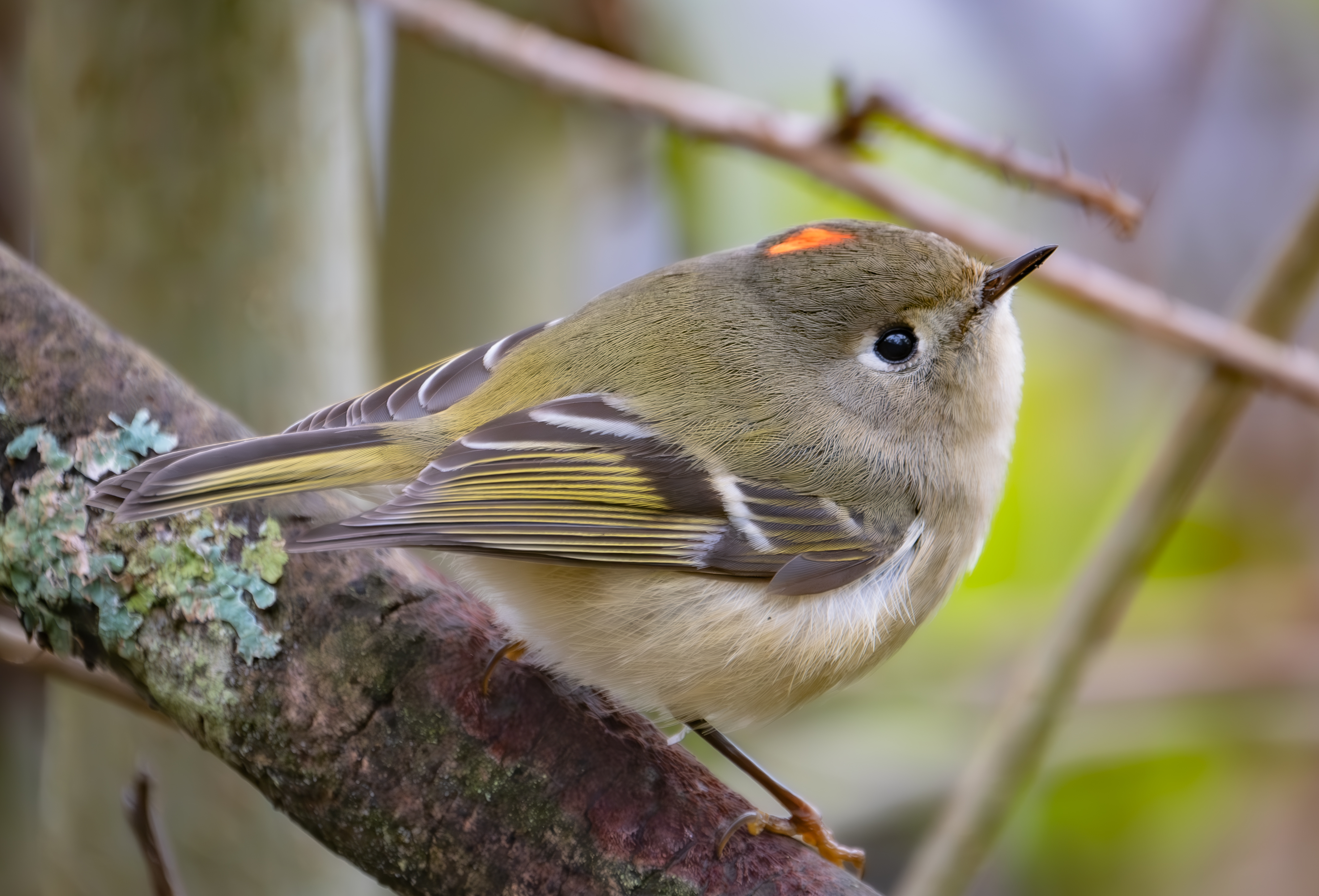
The Ruby-crowned Kinglet is a small songbird that is found in North America. It is one of the smallest birds in North America, measuring only about 4 inches in length. The bird is named for the ruby-red crown patch on the head of the male, which is usually concealed. The female lacks the ruby crown and has a yellow patch on her head instead. Ruby-crowned Kinglets are known for their high-pitched, rapid songs and their active, restless behavior as they flit through trees and shrubs in search of insects and spiders to eat. They breed in the boreal forests of Canada and Alaska and migrate south to the United States and Mexico for the winter.