Swifts Hummingbirds
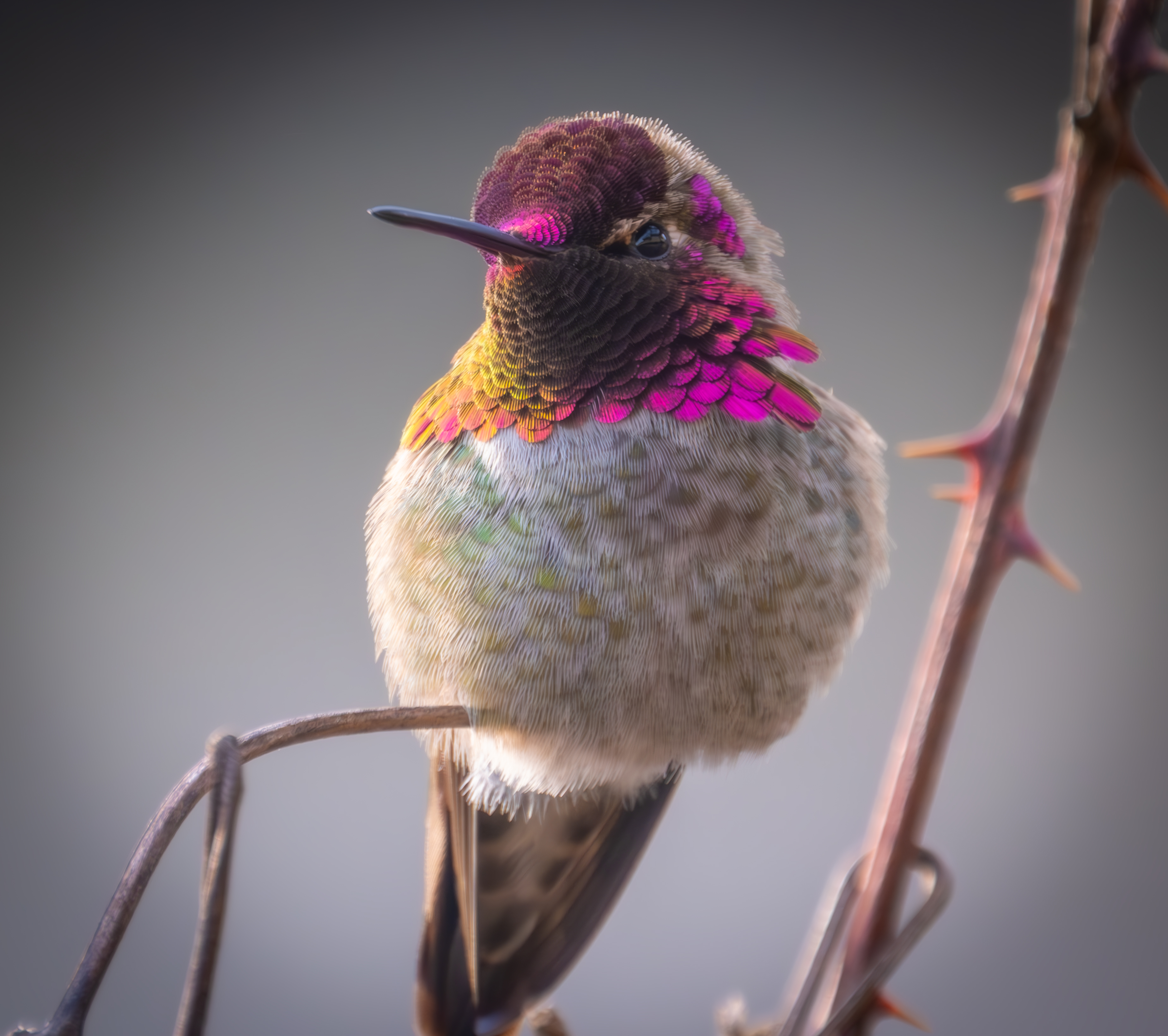
Anna's hummingbirds (Calypte anna) are a species of hummingbird native to the west coast of North America, ranging from British Columbia in Canada down through California and into parts of Mexico. In the springtime, these tiny, vibrant birds become particularly active, engaging in a variety of behaviors that are fascinating to observe. Here are some highlights of Anna's hummingbirds in the spring:
Breeding Season
Spring marks the beginning of the breeding season for Anna's hummingbirds. They are among the earliest birds to start the breeding process, sometimes as early as December or January, but activities peak in the spring.
Courtship Displays
Male Anna's hummingbirds perform spectacular courtship displays to attract females. One of the most notable is the "dive display," where the male flies up to 130 feet into the air and then dives down at high speeds towards the female, making a loud popping sound with their tail feathers at the bottom of the dive. This display is not only a visual spectacle but also an auditory one.
Nesting
Female Anna's hummingbirds are responsible for building the nest and caring for the young. They construct their nests from plant down, spider webs, and other materials, making them stretchy and sturdy. The nests are often located on tree branches or in shrubs. The female lays usually two eggs, which she incubates for about 14-19 days.
Feeding
In the spring, Anna's hummingbirds feed on nectar from flowers and flowering trees, using their long tongues to reach into flowers. They play a vital role in pollination. They also eat insects and spiders, especially during the breeding season, to meet their high protein needs.
Territorial Behavior
Anna's hummingbirds can be quite territorial, especially in areas where food sources are abundant. Males aggressively defend their territory to ensure they have enough resources to attract and support a mate.
Adaptations to Urban Environments
Interestingly, Anna's hummingbirds have adapted well to urban environments. They are commonly seen in gardens and parks, where hummingbird feeders and a variety of flowering plants provide ample food sources. This adaptation has helped them to thrive, even as some natural habitats are under threat.
Observing Anna's hummingbirds in the spring can be a rewarding experience for bird watchers and nature lovers. Their vibrant colors, dynamic behaviors, and the sounds of their courtship displays add a layer of excitement to the natural world as it awakens from the winter.