Finches
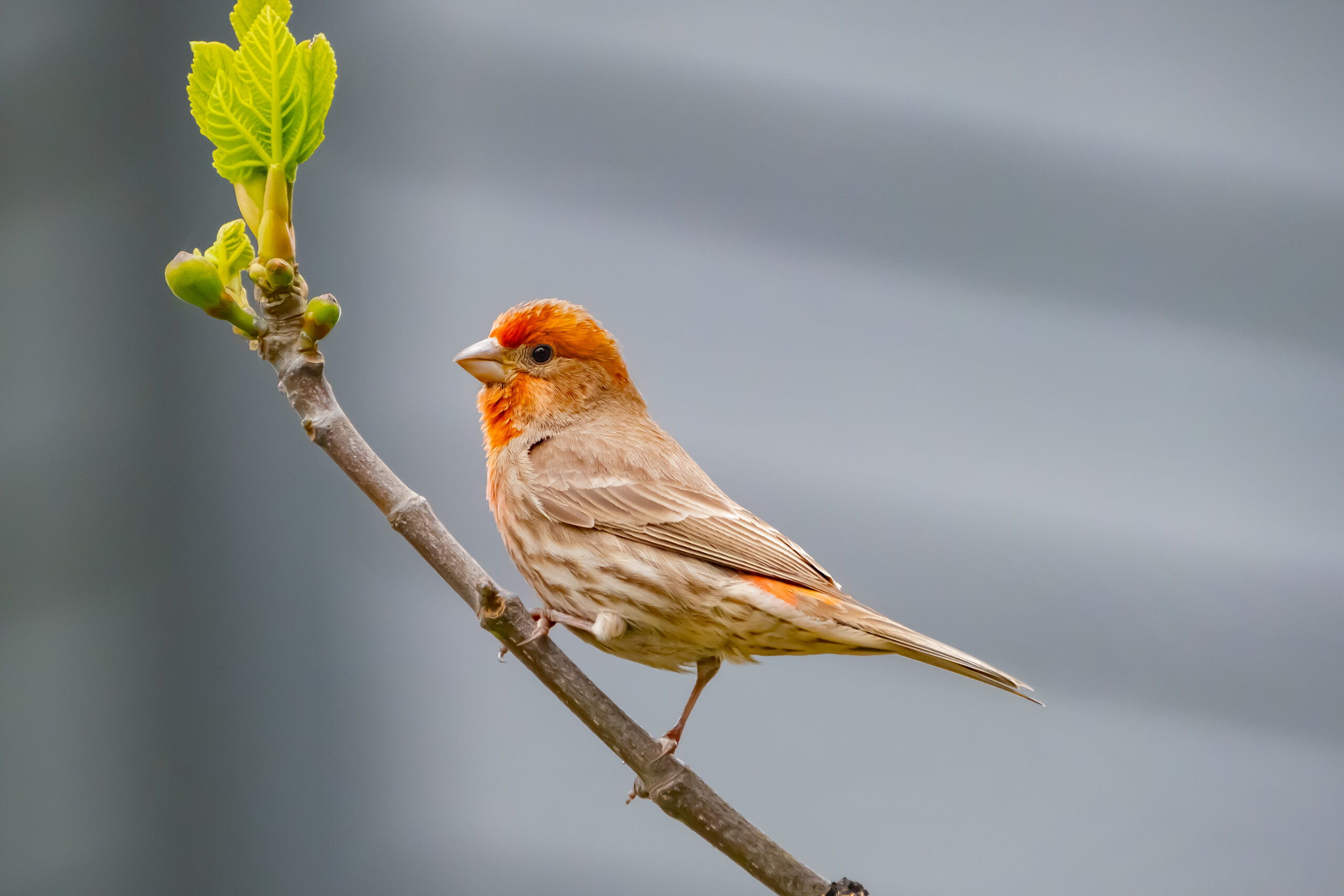
House Finches (Haemorhous mexicanus) are small, brightly colored birds that are a common sight across much of North America. Originally native to the southwestern United States and Mexico, their range expanded dramatically in the 20th century after caged birds were released in New York in the 1940s. They have adapted well to human-altered environments and are often found in urban and suburban areas, as well as in wilder habitats like deserts and forests.
Males are easily recognizable by their vibrant red plumage on the head, throat, and breast, which can sometimes vary to orange or yellow, while females and young birds are more subdued in color, with streaky brown plumage that provides excellent camouflage. House Finches are about 5 to 6 inches in length, with a robust body and a short, conical bill that is well-suited for their primarily seed-based diet, although they also consume insects.
These birds are gregarious outside of the breeding season, often forming large flocks. They have a cheerful, warbling song and a variety of calls, which they use to communicate with each other. House Finches are monogamous for the breeding season, and pairs can be quite affectionate, with the male often seen feeding the female as part of their courtship.
House Finches build their nests in a variety of locations, from trees and shrubs to various nooks and crannies on buildings, showing their adaptability. They can produce several broods per year, with clutches typically consisting of 2 to 6 eggs.
While their proliferation has been a success story in terms of their adaptability, House Finches have also faced challenges such as diseases like conjunctivitis, which can spread rapidly through populations. Nonetheless, they remain common and beloved visitors to backyard feeders, where they add a splash of color and song.