Sparrows
Savannah Sparrows
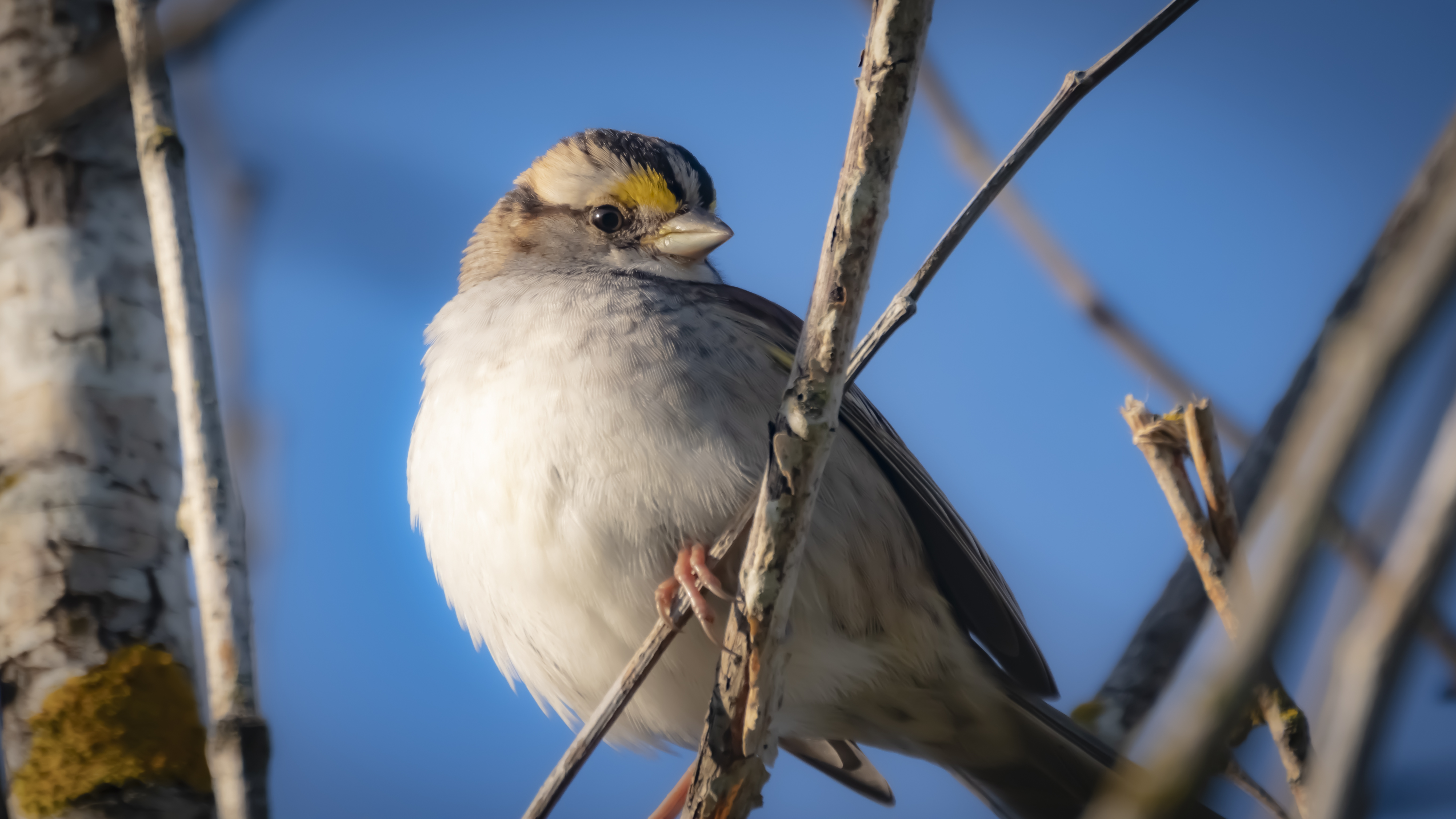
The Savannah sparrow (Passerculus sandwichensis) is a medium-sized songbird that is common in North America. They are found in open areas with low-lying vegetation, such as grasslands, fallow fields, and thick grassy areas.
Dark-Eyed Juncos
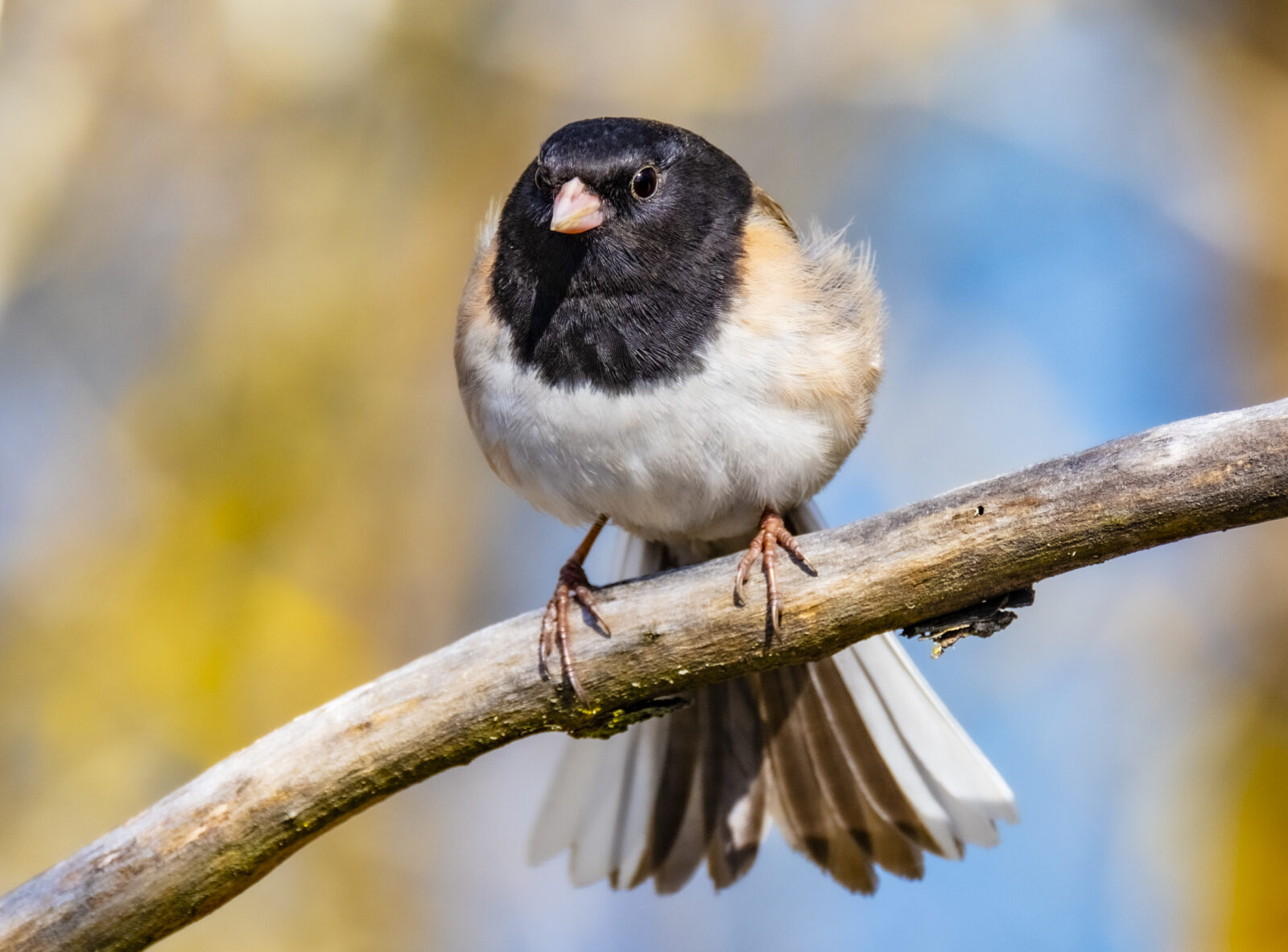
The Dark-eyed Junco (Junco hyemalis) is a small, charismatic songbird that graces much of North America, especially during its winter migration. These birds are easily recognized by their distinctive markings: they typically have slate-gray or black heads and backs (the males being darker), with contrasting white bellies. What truly sets them apart, however, are their striking dark eyes, which stand out against their subdued plumage, and their white outer tail feathers, which flash distinctively during flight.
Dark-eyed Juncos are often referred to as "snowbirds" in some regions due to their appearance in backyards and bird feeders during the winter months, heralding the change of seasons. They exhibit a variety of plumage colorations across different geographic regions, leading to the identification of several subspecies, such as the Slate-colored, Oregon, Pink-sided, and White-winged Juncos, among others.
These adaptable birds can be found in a wide range of habitats, from forest edges and alpine meadows to suburban parks and gardens. They primarily feed on seeds and insects, foraging on the ground in small flocks. Dark-eyed Juncos are also known for their sweet, trilling songs and calls, adding a touch of joy to their surroundings regardless of the season.
Golden-Crowned Sparrows
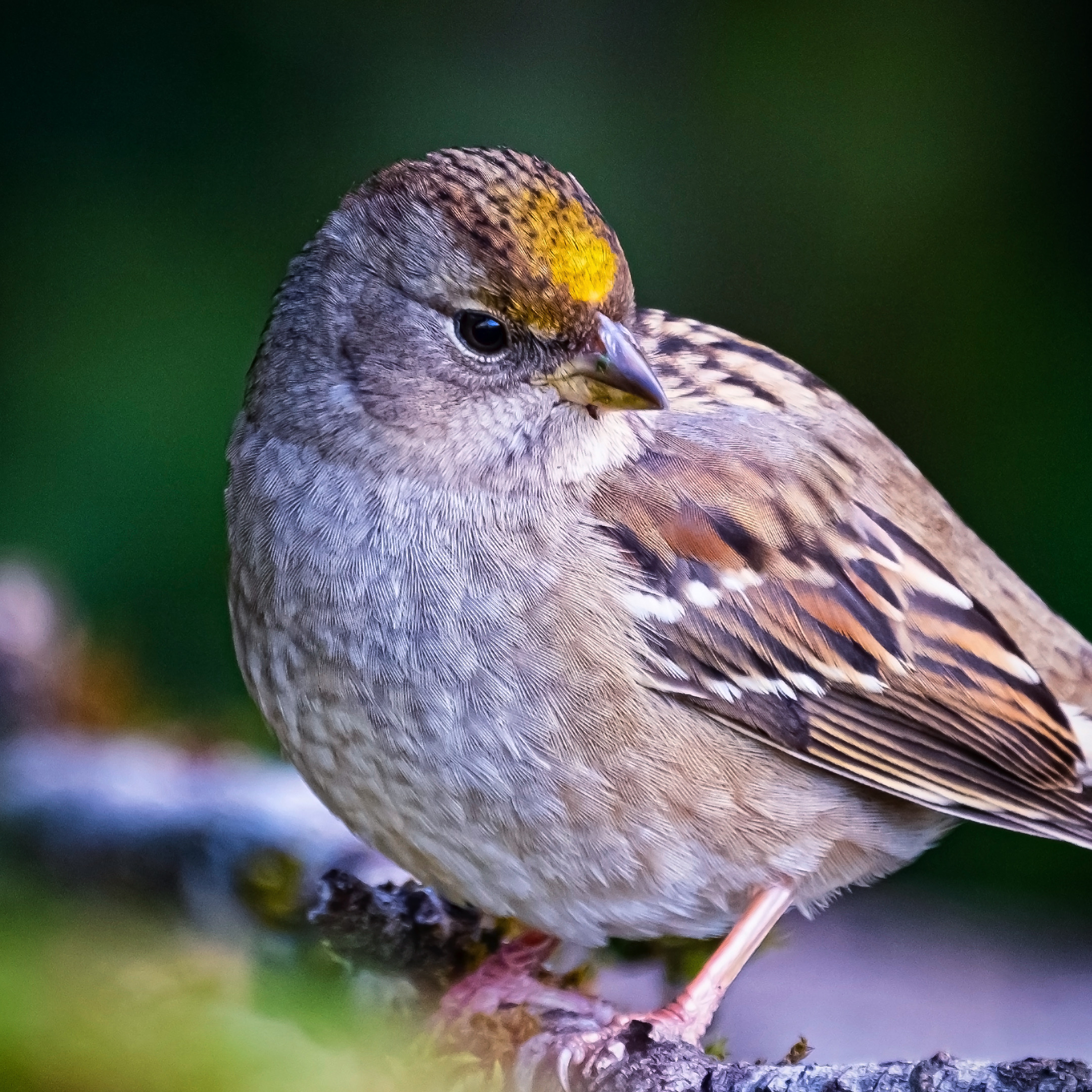
The Golden-crowned Sparrow (Zonotrichia atricapilla) is a striking bird native to the western parts of North America. Easily recognizable by its distinctive golden crown, bordered by black stripes, this medium-sized sparrow exhibits a blend of gray and brown plumage across its body, which provides excellent camouflage in its natural habitat. Adults typically display more vivid coloration during the breeding season, with males showcasing brighter gold and black crown markings than females.
Golden-crowned Sparrows are primarily found in shrubby habitats and open woodlands, especially during their breeding season in Alaska and northwestern Canada. In the winter, they migrate southward to the western United States, where they can be found in a variety of settings including gardens, parks, and coastal areas. These birds have a melodious song, often described as a series of sad, sweet whistles, which adds to their allure among birdwatchers.
Primarily ground feeders, their diet consists of seeds, fruits, and insects. The Golden-crowned Sparrow is a social bird outside of the breeding season, often forming flocks with other sparrows. Despite their beautiful appearance and enchanting songs, they are relatively shy and elusive, making any sighting a rewarding experience for bird enthusiasts.
Song Sparrows
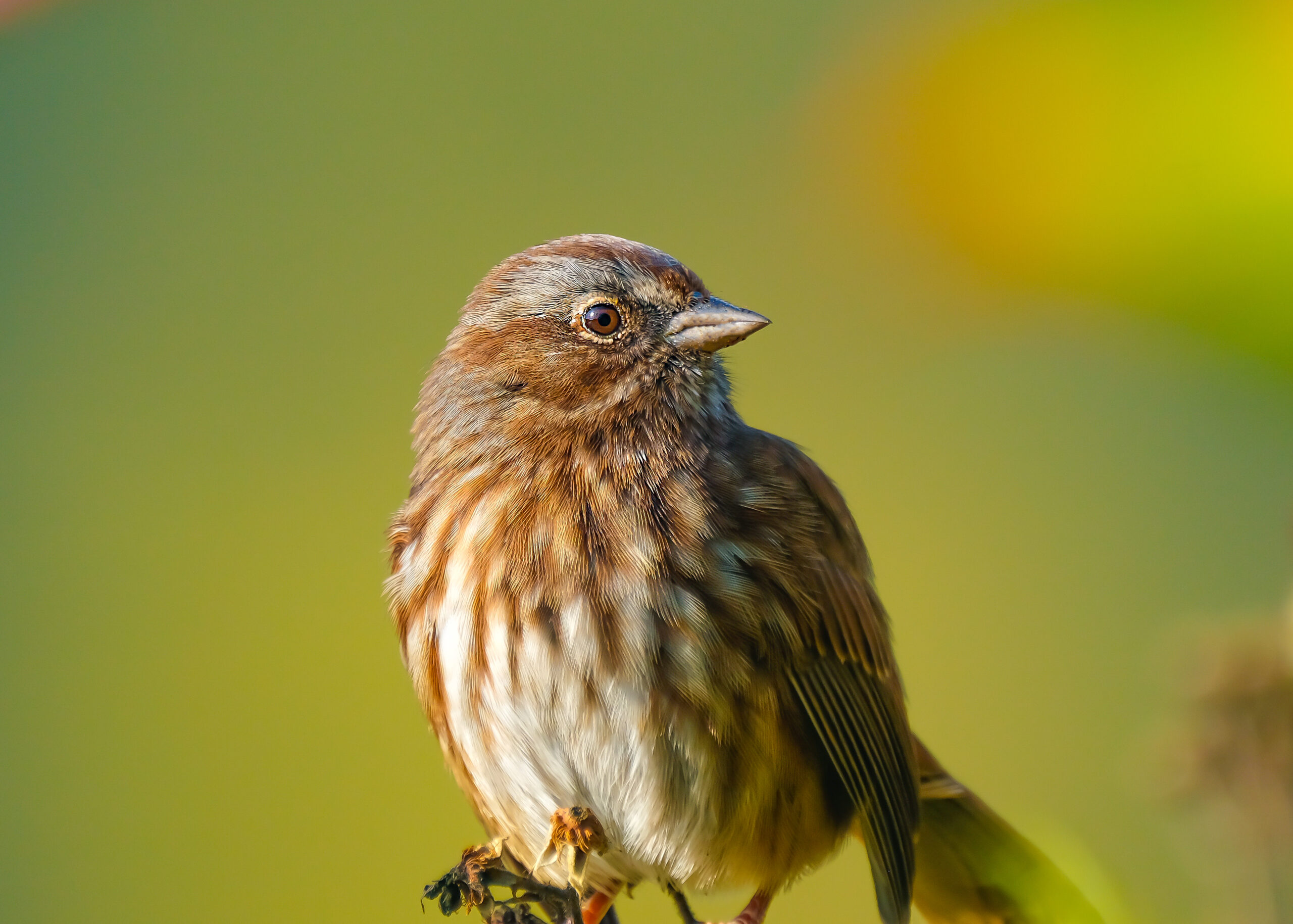
The song sparrow (Melospiza melodia) is a small, brown-streaked bird that is found throughout North America. It is a member of the Emberizidae family, which includes other sparrows, buntings, and towhees. The song sparrow is a common sight in backyards, parks, and other open areas. It is easily identified by its distinctive song, which is a series of short, musical trills.
The song sparrow is a ground-dwelling bird, preferring to forage for food on the ground or in low vegetation. Its diet consists of insects, seeds, and berries. It is also known to eat grains, such as corn and wheat, which it finds in agricultural fields. The song sparrow is an important seed disperser, helping to spread native plants throughout its range.
The song sparrow is a monogamous species, meaning that it forms a pair bond with one mate for the duration of the breeding season. The male song sparrow is territorial and will defend its territory from other males. The female builds the nest, which is usually a cup-shaped structure made of grasses and other plant material. The female lays three to five eggs, which are incubated for 11 to 14 days. The young fledge after 10 to 14 days.
The song sparrow is a resilient species, able to adapt to a variety of habitats. It is also a long-distance migrant, traveling south in the winter to warmer climates. Despite its adaptability, the song sparrow is threatened by habitat loss and fragmentation due to human development. It is also vulnerable to predation by cats, hawks, and other birds of prey.
The song sparrow is an important part of the North American ecosystem. Its presence in backyards and parks provides a source of beauty and joy to many people. Its song is a reminder of the beauty and complexity of nature. The song sparrow is a species worth protecting and preserving for future generations.
Spotted Towhees
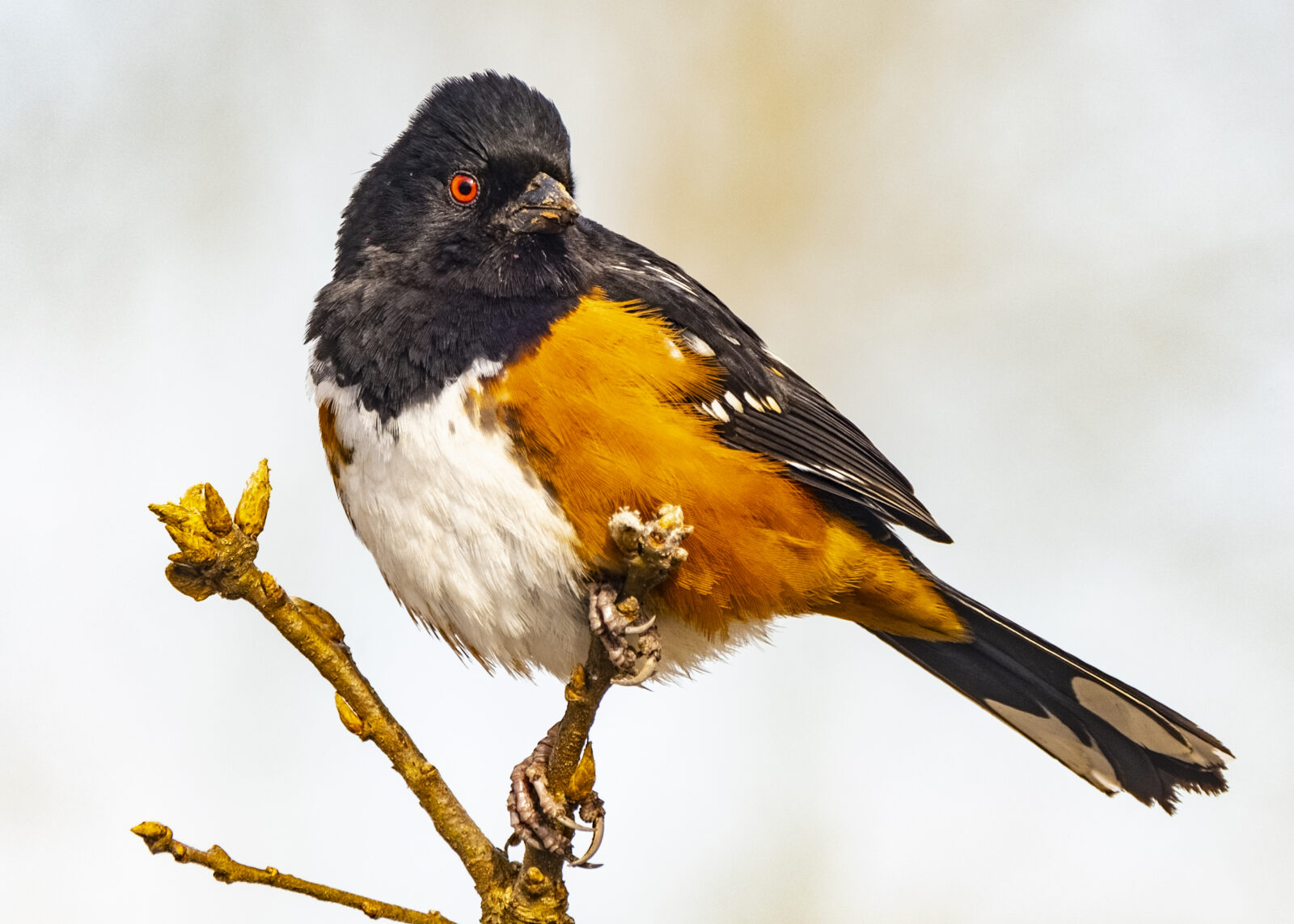
The Spotted Towhee is a bird species native to North America. It is a member of the sparrow family and is known for its distinctive black and white spotted plumage. The male has a black head, back, and tail, with white spots on its wings and back, while the female has a brownish-gray head and back with the same white spots. They are commonly found in brushy areas, woodlands, and suburban gardens.
White-Crowned Sparrows
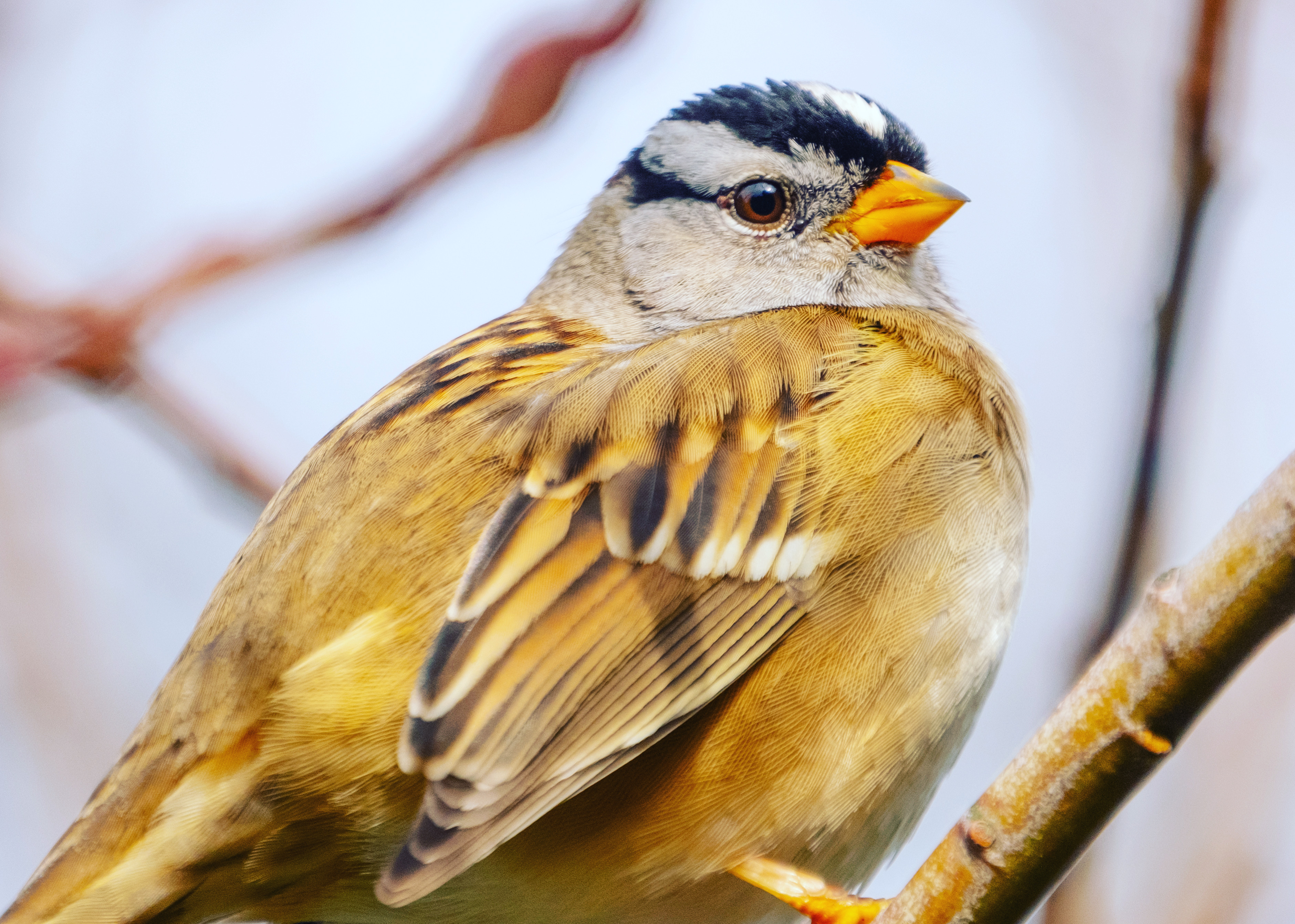
The white-crowned sparrow (Zonotrichia leucophrys) is a medium-sized North American bird with a gray face and black and white stripes on its upper head. It has a long tail, small bill, and can be 5.9–6.3 in (15–16 cm) long, 0.9–1.0 oz (25–28 g) in weight, and have a wingspan of 8.3–9.4 in (21–24 cm). Its underparts are plain grayish without streaks, and its bill color varies from yellow to pink, but is always brighter than the white-throated sparrow.